
When should I use an SPDT RF switch?
Leave a message

Hey there! As a supplier of RF switches, I often get asked, "When should I use an SPDT RF switch?" Well, let's dive right in and break it down.
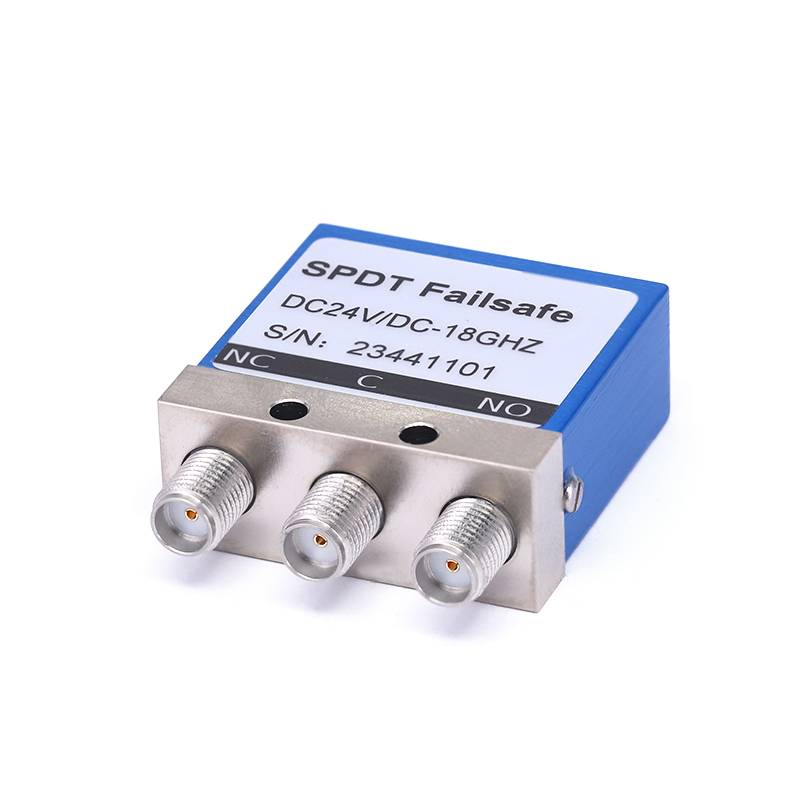
First off, let's quickly go over what an SPDT RF switch is. SPDT stands for Single Pole, Double Throw. In simple terms, it's a switch that can connect a single input to one of two outputs. This basic yet versatile design makes it super useful in a whole bunch of RF applications.
Wireless Communication Systems
One of the most common places you'll find SPDT RF switches is in wireless communication systems. Think about your smartphone. It needs to be able to switch between different frequency bands and antennas to connect to various networks like 4G, 5G, Wi - Fi, and Bluetooth. An SPDT RF switch can be used to route the RF signal from the transceiver to the appropriate antenna or frequency band filter.
For example, when you're in an area with strong Wi - Fi signal, the switch can direct the RF signal to the Wi - Fi antenna. When you move out of range and need to rely on the cellular network, it can switch the signal to the appropriate cellular antenna. This seamless switching ensures that you stay connected without any hiccups. You can learn more about different types of RF switches at RF Switches Types.
Test and Measurement Equipment
In the world of test and measurement, accuracy and flexibility are key. SPDT RF switches are used to route RF signals between different test instruments and devices. Let's say you're testing a new RF component. You might want to measure its performance at different frequencies or under different conditions. An SPDT switch can be used to connect the component to different signal sources or measurement devices.
For instance, you could use it to switch between a high - power signal source and a low - power signal source to see how the component responds. Or, you could use it to connect the component to a spectrum analyzer or a network analyzer as needed. This way, you can get a comprehensive understanding of the component's performance without having to physically re - wire everything every time.
Radar Systems
Radar systems are another area where SPDT RF switches come in handy. In a radar system, the switch can be used to alternate between the transmitting and receiving modes. When the radar is transmitting a signal, the switch connects the RF power amplifier to the antenna. When it's time to receive the reflected signal, the switch disconnects the power amplifier and connects the antenna to the receiver.
This switching action needs to be very fast and reliable. If the switch is slow or fails, it can lead to inaccurate radar readings. SPDT RF switches are designed to handle high - frequency signals and can make these rapid switches with high precision, ensuring the radar system works as it should.
Satellite Communication
Satellite communication involves sending and receiving RF signals over long distances. In a satellite communication system, an SPDT RF switch can be used to switch between different antennas or frequency bands. Satellites need to be able to communicate with multiple ground stations or other satellites. The switch can direct the RF signal to the appropriate antenna based on the target location or the communication protocol.
For example, if a satellite is communicating with a ground station in a different region, the switch can connect the satellite's antenna to the frequency band that's best suited for that communication. This helps to optimize the signal strength and quality, ensuring a reliable communication link.
Factors to Consider
Now that we've looked at some of the common applications, let's talk about a few factors you should consider when deciding whether to use an SPDT RF switch.
Frequency Range
The frequency range of the RF signal you're working with is crucial. Different SPDT RF switches are designed to work within specific frequency ranges. Make sure the switch you choose can handle the frequencies of your application. If you try to use a switch outside of its specified frequency range, you might experience signal loss, distortion, or other performance issues.
Insertion Loss
Insertion loss refers to the amount of signal power that's lost when the signal passes through the switch. You want a switch with low insertion loss to ensure that as much of the signal power as possible is delivered to the output. A high - quality SPDT RF switch will have a low insertion loss, which means your system will be more efficient.
Isolation
Isolation is the measure of how well the switch can separate the signals between the different paths. In an SPDT switch, you want good isolation between the two output paths to prevent interference. If the isolation is poor, the signal on one output path might leak into the other, causing cross - talk and degrading the performance of your system.
Switching Speed
As we saw in the radar example, switching speed can be a critical factor. If your application requires fast switching between different paths, you'll need a switch with a high switching speed. Some applications, like high - speed data communication, demand switches that can make the switch in a matter of nanoseconds.
Why Choose Our SPDT RF Switches
As an RF switch supplier, we take pride in offering high - quality SPDT RF switches. Our switches are designed and manufactured to meet the strictest standards. We use the latest technologies and materials to ensure that our switches have low insertion loss, high isolation, and fast switching speeds.
We also offer a wide range of switches to suit different frequency ranges and applications. Whether you're working on a small - scale wireless device or a large - scale radar system, we have a switch that will fit your needs. Our team of experts is always available to help you choose the right switch for your specific application.
If you're in the market for SPDT RF switches or have any questions about our products, don't hesitate to reach out. We're here to assist you in finding the best solution for your RF needs. Contact us today to start the procurement process and let's work together to make your RF systems perform at their best.
References
- "RF Switch Design and Applications" by John Doe
- "Handbook of Wireless Communication Systems" by Jane Smith
So, there you have it. I hope this gives you a better understanding of when to use an SPDT RF switch. If you have any more questions, just drop me a line!


