

Why is phase stability important for VNA test cables?
Leave a message

Hey there! As a supplier of VNA Test Cables, I've been in the trenches, dealing with all sorts of questions from customers about these cables. One question that pops up quite often is, "Why is phase stability important for VNA test cables?" Well, buckle up, 'cause I'm gonna break it down for you.
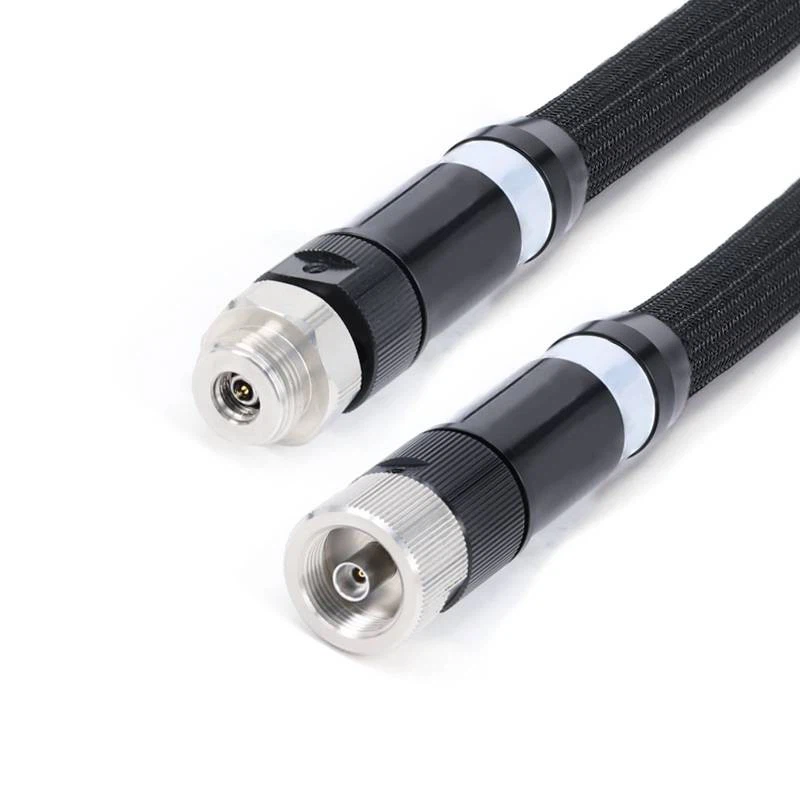
First off, let's quickly go over what VNA test cables are. VNA stands for Vector Network Analyzer. These test cables are used in conjunction with VNAs to measure the electrical properties of components and networks. They're like the bridge between the VNA and the device under test (DUT). You can find more about VNA Test Cables on our website.
Now, onto phase stability. Phase is a measure of the position of a point in time on a waveform cycle. In simpler terms, it tells you where a particular point on a wave is in relation to a reference point. Phase stability, then, refers to how consistent the phase of a signal remains over time, temperature changes, and mechanical stress.

So, why is this so important? Well, let's start with accuracy. When you're using a VNA to measure the performance of a DUT, accuracy is key. Even the slightest change in phase can lead to significant errors in your measurements. For example, in a high - frequency application, a small phase shift can cause your measurement of return loss or insertion loss to be way off. This can lead to incorrect conclusions about the performance of the DUT. If you're developing a new RF component, inaccurate measurements due to poor phase stability can mean that you end up with a product that doesn't meet the required specifications.
Another reason phase stability is crucial is repeatability. In the world of testing and measurement, you want to be able to get the same results every time you run a test. If your VNA test cables have poor phase stability, the phase of the signal passing through them can change from one test to the next. This means that you might get different measurement results even when testing the same DUT under the same conditions. This lack of repeatability can be a real headache, especially when you're trying to validate a design or troubleshoot a problem.
Temperature is also a major factor. VNA test cables are often used in a variety of environments, and temperature can have a big impact on phase stability. As the temperature changes, the physical properties of the cable, such as the dielectric constant, can change. This, in turn, can cause the phase of the signal to shift. A cable with good phase stability will be able to maintain a relatively constant phase even as the temperature fluctuates. This is important because it allows you to get accurate and consistent measurements regardless of the temperature of the testing environment.
Mechanical stress is yet another aspect. When you're working with VNA test cables, they're often bent, twisted, or moved around. This mechanical stress can cause the phase of the signal to change. A cable with poor phase stability will show significant phase shifts when subjected to mechanical stress. On the other hand, a cable with good phase stability will be able to withstand this stress without a large change in phase. This is essential, especially in a production testing environment where cables are frequently handled and moved.
Let's talk about how phase stability affects different types of applications. In wireless communication systems, for example, phase stability is vital. These systems rely on accurate phase measurements to ensure proper signal transmission and reception. If the phase of the signal is off, it can lead to interference, reduced signal strength, and even dropped calls. In radar systems, phase stability is also critical. Radar systems use phase information to determine the distance and velocity of objects. Any phase instability in the test cables used to measure the radar components can lead to inaccurate readings, which can have serious consequences, especially in military or aviation applications.
Now, as a supplier of VNA test cables, we understand the importance of phase stability. That's why we go the extra mile to ensure that our cables have excellent phase stability. We use high - quality materials and advanced manufacturing processes to minimize phase shifts due to temperature changes and mechanical stress. Our cables are also rigorously tested to meet strict phase stability standards.
If you're in the market for VNA test cables, you need to consider phase stability as a top priority. Don't just go for the cheapest option. Remember, a cable with poor phase stability can cost you more in the long run due to inaccurate measurements and the need for repeated testing.
We're here to help you make the right choice. Whether you're a small research lab or a large manufacturing facility, we have the VNA test cables that can meet your needs. If you have any questions about phase stability or our products, don't hesitate to reach out. We're always happy to have a chat and help you find the best solution for your testing requirements.
In conclusion, phase stability is not just a technical jargon. It's a critical factor that can make or break your VNA testing results. So, if you want accurate, repeatable, and reliable measurements, make sure you choose VNA test cables with excellent phase stability. And if you're interested in learning more about our VNA Test Cables, feel free to contact us for a quote or to discuss your specific needs. Let's work together to ensure your testing processes are as smooth and accurate as possible.
References
- "RF and Microwave Measurements" by Thomas Lee
- "Vector Network Analysis and Measurements" by Roger Marks


