

How to choose RF cable assembly
Leave a message
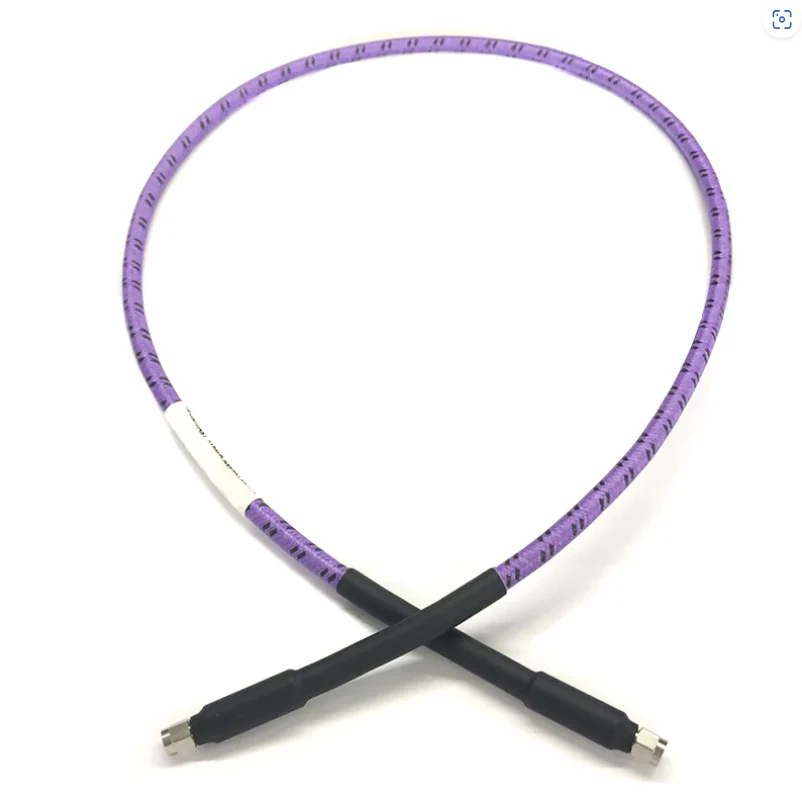
Selecting the right RF cable assembly is crucial for ensuring reliable signal transmission in fields such as telecommunications, radar, test and measurement, aerospace, and industrial systems. The selection process requires balancing electrical performance, mechanical characteristics, environmental resistance, and specific application requirements. Here is a step-by-step guide to help you make an informed decision:
1. Clarify Application Requirements and Scenarios
Test and Measurement: Frequent bending, repeated connections, and high-precision requirements (e.g., laboratory equipment, oscilloscopes).
Fixed Installation: Long-term stability and low maintenance needs.
Harsh Environments: Exposure to extreme temperatures, humidity, vibration, or chemicals (e.g., outdoor towers, aerospace, industrial machinery).
High-Mobility Systems: Flexibility and durability in moving states (e.g., drones, robots, portable devices).
2. Evaluate Key Electrical Performance Parameters
a. Frequency Range
RF cables have a maximum operating frequency, beyond which signal loss (attenuation) increases sharply. Ensure the cable's rated frequency covers your system's operating range:
Low frequency (≤6 GHz): RG 58, RG316 (common in consumer electronics).
Medium frequency (6–26 GHz): .086, .141 semi-flexible and semi-rigid cables.
High frequency (26–40 GHz): Ultra-low loss amplitude and phase-stable coaxial cables (e.g., for satellite communications, radar).
Ultra-high frequency (40–110 GHz): Ultra-low loss amplitude and phase-stable coaxial cables (millimeter-wave systems).
b. Attenuation (Signal Loss)
Attenuation (dB/ft) measures signal loss over distance and increases with frequency. For long-distance transmission, prioritize low-attenuation cables.
c. Impedance Matching
Impedance mismatch causes signal reflection, reducing efficiency and creating interference. Match the cable's impedance to your system:
Most RF systems (e.g., military, telecommunications, test equipment): 50Ω.
Video / cable TV systems: 75Ω.
Avoid mixing impedances (e.g., 50Ω cable with 75Ω connectors).
d. Power Handling Capacity
The cable must withstand the system's power (average and peak power) to avoid overheating or breakdown. Key factors:
Average power: Continuous power (e.g., 100W in base stations).
Peak power: Short-pulse power (e.g., kilowatt-level in radar).
Derate in high-temperature environments (e.g., 20% reduction at 60°C).
e. Phase Stability
In phase-sensitive systems, such as those with differential signals, minimize phase drift caused by temperature changes or bending. Choose cables with stable amplitude and phase characteristics.
3. Evaluate Mechanical Characteristics
a. Flexibility
High flexibility: Use flexible cables for scenarios requiring frequent bending (e.g., test leads).
Low flexibility: For fixed installations needing stability, use semi-rigid (solid copper outer conductor) or semi-flexible cables.
b. Durability
Bending radius: Ensure the cable can withstand the minimum bending radius without performance degradation.
Wear resistance: Use cables with robust sheaths (e.g., stainless steel nylon braided sheaths) in harsh industrial environments.
4. Consider Environmental Resistance
The cable must function properly under its operating conditions:
Temperature range: Industrial grade (-40°C to 125°C), aerospace grade (-55°C to 165°C), or extreme environments. High-temperature superconductors (e.g., PTFE insulation can withstand -65°C to 200°C).
Moisture resistance / IP rating: Outdoor use requires waterproof cables / connectors (e.g., IP67/IP68 N-type connectors with O-rings).
Chemical resistance / UV resistance: For scenarios exposed to oil, fuel, or sunlight (e.g., ethylene-tetrafluoroethylene copolymer sheaths for chemical resistance; UV-stabilized PVC for outdoor use).
Vibration / shock resistance: Military / aerospace applications require cables with robust shielding and strain relief (e.g., meeting MIL-DTL-17 standards).
5. Select Compatible Connectors
Connectors must match the cable and equipment interface, with low insertion loss and reliable connection:
Common types: SMA (up to 18 GHz), N-type (up to 18 GHz, high power), TNC (vibration-resistant), BNC (low frequency, quick connection), 2.92mm (up to 40 GHz), 1.85mm (up to 67 GHz).
Features: Choose crimp, solder, or compression connectors based on installation needs. In harsh environments, select stainless steel connectors over brass ones.
Gender and polarity: Ensure male / female ends match the equipment (e.g., SMA male to N-type female).
6. Balance Cost and Reliability
High-performance cables (e.g., silver-plated conductors, foamed PTFE / low-density PTFE) are more expensive but have lower loss and longer lifespan (suitable for critical systems).
Economical options (e.g., silver-copper-clad steel, tinned copper braid, PVC sheaths) are suitable for low-frequency, non-critical uses (e.g., consumer electronics).
For safety-critical applications (e.g., medical equipment, aviation), prioritize reliability over cost.
Summary of Key Steps
Clarify the application scenario (fixed / mobile, indoor / outdoor, frequency range).
Match electrical specifications (impedance, power, attenuation).
Select appropriate mechanical properties (flexibility, size, durability).
Ensure environmental resistance (temperature, humidity, chemicals).
Choose compatible connectors.
Balance performance, cost, and reliability.
By following these steps, you can select an RF cable assembly that optimizes signal integrity and longevity for your specific needs.


