All About SMA Connectors
Leave a message
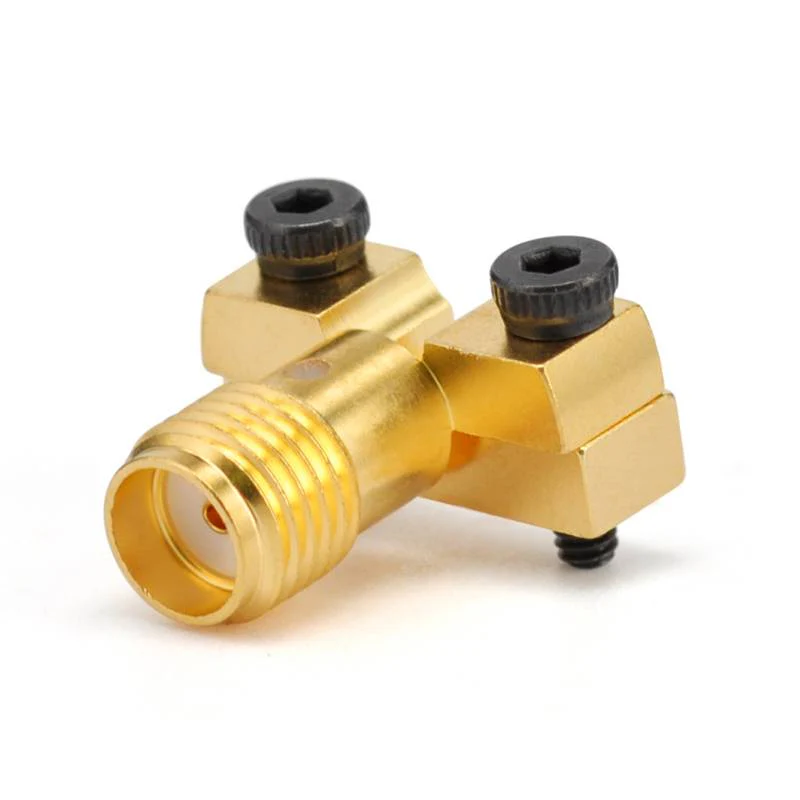
The SMA connector is a widely used RF coaxial connector, renowned for its high performance and versatility. It was developed by Bendix Scintilla in the 1950s, and the name "SMA" stands for SubMiniature version A. Its design is intended to work efficiently in high-frequency environments, thus playing a crucial role in various industries involving RF signals.
1. Main Features of SMA Connectors
Size: SMA connectors have a compact structure with an outer conductor diameter of 0.141 inches, making them suitable for applications with limited space.
Frequency Range: They typically operate up to 18 GHz, although some high-performance versions can reach 26.5 GHz or even higher.
Impedance: Most SMA connectors are 50 ohms, which is the standard configuration for RF and microwave systems.
Coupling Mechanism: Adopts a threaded coupling design with 1/4 inch, 36 threads per inch UNC threads, ensuring a firm and stable connection with strong vibration resistance.
SMA Materials and Surface Treatment Processes
The shell is usually made of brass and stainless steel, and can be plated (such as nickel, gold) to enhance corrosion resistance and conductivity.
The center conductor may be copper, brass, or beryllium copper, with a gold-plated surface to achieve optimal signal transmission.
Voltage Standing Wave Ratio (VSWR): High-quality SMA connectors have a low VSWR (typically below 1.2:1 below 12 GHz), meaning efficient signal transmission with minimal reflection.
2. Types of SMA Connectors
SMA connectors come in various configurations to suit different applications:
According to port types, they can be divided into: standard port SMA, quick-connect SMA, and reverse polarity SMA.
According to structural styles, they can be divided into straight and right-angle types. Straight connectors are used for series connections, while right-angle types are suitable for tight spaces. The 90-degree bending design can save space or reduce cable tension.
According to installation methods, they can be divided into regular and panel-mount types. Panel-mount connectors are designed for installation on panels or enclosures, with various types such as 2-hole flanges, 4-hole flanges, and round flanges.
3. Common Uses of SMA
In the telecommunications field, SMA connectors are widely used in mobile phone base stations, satellite systems, and wireless communication equipment.
In test equipment, they are used in testing devices such as oscilloscopes, network analyzers, and signal generators.
In antenna systems, SMA connectors are often used to connect antennas in wireless systems.
In RF circuits, they are found in many RF devices such as amplifiers, filters, and mixers.
Notes
4.Power Handling Capacity:
Although SMA connectors are suitable for low-power and medium-power RF systems, they may not be suitable for high-power applications. For higher power scenarios, other connectors such as N-type or 7/16-type may be more appropriate.
Mechanical Durability: Compared to some larger connectors, SMA connectors are relatively fragile, especially in terms of pin alignment and withstanding mechanical stress. Therefore, extra care should be taken during handling and installation.
Compatibility: When selecting SMA connectors, ensure that the male and female connectors match in terms of thread size and impedance to ensure a good connection. They can also be interconnected with 2.92mm and 3.5mm ports.