

Are SMA Adapters compatible with all types of cables?
Leave a message

Are SMA Adapters compatible with all types of cables?
Hey there! I'm an SMA Adapter supplier, and I often get asked if SMA adapters are compatible with all types of cables. Well, the answer isn't a simple yes or no. Let's dive into the details to understand this better.
First off, what are SMA adapters? SMA stands for SubMiniature version A. These adapters are widely used in RF (Radio Frequency) applications. They're known for their high - frequency performance, typically up to 18 GHz, and are commonly found in wireless communication systems, test equipment, and antenna setups.
Now, let's talk about cable compatibility. There are several factors that determine whether an SMA adapter can work with a particular cable.
Impedance
One of the most crucial factors is impedance. Most SMA adapters are designed for a characteristic impedance of 50 ohms. So, if you have a cable with a different impedance, say 75 ohms, it's not going to be a good match. When the impedance of the adapter and the cable don't match, it can lead to signal reflection. Signal reflection means that some of the signal traveling through the cable gets bounced back instead of being transmitted properly. This can cause a decrease in signal strength and overall system performance. For example, in a Wi - Fi system, impedance mismatch can result in a weaker signal and slower data transfer speeds.
Connector Type
Another important aspect is the connector type of the cable. SMA adapters are designed to mate with SMA connectors. If your cable has a different connector, like BNC, N - type, or 2.4mm Adapter, 2.92mm Adapter, or GPPO Mini SMP Adapter, then you can't directly connect it to an SMA adapter. However, there are ways around this. You can use transition adapters. For instance, if you have a BNC cable and an SMA device, you can use a BNC - to - SMA adapter to make the connection. But keep in mind that each additional adapter adds a bit of loss to the signal, so it's best to minimize the number of adapters in your setup.
Cable Diameter and Flexibility
The physical characteristics of the cable, such as its diameter and flexibility, can also affect compatibility. SMA adapters are designed to work with a certain range of cable diameters. If the cable is too thick or too thin, it might be difficult to properly attach the adapter. Also, if the cable is extremely rigid, it can put stress on the adapter when making the connection, which could lead to a loose or unreliable connection over time. On the other hand, a cable that's too flexible might not provide enough support to keep the adapter in place securely.
Frequency Range
The frequency range of the cable and the SMA adapter also need to be considered. As I mentioned earlier, most SMA adapters can handle frequencies up to 18 GHz. But if your cable is designed for a much lower or higher frequency range, it can cause problems. For example, if you have a cable that's only rated for frequencies up to 2 GHz and you try to use it with an SMA adapter in a 10 - GHz application, the cable might not be able to transmit the signal effectively, resulting in poor performance.
Environmental Conditions
The environment in which the cable and adapter will be used can also play a role. Some cables are designed to be used in harsh environments, like outdoor settings with extreme temperatures, moisture, or high levels of electromagnetic interference. If you use a standard SMA adapter with a cable that's built for these tough conditions, the adapter might not be able to withstand the same environmental stresses. This could lead to corrosion, damage to the connector, and ultimately, a loss of signal.
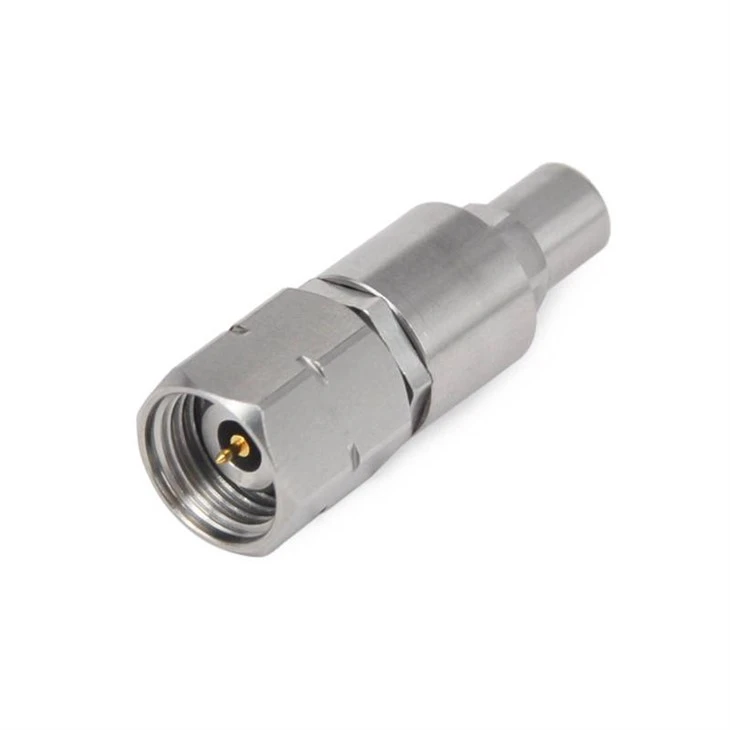

Compatibility with Different Cable Types
Coaxial Cables
Coaxial cables are very commonly used with SMA adapters. There are different types of coaxial cables, such as RG - 58, RG - 316, and LMR series. RG - 58 is a popular choice for lower - power and shorter - distance applications. It has a relatively small diameter and is fairly flexible. Most SMA adapters can work well with RG - 58 cables as long as the impedance and other factors are correct. RG - 316 is a more high - performance coaxial cable with better shielding and lower loss. It's often used in more demanding RF applications. SMA adapters can also be used with RG - 316, but you need to make sure that the cable's diameter is compatible with the adapter's design.
Twin - Axial Cables
Twin - axial cables consist of two conductors that are parallel to each other. They're sometimes used in high - speed data transmission applications. While it's less common to use SMA adapters with twin - axial cables, it is possible in some cases. However, you need to pay extra attention to the impedance and signal integrity because twin - axial cables have different electrical characteristics compared to coaxial cables.
Fiber Optic Cables
Fiber optic cables are used for high - speed, long - distance data transmission. SMA adapters are not directly compatible with fiber optic cables because fiber optic cables use light to transmit data, while SMA adapters are designed for electrical signals. But in some hybrid systems where there is a need to convert between optical and electrical signals, there are special transceivers that can be used in combination with SMA adapters.
Conclusion
So, to answer the question "Are SMA Adapters compatible with all types of cables?", the answer is no. SMA adapters have specific requirements in terms of impedance, connector type, frequency range, and other factors. While they can be used with a wide variety of cables, especially coaxial cables, there are many cases where compatibility issues can arise.
If you're in the market for SMA adapters and are unsure about which cables they'll work with, don't hesitate to reach out. We have a team of experts who can help you find the right combination of adapters and cables for your specific application. Whether you're setting up a small Wi - Fi network or a large - scale RF testing facility, we can provide you with the best solutions. Let's have a chat and discuss your needs so we can get you the right products for your project.
References
- "RF and Microwave Circuit Design for Wireless Applications" by Chris Bowick
- "Coaxial Cable Handbook" by ARRL (American Radio Relay League)


