

Can horn antennas be used in aerospace applications?
Leave a message

Hey there! As a supplier of Horn Antennas, I often get asked whether these nifty devices can be used in aerospace applications. Well, let's dive right in and explore this topic.
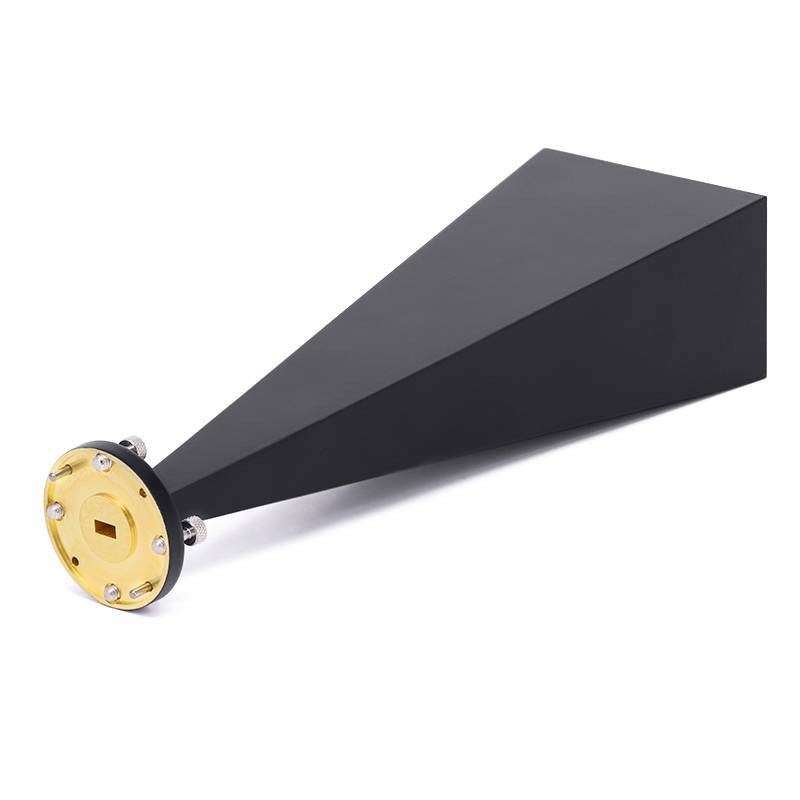
First off, what are horn antennas? Horn antennas are a type of aperture antenna. They're basically a waveguide that flares out in a horn-like shape at one end. This flared design helps in efficient radiation and reception of electromagnetic waves. You can check out more about them on our Horn Antennas page.
Now, let's talk about aerospace applications. The aerospace industry is super demanding. It requires equipment that can withstand extreme conditions, operate with high precision, and be reliable as heck. So, can horn antennas meet these tough requirements?
One of the key aspects in aerospace is communication. Whether it's between a spacecraft and the ground station or between different parts of an aircraft, clear and strong communication is a must. Horn antennas are great for this. They have a relatively wide bandwidth, which means they can transmit and receive a wide range of frequencies. This is crucial in aerospace where different types of signals need to be sent and received, like telemetry data, voice communication, and video feeds.
For example, in satellite communication, horn antennas can be used on the satellites themselves as well as on the ground stations. On the satellite, they can be pointed towards the Earth to send and receive data. Their directional properties are really useful here. They can focus the radio waves in a specific direction, which helps in reducing interference from other sources and increasing the signal strength at the receiving end.
Another important application is in radar systems. Radar is used in aerospace for various purposes, such as detecting other aircraft, mapping the terrain, and weather monitoring. Horn antennas can be part of radar transmitters and receivers. Their ability to radiate high-power signals in a controlled pattern makes them suitable for radar applications. They can help in accurately detecting objects at long distances and providing detailed information about their position and movement.
When it comes to the harsh environment of space, horn antennas have some advantages. They're relatively simple in design compared to some other types of antennas. This simplicity means fewer components that can fail, which is a big plus in a situation where maintenance is almost impossible. Also, they can be made from materials that can withstand the extreme temperatures, radiation, and vacuum conditions of space.
In aircraft, horn antennas can be used for in-flight communication systems. They can be installed on the exterior of the aircraft to communicate with air traffic control and other aircraft. Their small size and relatively lightweight nature make them a good choice for aircraft applications, where weight and space are always at a premium.
However, there are also some challenges. One of the main challenges is the size. In some aerospace applications, space is extremely limited. While horn antennas can be made in different sizes, in some cases, their size might be a bit too large. For example, on small satellites or unmanned aerial vehicles (UAVs), finding enough space to install a horn antenna can be a problem.
Another challenge is the cost. Developing horn antennas that can meet the strict requirements of aerospace applications can be expensive. The materials used, the manufacturing processes, and the testing procedures all add to the cost. But, in the long run, the reliability and performance they offer might outweigh the initial cost.
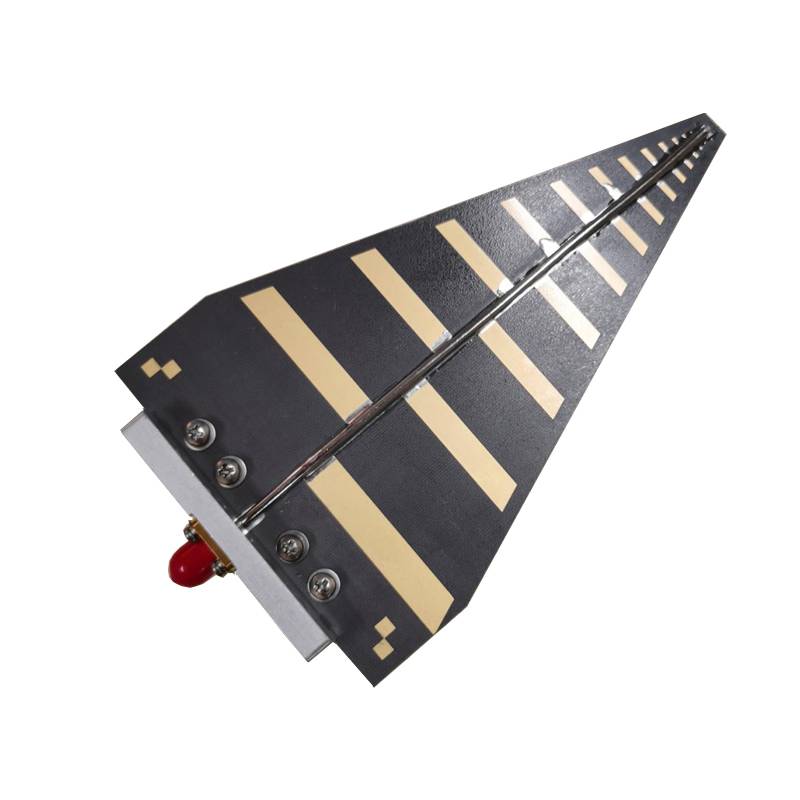
Now, let's compare horn antennas with other types of antennas. One type of antenna that is often mentioned in the same breath is the log-periodic antenna. Log-periodic antennas have a different design and operating principle. They're known for their wide frequency range and relatively constant radiation pattern over that range. You can learn more about them on our Log-periodic Antennas page.
Compared to log-periodic antennas, horn antennas have better directional properties. They can focus the signal more precisely in a specific direction, which can be an advantage in some aerospace applications where you need to communicate with a specific target. On the other hand, log-periodic antennas might be more suitable in situations where you need to cover a very wide frequency range without the need for a highly directional signal.
In conclusion, horn antennas definitely have a place in aerospace applications. Their unique properties make them suitable for communication, radar, and other systems in both satellites and aircraft. While there are some challenges, with the right design and engineering, these challenges can be overcome.
If you're in the aerospace industry and are looking for high-quality horn antennas, we're here to help. We have a wide range of horn antennas that can be customized to meet your specific requirements. Whether you need an antenna for a small UAV or a large satellite, we can work with you to find the best solution. So, don't hesitate to reach out and start a conversation about your antenna needs. We're ready to partner with you and provide the antennas that will help your aerospace projects succeed.
References
- Balanis, C. A. (2016). Antenna Theory: Analysis and Design. Wiley.
- Kraus, J. D., & Marhefka, R. J. (2002). Antennas for All Applications. McGraw-Hill.


