
Can SMA Adapters be used in RF test equipment?
Leave a message

Can SMA Adapters be used in RF test equipment?
Introduction
In the realm of radio frequency (RF) technology, the choice of appropriate connectors and adapters is crucial for achieving accurate and reliable test results. Among the various types of RF adapters available in the market, SMA (SubMiniature version A) adapters are widely recognized and commonly used. As a trusted SMA Adapter supplier, I am often asked whether SMA adapters can be used in RF test equipment. In this blog post, we will explore the technical aspects, advantages, limitations, and considerations of using SMA adapters in RF test equipment.
Technical Features of SMA Adapters
SMA adapters are small, threaded RF connectors that operate at frequencies up to 18 GHz, with some high - performance variants capable of reaching frequencies up to 26.5 GHz. They offer a 50 - ohm impedance, which is a standard in many RF systems. The threaded coupling mechanism of SMA adapters provides a secure connection, reducing the risk of signal loss due to loose connections during testing.
The design of SMA adapters also allows for relatively low insertion loss and return loss. Insertion loss refers to the amount of signal power that is lost when passing through the adapter, while return loss measures the amount of signal that is reflected back from the adapter. Low values of insertion and return losses are essential for accurate RF testing, as they ensure that the test equipment measures the true characteristics of the device under test (DUT) without significant interference from the adapter itself.
Advantages of Using SMA Adapters in RF Test Equipment
Cost - Effectiveness
SMA adapters are generally more affordable compared to some other high - precision RF connectors, such as 3.5mm Adapter and 2.92mm Adapter. This makes them an attractive option for budget - conscious RF test setups, especially for applications where extremely high - frequency performance is not required. For example, in educational institutions or small - scale RF testing laboratories, SMA adapters can provide a cost - effective solution for basic RF testing tasks.
Wide Availability
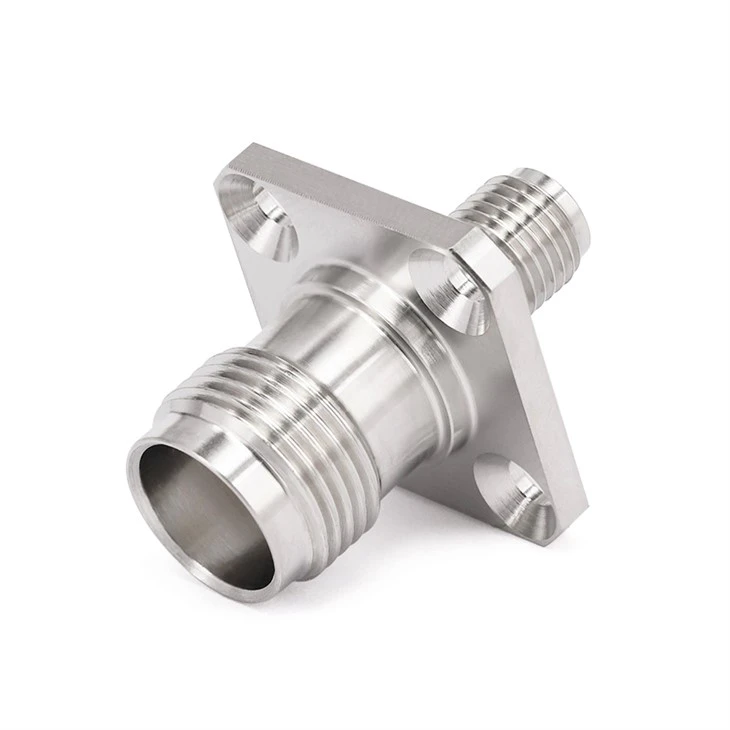
One of the significant advantages of SMA adapters is their wide availability in the market. As a SMA Adapter supplier, I can attest to the fact that SMA adapters come in a variety of configurations, including straight, right - angle, and bulkhead styles. This wide range of options allows users to easily find the appropriate adapter for their specific test equipment and setup requirements. Whether it is for connecting a RF generator to a spectrum analyzer or for interfacing a DUT with a test fixture, SMA adapters can be readily sourced.
Compatibility
SMA adapters are compatible with many different types of RF components and equipment. They can be used with SMA - enabled RF cables, RF modules, and test devices. This compatibility simplifies the process of building or modifying RF test setups. For instance, if a technician needs to change the input or output interface of a RF amplifier for testing purposes, they can easily use an SMA adapter to make the connection without the need for complex modifications to the equipment.
Limitations of SMA Adapters in RF Test Equipment
Frequency Limitations
While SMA adapters can operate up to 18 GHz or even 26.5 GHz in high - performance versions, they may not be suitable for extremely high - frequency applications. In modern RF test scenarios, especially in the millimeter - wave frequency bands (e.g., 30 GHz and above), the performance of SMA adapters degrades significantly. At these high frequencies, the insertion and return losses increase, and the electrical characteristics of the adapter become less predictable. This can lead to inaccurate test results and unreliable measurements. In such cases, more advanced connectors like 3.5mm Adapter or 2.92mm Adapter are typically preferred.
Mechanical Durability
The small size of SMA adapters can also be a disadvantage in terms of mechanical durability. The threaded coupling mechanism, although providing a secure connection, can be prone to damage if not handled properly. Over - tightening or using excessive force during installation can cause the threads to strip or the connector body to crack. In addition, repeated mating and unmating of SMA adapters can lead to wear and tear, which can affect the electrical performance of the adapter over time.
Considerations for Using SMA Adapters in RF Test Equipment
Application Requirements
The first consideration when deciding whether to use SMA adapters in RF test equipment is the specific application requirements. If the test is being conducted at relatively low frequencies (e.g., below 10 GHz) and the budget is limited, SMA adapters can be a suitable choice. However, for high - frequency applications or when high - precision measurements are required, it is advisable to evaluate other connector options.

Test Environment
The test environment also plays a crucial role in the selection of SMA adapters. In a laboratory setting where the test equipment is handled with care and the environment is relatively stable, SMA adapters can perform well. However, in harsh industrial environments or in outdoor testing scenarios, where the adapters may be exposed to vibrations, dust, or moisture, the mechanical and electrical performance of SMA adapters may be affected. In such cases, additional protective measures or more robust connector designs may be necessary.
Compatibility with Other Components
It is essential to ensure that the SMA adapters are compatible with all other components in the RF test setup. This includes checking the impedance matching between the adapter, the test equipment, and the DUT. Mismatched impedance can lead to signal reflections and inaccurate test results. Additionally, the physical dimensions and mounting requirements of the adapter must be compatible with the test equipment and the overall test setup.
Conclusion
In conclusion, SMA adapters can be used in RF test equipment in many cases, especially for applications with relatively low - frequency requirements and cost - sensitive budgets. They offer several advantages, such as cost - effectiveness, wide availability, and compatibility with a variety of RF components. However, they also have limitations, particularly in high - frequency applications and in terms of mechanical durability.
As a SMA Adapter supplier, I understand the importance of choosing the right adapter for your RF test needs. If you are unsure whether SMA adapters are suitable for your specific test setup, I encourage you to reach out to us for expert advice. We can help you evaluate your requirements and recommend the most appropriate adapter options. Whether you are a researcher, an engineer, or a technician involved in RF testing, making the right choice of adapter can significantly improve the accuracy and reliability of your test results. So, don't hesitate to contact us for further information and to discuss your procurement needs.
References
- Pozar, D. M. (2011). Microwave Engineering (4th ed.). Wiley.
- Golio, M. (Ed.). (2008). The RF and Microwave Handbook. CRC Press.


