

How do DC blocks protect circuits from DC interference?
Leave a message

DC interference can pose significant challenges to electronic circuits, affecting their performance and reliability. As a trusted DC blocks supplier, we understand the critical role these components play in safeguarding circuits. In this blog, we'll explore how DC blocks protect circuits from DC interference, delving into their working principles, applications, and the benefits they offer.
Understanding DC Interference
DC interference refers to the presence of direct current or unwanted DC offsets in a circuit where only alternating current (AC) signals are desired. This interference can arise from various sources, such as power supply fluctuations, electromagnetic coupling, or improper grounding. When DC interference occurs in a circuit, it can cause several problems. For instance, it can shift the operating point of active components like transistors, leading to distortion of AC signals. This distortion can degrade the quality of audio, video, and data signals, affecting the overall performance of the system. Additionally, DC interference can also cause excessive power dissipation in components, reducing their lifespan and increasing the risk of failures.
How DC Blocks Work
DC blocks are electronic components designed to block DC signals while allowing AC signals to pass through. They achieve this by utilizing the principle of capacitance. A capacitor has the property of blocking DC and passing AC, which makes it an ideal component for DC blocking applications.
A typical DC block consists of one or more capacitors connected in series or parallel in the signal path. When a combined DC and AC signal is applied to the input of the DC block, the capacitor presents a high impedance to the DC component, effectively blocking it. On the other hand, the capacitor offers a lower impedance to the AC component, allowing it to pass through to the output. The impedance of a capacitor (Zc) is given by the formula:
[Zc = \frac{1}{2\pi fC}]
where (f) is the frequency of the AC signal and (C) is the capacitance of the capacitor.
As the frequency of the AC signal increases, the impedance of the capacitor decreases, allowing more of the AC signal to pass. Conversely, for DC signals ((f = 0)), the impedance of the capacitor is infinite, effectively blocking the DC component.
Types of DC Blocks
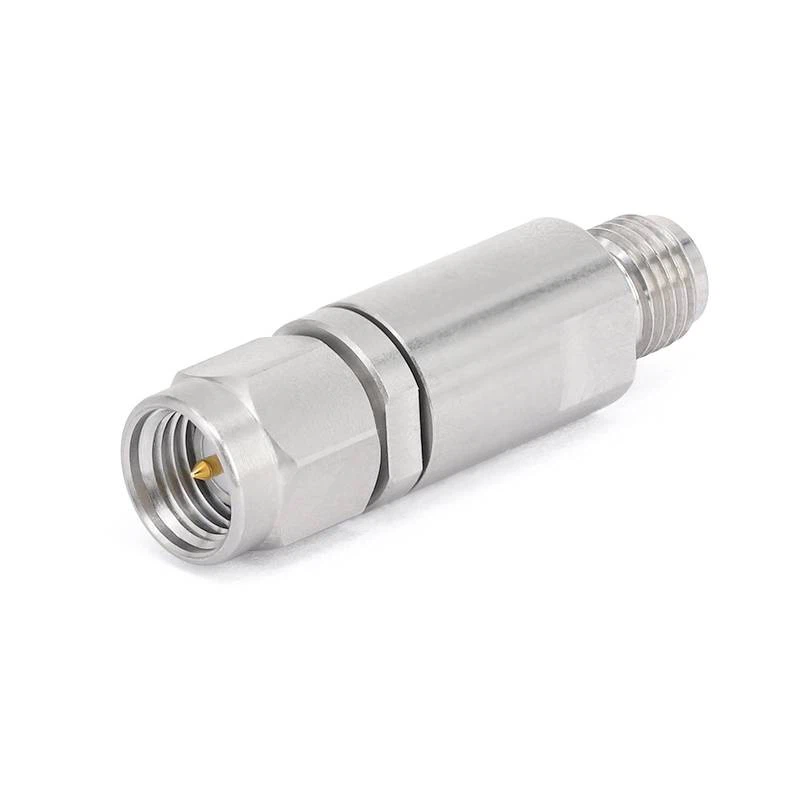
There are different types of DC blocks available, each with its own characteristics and applications. One common type is the Inner DC Blocks, which are designed for use in specific internal circuit configurations. You can find more information about Inner DC Blocks at Inner DC Blocks.
Another type is the external DC block, which is typically used as a standalone component to protect external circuits from DC interference. External DC blocks are often used in test and measurement setups, telecommunications equipment, and RF systems. They come in various package sizes and configurations to suit different application requirements.

Applications of DC Blocks
DC blocks have a wide range of applications across different industries. In telecommunications, DC blocks are used to protect communication lines from DC interference. For example, in fiber optic communication systems, DC blocks are used to isolate the optical transceiver from any DC bias present in the electrical circuitry. This helps to ensure the integrity of the high - speed data signals transmitted over the fiber.
In RF (Radio Frequency) systems, DC blocks play a crucial role in preventing DC offsets from interfering with RF signals. In RF amplifiers, DC blocks are used to couple the input and output stages, allowing the AC RF signals to pass while blocking any DC components. This helps to maintain the proper biasing of the amplifier and ensures linear operation.
In test and measurement equipment, DC blocks are used to isolate the test equipment from the DC components of the signal under test. This is particularly important when measuring small AC signals in the presence of large DC offsets. By using a DC block, the test equipment can accurately measure the AC component of the signal without being affected by the DC offset.
Benefits of Using DC Blocks
Using DC blocks in electronic circuits offers several benefits. Firstly, they improve the signal quality by eliminating DC interference. This results in cleaner, more accurate AC signals, which is essential for applications such as audio and video processing, where signal fidelity is crucial.
Secondly, DC blocks help to protect sensitive components in the circuit. By blocking DC signals, they prevent excessive power dissipation in components like transistors and integrated circuits, which can extend their lifespan and reduce the likelihood of failures. This is especially important in high - power and high - reliability applications, where component failures can be costly and disruptive.
Thirdly, DC blocks enhance the overall performance and reliability of the circuit. By reducing the effects of DC interference, they allow the circuit to operate more stably and efficiently. This can lead to improved system performance, fewer errors, and lower maintenance costs.
Selecting the Right DC Block
When selecting a DC block for a specific application, several factors need to be considered. The first factor is the capacitance value. The capacitance of the DC block should be chosen based on the frequency range of the AC signal and the desired impedance characteristics. For low - frequency applications, a larger capacitance value may be required to ensure low impedance for the AC signal.
The second factor is the voltage rating. The DC block should be able to withstand the maximum DC voltage that may be present in the circuit without breakdown. Choosing a DC block with an appropriate voltage rating is essential to ensure the long - term reliability of the circuit.
The third factor is the package size and configuration. The DC block should be available in a package that is suitable for the application space and the mounting requirements. For example, surface - mount packages are commonly used in printed circuit board (PCB) applications, while through - hole packages may be more suitable for prototyping and certain types of equipment.
Our Role as a DC Blocks Supplier
As a DC blocks supplier, we are committed to providing high - quality DC blocks that meet the diverse needs of our customers. Our products are designed and manufactured using the latest technologies and highest quality materials to ensure reliable performance and durability.
We offer a wide range of DC blocks with different capacitance values, voltage ratings, and package configurations to suit various applications. Whether you are working on a telecommunications project, an RF system, or a test and measurement setup, we have the right DC block for you.
Our team of experts is always available to provide technical support and assistance in selecting the most appropriate DC block for your specific application. We understand the importance of getting the right component for the job, and we are dedicated to helping our customers make informed decisions.
Contact Us for Procurement
If you are looking for reliable DC blocks to protect your circuits from DC interference, we invite you to contact us for procurement. We are ready to discuss your requirements and provide you with the best solutions at competitive prices. Our commitment to quality and customer satisfaction makes us the ideal partner for your DC block needs.
References
- Millman, Jacob, and Christos C. Halkias. Integrated Electronics: Analog and Digital Circuits and Systems. McGraw - Hill, 1972.
- Razavi, Behzad. Design of Analog CMOS Integrated Circuits. McGraw - Hill, 2001.
- Horowitz, Paul, and Winfield Hill. The Art of Electronics. Cambridge University Press, 2015.


