
How do phase trimmers interact with demodulators?
Leave a message

Hey there, fellow electronics enthusiasts! I'm a supplier of Phase Trimmers, and today I'm stoked to dig into the fascinating topic of how phase trimmers interact with demodulators. It might sound a bit technical at first, but I'll break it down in a way that's easy to understand.
Let's start with the basics. First off, what the heck are phase trimmers and demodulators? Phase trimmers are components that let you adjust the phase of an electrical signal. You can tweak the relationship between the voltage and current in an alternating current (AC) signal. This adjustment is super important in loads of applications, like radio communication, radar systems, and test equipment. On the other hand, demodulators are used to extract the original information from a modulated carrier signal.
When it comes to how phase trimmers and demodulators interact, it all boils down to getting the right phase relationship. In a lot of demodulation processes, the phase of the incoming signal matters big time. For example, in a coherent demodulator, the phase of the local oscillator signal has to be just right compared to the incoming modulated signal. That's where phase trimmers come in.
A phase trimmer can be used to fine - tune the phase of the local oscillator. Let's say we have an amplitude - modulated (AM) or frequency - modulated (FM) signal that's been sent through the airwaves. The demodulator needs to recover the original audio or data signal. To do this accurately, the local oscillator in the demodulator has to match the phase of the incoming carrier signal. By adjusting the phase trimmer connected to the local oscillator, we can make sure that the phase difference between the local oscillator and the incoming carrier is minimized. This results in a cleaner and more accurate demodulation process.
In an AM demodulator, the phase of the local oscillator should ideally be in sync with the carrier of the AM signal. If there's a phase difference, it can lead to distortion in the demodulated output. You might hear some really annoying noise or the audio quality might just go way down. Using a phase trimmer, we can correct this phase difference. As we turn the adjustment screw on the phase trimmer, the phase of the local oscillator changes. We can keep adjusting until the demodulated output sounds as clear as possible.
Now, let's talk about FM demodulation. FM signals have a different way of carrying information compared to AM. The frequency of the carrier varies according to the message signal. But even in FM demodulators, the phase relationship is still key. The phase - locked loop (PLL), which is often used in FM demodulators, is very sensitive to phase differences. A phase trimmer can be used to fine - tune the phase of the signal going into the PLL. This helps the PLL to lock onto the incoming FM signal more accurately. When the PLL is locked properly, it can demodulate the FM signal without any glitches, and we get a high - quality audio output.
Another important aspect is the role of phase trimmers in multi - channel demodulation systems. In these systems, multiple signals are being demodulated at the same time. Each signal might have a slightly different phase due to factors like transmission path differences or interference. By using phase trimmers for each channel, we can ensure that all the demodulated signals are in the right phase relationship with each other. This is crucial for applications like stereo audio systems, where the left and right channels need to be in sync for a proper audio experience.
Let's look at some practical considerations when using phase trimmers with demodulators. First of all, the accuracy of the phase trimmer matters. A high - quality phase trimmer with good precision can make a huge difference in the performance of the demodulator. Cheap or low - quality trimmers might not be able to provide the fine - grained adjustment needed for accurate demodulation.
Second, the stability of the phase trimmer is also important. Over time, factors like temperature changes and mechanical vibrations can cause the setting of the phase trimmer to shift. This can lead to a change in the phase relationship between the local oscillator and the incoming signal, and thus degrade the demodulation performance. So, it's always a good idea to choose a phase trimmer that has high stability under different operating conditions.
When it comes to choosing the right phase trimmer for a demodulator application, there are a few things to keep in mind. You need to consider the frequency range of the application. Different phase trimmers are designed to work well within specific frequency bands. Make sure to pick one that matches the frequency of your demodulator's operating signal. Also, look at the power handling capacity of the phase trimmer. If the signal has a high power level, the phase trimmer needs to be able to handle it without getting damaged or affecting the performance.
In addition to these technical aspects, the ease of adjustment is also a factor. You want a phase trimmer that's easy to access and adjust. Some phase trimmers come with a small screwdriver slot for manual adjustment, while others might have more advanced digital adjustment options. Depending on your application and how often you need to make adjustments, you can choose the type that suits you best.
Now, I know all this might seem a bit overwhelming, but don't worry! As a Phase Trimmers supplier, I'm here to help you out. Whether you're working on a small DIY project or a large - scale industrial application, I can provide you with the right phase trimmers for your demodulator needs. I've got a wide range of products, from basic analog phase trimmers to more advanced digital ones.
If you're in the market for phase trimmers for your demodulator projects, I'd love to have a chat with you. We can discuss your specific requirements, and I can recommend the best products for your application. Whether you need high - precision trimmers for a critical communication system or something more budget - friendly for a hobby project, I've got you covered.

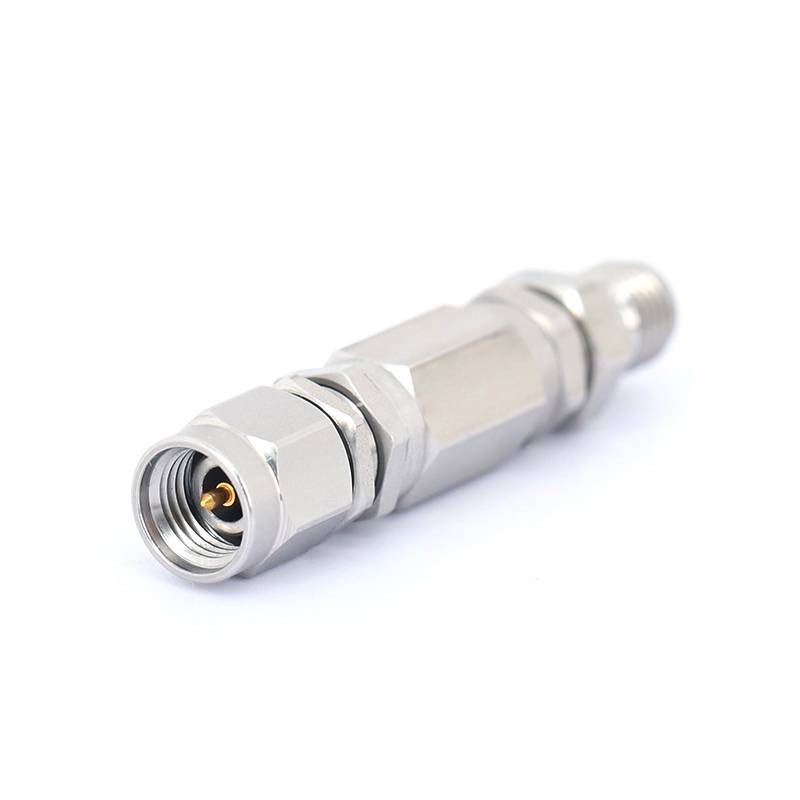
So, if you're interested, just reach out and let's start a conversation. I'm looking forward to helping you get the best performance out of your demodulators with our top - notch phase trimmers.
References
- Communication Systems: Principles, Technologies, and Applications by John Wiley & Sons
- RF and Microwave Circuit Design for Wireless Communications by Artech House
- Electronics Handbook edited by Richard C. Dorf


