

How do RF amplifiers improve the detection range of radar?
Leave a message

Hey there! As a supplier of RF amplifiers, I often get asked about how these nifty devices can improve the detection range of radar. Well, buckle up because I'm about to break it down for you in a way that's easy to understand.
First off, let's talk a bit about radar. Radar, short for Radio Detection and Ranging, is a technology that uses radio waves to detect the presence, distance, and speed of objects. It's used in a wide range of applications, from air traffic control and military surveillance to weather forecasting and automotive safety systems. The basic principle behind radar is simple: it sends out a radio wave signal, and when that signal hits an object, it bounces back to the radar receiver. By measuring the time it takes for the signal to return and the characteristics of the returned signal, the radar can figure out all sorts of information about the object.
But here's the thing: the radio wave signal that the radar sends out can weaken as it travels through the air. This is due to a variety of factors, like absorption by the atmosphere, scattering from particles in the air, and spreading out over a larger area. As the signal gets weaker, it becomes harder for the radar receiver to detect it, especially if there's a lot of background noise. And that's where RF amplifiers come in.
RF amplifiers are designed to boost the strength of radio frequency signals. They take a weak input signal and increase its power, making it stronger and easier to detect. In the context of radar, an RF amplifier can be used in two main ways: to amplify the signal before it's transmitted and to amplify the received signal.
Let's start with the transmitter side. When you use an RF amplifier to boost the power of the transmitted signal, you're essentially giving the radar a louder voice. A stronger transmitted signal can travel further through the air before it becomes too weak to detect. It can penetrate through obstacles better and reach objects that might be too far away or too small to be detected by a weaker signal. For example, in a military radar system, a high - power RF amplifier can allow the radar to detect enemy aircraft or ships at much greater distances, giving the military more time to react.

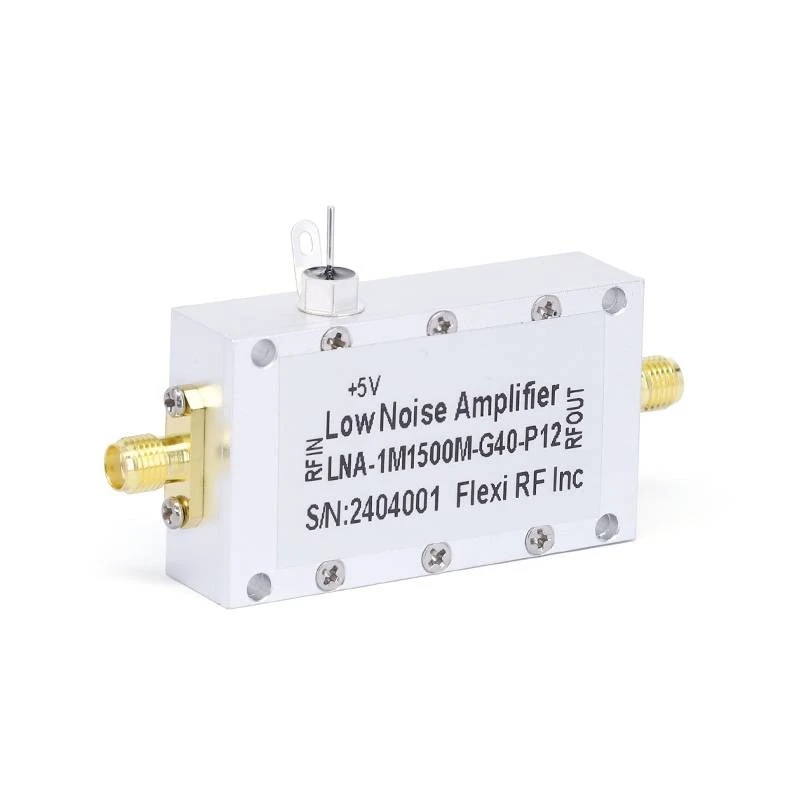
On the receiver side, an RF amplifier can be used to boost the weak signal that bounces back from the target. Even if the transmitted signal has traveled a long way and weakened significantly by the time it reaches the target and bounces back, an RF amplifier can bring that signal back up to a detectable level. This is especially important when dealing with small or distant targets, where the returned signal can be extremely weak.
One type of RF amplifier that's particularly useful in radar applications is the Low Noise Amplifiers. As the name suggests, these amplifiers are designed to add as little noise as possible to the signal while amplifying it. Noise is basically unwanted electrical signals that can interfere with the radar's ability to detect the target signal. In a radar receiver, a low - noise amplifier can be placed right at the front end, where it amplifies the weak incoming signal before any other components in the receiver can add their own noise. This helps to improve the signal - to - noise ratio, which is a measure of how much of the received signal is the actual target signal and how much is noise. A higher signal - to - noise ratio means that the radar can more accurately detect and analyze the target signal, even in noisy environments.
Another important factor in improving the detection range of radar is the gain of the RF amplifier. Gain is simply a measure of how much an amplifier can increase the power of a signal. An amplifier with a high gain can take a very weak signal and turn it into a much stronger one. However, it's not just about having a high gain. The amplifier also needs to have a flat gain response over the frequency range of the radar signal. This means that it should amplify all frequencies in the radar signal equally, so that the shape and characteristics of the signal are preserved. If the gain varies too much across the frequency range, it can distort the signal and make it harder for the radar to accurately detect and analyze the target.
In addition to gain and low noise performance, the linearity of the RF amplifier is also crucial. Linearity refers to how well the amplifier can amplify the signal without introducing distortion. In a radar system, a non - linear amplifier can generate unwanted harmonics and intermodulation products, which can interfere with the radar's operation and reduce its detection range. A linear RF amplifier ensures that the amplified signal is a faithful reproduction of the original signal, allowing the radar to accurately detect and analyze the target.
Now, you might be wondering how all these technical details translate into real - world improvements in radar detection range. Well, let's look at an example. Suppose you have a radar system that's used for detecting small boats in a coastal area. Without an RF amplifier, the radar might only be able to detect boats that are within a few kilometers of the radar station. But if you add a high - power, low - noise, and linear RF amplifier to the transmitter and receiver, you could potentially increase the detection range to tens of kilometers. This gives the coast guard or other monitoring agencies more time to respond to any potential threats or emergencies.
In the automotive industry, RF amplifiers are also playing a crucial role in improving the detection range of radar systems used in advanced driver - assistance systems (ADAS). These systems rely on radar to detect other vehicles, pedestrians, and obstacles on the road. By using RF amplifiers to boost the strength of the radar signals, the detection range can be increased, giving the vehicle more time to react and avoid collisions. This is especially important at high speeds, where a longer detection range can mean the difference between a safe stop and a serious accident.
So, as you can see, RF amplifiers are essential components for improving the detection range of radar. They offer a cost - effective and efficient way to enhance the performance of radar systems in a wide range of applications. Whether you're in the military, aviation, automotive, or any other industry that relies on radar technology, investing in high - quality RF amplifiers can make a big difference.
If you're interested in learning more about our RF amplifiers or are looking to purchase them for your radar system, I'd love to have a chat with you. We have a wide range of RF amplifiers to suit different needs and budgets, and our team of experts can help you find the perfect solution for your specific application. Just reach out to us, and we'll be happy to assist you in your procurement process.
References
- Skolnik, M. I. (2008). Introduction to Radar Systems. McGraw - Hill.
- Pozar, D. M. (2011). Microwave Engineering. Wiley.
- Razavi, B. (2011). RF Microelectronics. Prentice Hall.


