
How does the bandwidth affect the performance of an RF amplifier?
Leave a message

Hey there! As a supplier of RF amplifiers, I've seen firsthand how crucial bandwidth is when it comes to the performance of these devices. In this blog, I'll break down how bandwidth affects an RF amplifier's performance and why it matters for your applications.
What is Bandwidth in an RF Amplifier?
Before we dive into how bandwidth impacts performance, let's quickly define what bandwidth is in the context of an RF amplifier. Bandwidth refers to the range of frequencies over which an amplifier can operate effectively. It's usually measured in hertz (Hz) and represents the difference between the highest and lowest frequencies that the amplifier can handle while maintaining a certain level of performance.
For example, if an amplifier has a bandwidth of 1 GHz to 2 GHz, it means it can amplify signals within that frequency range. Outside of this range, the amplifier's performance may degrade, and it might not be able to amplify the signals as effectively.
How Bandwidth Affects Gain
One of the most significant ways bandwidth affects an RF amplifier is through its impact on gain. Gain is the measure of how much an amplifier can increase the power of an input signal. In general, as the bandwidth of an amplifier increases, its gain tends to decrease.
This is because amplifiers are designed with specific components and circuits that are optimized for a particular frequency range. When you try to increase the bandwidth, you're essentially asking the amplifier to work over a wider range of frequencies. This requires the amplifier to be more flexible, and as a result, the gain that it can achieve over that entire range is reduced.
Let's say you're using an RF amplifier for a specific application that requires a high gain at a particular frequency. If you choose an amplifier with a very wide bandwidth, you might find that the gain at your desired frequency is lower than you need. On the other hand, if you choose an amplifier with a narrow bandwidth that is centered around your desired frequency, you can achieve a higher gain.
Impact on Noise Figure
Another important performance parameter that is affected by bandwidth is the noise figure. The noise figure is a measure of how much noise an amplifier adds to the input signal. A lower noise figure means that the amplifier adds less noise to the signal, which is desirable in most applications.
As the bandwidth of an amplifier increases, the noise figure also tends to increase. This is because a wider bandwidth allows more noise to enter the amplifier. The amplifier has to amplify both the signal and the noise, and as the bandwidth gets wider, there is more noise available to be amplified.
For applications where low noise is critical, such as in radio astronomy or wireless communication systems, it's important to choose an amplifier with a narrow bandwidth. This will help to keep the noise figure low and ensure that the signal remains clear and strong.
Linearity and Bandwidth
Linearity is another key performance aspect of an RF amplifier. A linear amplifier is one that amplifies the input signal without distorting it. In other words, the output signal is a scaled version of the input signal.
Bandwidth can have a significant impact on the linearity of an amplifier. As the bandwidth increases, it becomes more challenging for the amplifier to maintain linearity. This is because different frequencies within the bandwidth may interact with each other in non - linear ways, causing distortion in the output signal.
For applications that require high linearity, such as in wireless base stations or satellite communication systems, it's important to carefully consider the bandwidth of the amplifier. You may need to choose an amplifier with a more limited bandwidth to ensure that the output signal remains linear.
Choosing the Right Bandwidth for Your Application
Now that we've seen how bandwidth affects the performance of an RF amplifier, how do you choose the right bandwidth for your application? Well, it all depends on your specific requirements.
If you're working on an application that requires high gain and low noise at a specific frequency, you might want to choose an amplifier with a narrow bandwidth. For example, if you're using an RF amplifier in a radar system that operates at a fixed frequency, a narrow - bandwidth amplifier can provide the high gain and low noise performance you need.
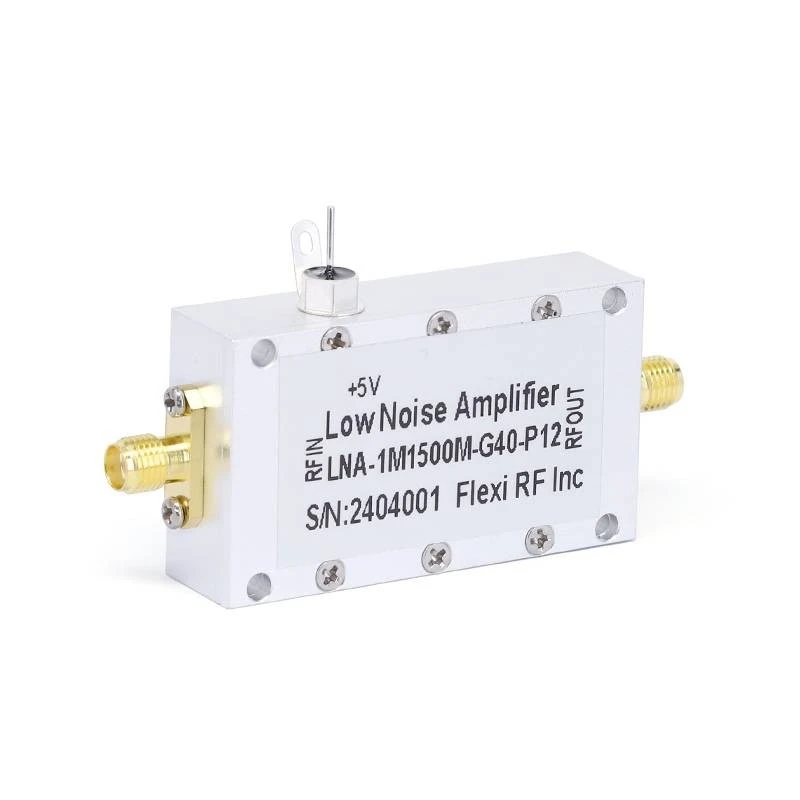
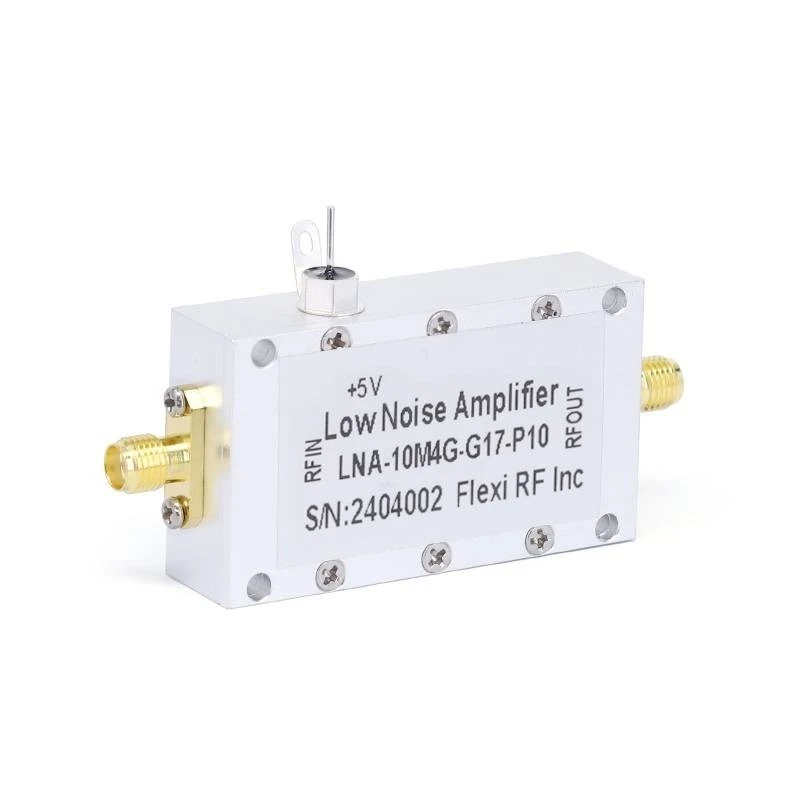
On the other hand, if your application requires the amplifier to handle a wide range of frequencies, such as in a broadband communication system, you'll need an amplifier with a wider bandwidth. However, you'll have to accept the trade - offs in terms of gain, noise figure, and linearity.
At our company, we offer a wide range of RF amplifiers with different bandwidths to meet your specific needs. For instance, we have 50GHz Low Noise Amplifiers that are designed for high - frequency applications where low noise is crucial. Our 170GHz Low Noise Amplifiers are suitable for extremely high - frequency applications, and our 40GHz Low Noise Amplifiers offer a good balance between frequency range and performance.
Conclusion
In conclusion, bandwidth plays a vital role in determining the performance of an RF amplifier. It affects gain, noise figure, and linearity, and choosing the right bandwidth is crucial for the success of your application.
If you're in the market for an RF amplifier and need help choosing the right one for your specific requirements, don't hesitate to reach out. We're here to assist you in finding the perfect amplifier that meets your needs and provides the best performance. Whether you need a narrow - bandwidth amplifier for high - gain applications or a wide - bandwidth amplifier for broadband systems, we've got you covered.
References
- Pozar, D. M. (2011). Microwave Engineering. Wiley.
- Razavi, B. (2012). RF Microelectronics. Prentice Hall.


