
How does the input voltage affect the performance of SMA attenuators?
Leave a message

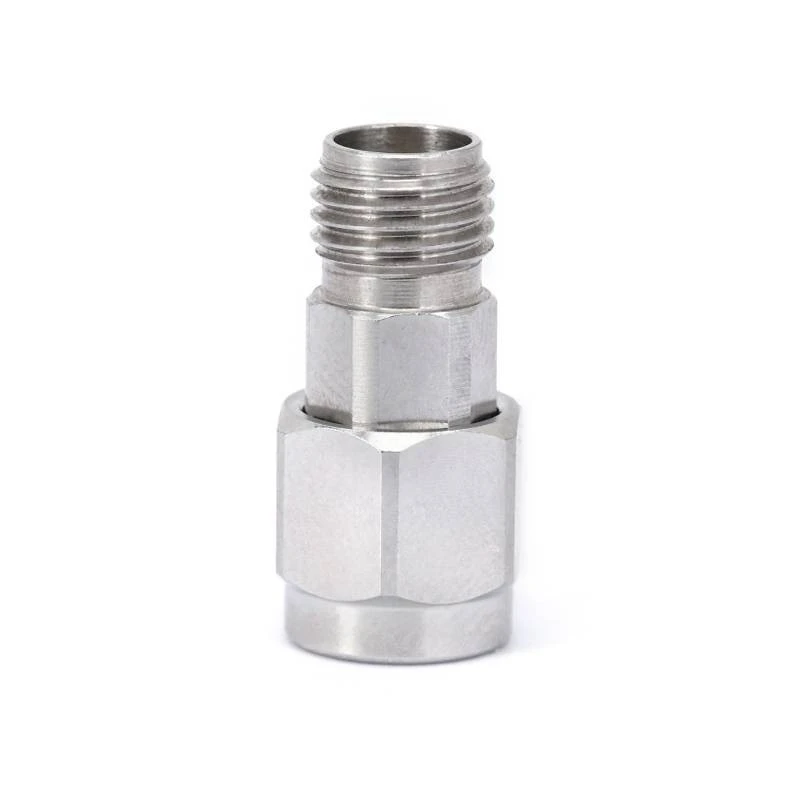
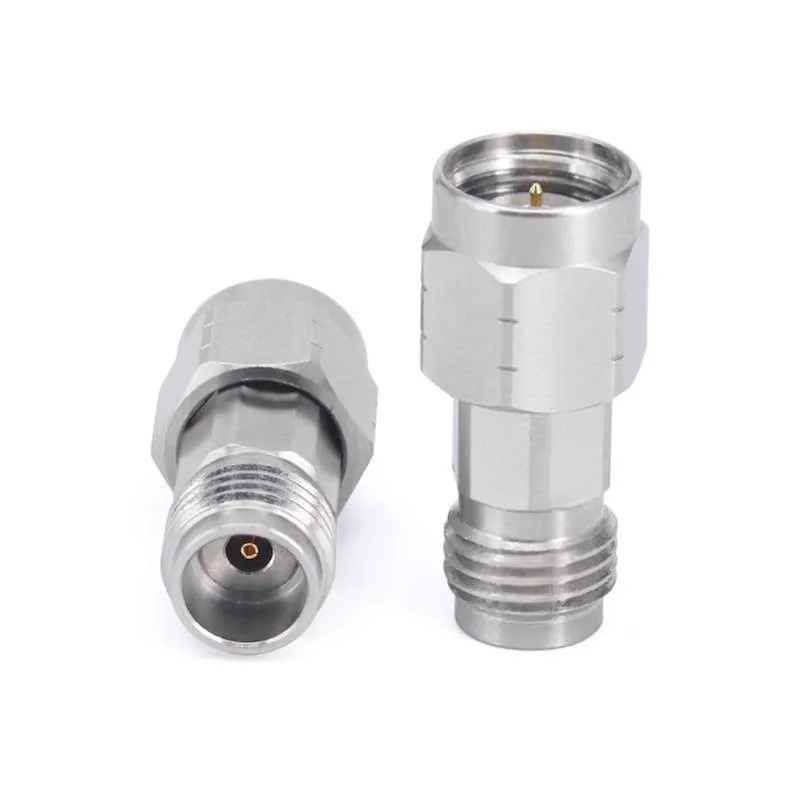
As a supplier of SMA attenuators, I've witnessed firsthand the critical role that input voltage plays in the performance of these essential RF components. SMA attenuators are widely used in various applications, from telecommunications to aerospace, to control the power level of RF signals. Understanding how input voltage affects their performance is crucial for engineers and technicians to ensure optimal system operation.
Basic Principles of SMA Attenuators
Before delving into the impact of input voltage, let's briefly review the basic principles of SMA attenuators. An SMA attenuator is a passive device that reduces the power of an RF signal without significantly distorting its waveform. It works by dissipating a portion of the input power as heat, typically using a resistive network. The attenuation level is usually specified in decibels (dB) and indicates the ratio of the input power to the output power.
Impact of Input Voltage on Attenuation Accuracy
One of the primary concerns when it comes to input voltage is its effect on attenuation accuracy. In an ideal world, an SMA attenuator would provide a constant attenuation level regardless of the input voltage. However, in reality, the attenuation accuracy can be affected by changes in input voltage, especially at high power levels.
At low input voltages, the attenuation accuracy of an SMA attenuator is typically very good. The resistive elements in the attenuator operate within their linear range, and the attenuation level remains relatively stable. However, as the input voltage increases, the resistive elements may start to exhibit non-linear behavior, leading to deviations from the specified attenuation level.
This non-linear behavior can be caused by several factors, including self-heating of the resistive elements, changes in the resistance value due to temperature variations, and the breakdown of the insulating materials. These effects can result in a decrease in attenuation accuracy, especially at high frequencies where the non-linear behavior becomes more pronounced.
Power Handling Capacity and Input Voltage
Another important aspect to consider is the power handling capacity of SMA attenuators. The power handling capacity is the maximum amount of power that an attenuator can safely dissipate without being damaged. It is typically specified in watts (W) and depends on various factors, such as the design of the attenuator, the materials used, and the operating temperature.
The input voltage directly affects the power dissipated in the attenuator. According to the power formula P = V^2 / R (where P is power, V is voltage, and R is resistance), an increase in input voltage will result in a proportional increase in power dissipation. Therefore, it is essential to ensure that the input voltage does not exceed the power handling capacity of the attenuator to prevent overheating and damage.
When selecting an SMA attenuator, it is crucial to consider the expected input voltage and power levels in the application. Choosing an attenuator with a higher power handling capacity than required can provide a safety margin and ensure reliable operation, especially in high-power applications.
Signal Distortion and Input Voltage
In addition to attenuation accuracy and power handling capacity, input voltage can also affect the signal distortion characteristics of SMA attenuators. Signal distortion refers to any unwanted changes in the waveform of the RF signal, such as amplitude distortion, phase distortion, or harmonic distortion.
At low input voltages, the signal distortion introduced by an SMA attenuator is typically minimal. The resistive elements in the attenuator operate within their linear range, and the signal waveform remains relatively unchanged. However, as the input voltage increases, the non-linear behavior of the resistive elements can cause signal distortion, especially at high frequencies.
Amplitude distortion occurs when the attenuation level varies with the input signal amplitude. This can result in a change in the shape of the signal waveform, leading to errors in the received signal. Phase distortion, on the other hand, occurs when the phase of the signal is affected by the attenuator. This can cause problems in applications where phase accuracy is critical, such as in phase-locked loops and communication systems.
Harmonic distortion is another type of signal distortion that can occur at high input voltages. Harmonics are unwanted frequency components that are integer multiples of the fundamental frequency of the signal. When the input voltage exceeds the linear range of the attenuator, the resistive elements can generate harmonics, which can interfere with other signals in the system and degrade the overall performance.
Thermal Considerations
Input voltage also has a significant impact on the thermal performance of SMA attenuators. As mentioned earlier, an increase in input voltage leads to an increase in power dissipation, which in turn generates heat. If the heat is not dissipated effectively, it can cause the temperature of the attenuator to rise, leading to various problems, such as reduced attenuation accuracy, signal distortion, and even permanent damage to the attenuator.
To ensure proper thermal management, SMA attenuators are typically designed with heat sinks or other cooling mechanisms to dissipate the heat generated during operation. The effectiveness of these cooling mechanisms depends on various factors, such as the size and design of the heat sink, the ambient temperature, and the airflow around the attenuator.
It is important to note that the thermal performance of an SMA attenuator can also be affected by the input voltage waveform. For example, a pulsed input voltage with a high peak power can cause more heat generation than a continuous wave (CW) input voltage with the same average power. Therefore, when using SMA attenuators in pulsed applications, it is necessary to consider the peak power and duty cycle of the input voltage to ensure proper thermal management.
Applications and Considerations
The impact of input voltage on the performance of SMA attenuators has significant implications for various applications. In telecommunications, for example, SMA attenuators are used in base stations, mobile phones, and other communication devices to control the power level of RF signals. In these applications, it is crucial to ensure accurate attenuation and low signal distortion to maintain the quality of the communication link.
In aerospace and defense applications, SMA attenuators are used in radar systems, electronic warfare equipment, and satellite communication systems. These applications often require high-power handling capacity and excellent signal integrity, making the selection of the right SMA attenuator critical.
When selecting an SMA attenuator for a specific application, it is important to consider the expected input voltage, power levels, frequency range, and other requirements. It is also recommended to consult with the attenuator manufacturer or a technical expert to ensure that the selected attenuator meets the specific needs of the application.
Related Products
In addition to SMA attenuators, we also offer a wide range of other RF attenuators, including 2.4mm Attenuators, 2.92mm Attenuators, and 1.85mm Attenuators. These attenuators are designed to meet the high-performance requirements of various RF applications and offer excellent attenuation accuracy, low signal distortion, and high power handling capacity.
Conclusion
In conclusion, the input voltage has a significant impact on the performance of SMA attenuators. It affects the attenuation accuracy, power handling capacity, signal distortion characteristics, and thermal performance of the attenuator. Understanding these effects is crucial for engineers and technicians to ensure optimal system operation and reliable performance.
When selecting an SMA attenuator, it is important to consider the expected input voltage, power levels, frequency range, and other requirements of the application. Choosing the right attenuator with the appropriate power handling capacity and attenuation accuracy can help to minimize the impact of input voltage on the performance of the system.
If you have any questions or need further information about SMA attenuators or our other RF products, please feel free to contact us. We are a leading supplier of RF components and can provide you with the expertise and support you need to select the right products for your application.
References
- Pozar, D. M. (2011). Microwave Engineering (4th ed.). Wiley.
- Collin, R. E. (2001). Foundations for Microwave Engineering (2nd ed.). Wiley.
- Vendelin, G. D., Pavio, A. M., & Rohde, U. L. (1990). Microwave Circuit Design Using Linear and Nonlinear Techniques. Wiley.


