

How to calculate the dimensions of a horn antenna?
Leave a message

Hey there! I'm with a Horn Antennas supplier, and today I wanna talk about how to calculate the dimensions of a horn antenna. It's a topic that's super important if you're into antennas, whether you're a hobbyist or a professional in the field.
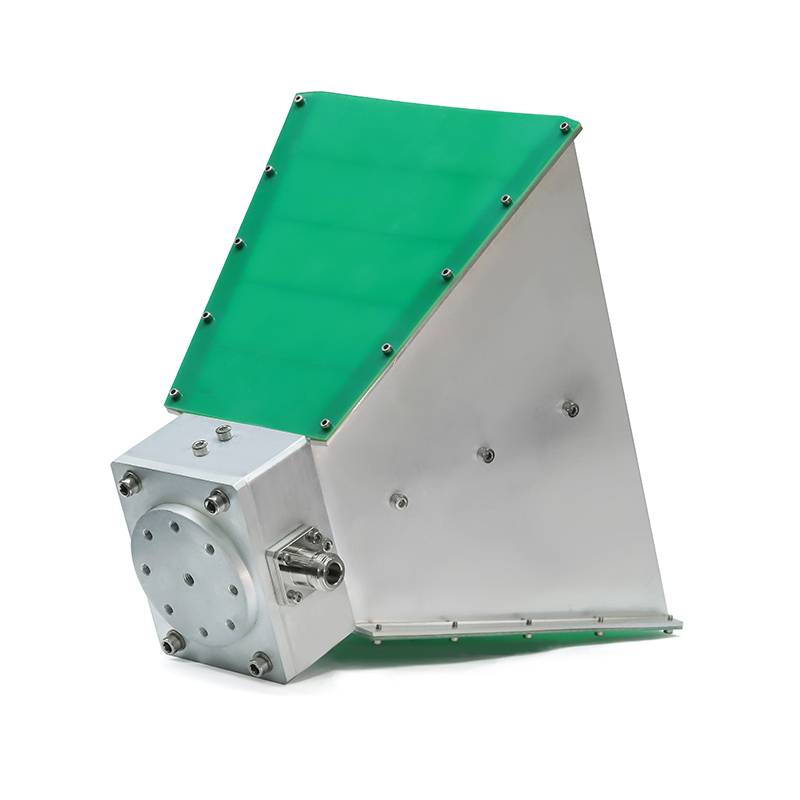
First off, let's understand what a horn antenna is. It's basically an antenna that flares out in the shape of a horn. This flared design helps in directing the radio waves more efficiently. Horn antennas are used in a bunch of applications, like radar systems, satellite communication, and microwave testing.
The Basics of Horn Antenna Dimensions
When we talk about the dimensions of a horn antenna, there are a few key measurements we need to consider. These include the length of the horn, the aperture dimensions (the opening at the end of the horn), and the flare angle. Each of these dimensions plays a crucial role in determining the antenna's performance.
Aperture Dimensions
The aperture dimensions are super important as they affect the antenna's gain and radiation pattern. The gain of an antenna is a measure of how well it can focus the radio waves in a particular direction. A larger aperture generally means higher gain.
To calculate the aperture dimensions, we usually start with the operating frequency of the antenna. The wavelength (λ) of the radio wave at the operating frequency is given by the formula:
λ = c / f
where c is the speed of light (approximately 3 x 10^8 m/s) and f is the operating frequency.
For a rectangular horn antenna, the aperture dimensions (a and b) are often related to the wavelength. A common rule of thumb is that the longer side of the aperture (a) should be around 2 - 3 times the wavelength, and the shorter side (b) should be around 1 - 2 times the wavelength. But this can vary depending on the specific requirements of the application.
For example, if we're working at a frequency of 10 GHz, the wavelength is:
λ = (3 x 10^8 m/s) / (10 x 10^9 Hz) = 0.03 m = 3 cm
So, a good starting point for the aperture dimensions could be a = 2λ = 6 cm and b = λ = 3 cm.
Flare Angle
The flare angle of the horn also affects the antenna's performance. A smaller flare angle results in a more gradual transition of the radio waves from the waveguide (the part that feeds the horn) to the free space. This can lead to lower reflections and better impedance matching.
The flare angle (θ) can be calculated based on the length of the horn (L) and the aperture dimensions. For a rectangular horn, the flare angle in the E - plane (the plane where the electric field is polarized) and H - plane (the plane where the magnetic field is polarized) can be calculated using trigonometry.
In the E - plane, if the aperture dimension in the E - plane is a and the length of the horn is L, the flare angle θ_E is given by:
tan(θ_E/2) = (a/2) / L
Similarly, in the H - plane, if the aperture dimension in the H - plane is b and the length of the horn is L, the flare angle θ_H is given by:
tan(θ_H/2) = (b/2) / L

Length of the Horn
The length of the horn is another important dimension. A longer horn generally provides better impedance matching and a more uniform radiation pattern. However, it also makes the antenna larger and more expensive.
The length of the horn can be calculated based on the desired flare angle and the aperture dimensions. Rearranging the equations for the flare angle, we can get the length of the horn. For example, in the E - plane:
L = (a/2) / tan(θ_E/2)
Different Types of Horn Antennas and Their Dimension Calculations
There are different types of horn antennas, like rectangular horn antennas, pyramidal horn antennas, and conical horn antennas. Each type has its own way of calculating the dimensions.
Rectangular Horn Antennas
As we've already discussed, for rectangular horn antennas, we calculate the aperture dimensions based on the wavelength and then use trigonometry to calculate the flare angle and the length of the horn.
Pyramidal Horn Antennas
A pyramidal horn antenna is a combination of two rectangular horns flared in both the E - plane and the H - plane. The calculations for the aperture dimensions, flare angles, and length are similar to those for rectangular horn antennas, but we need to consider both planes separately.
Conical Horn Antennas
Conical horn antennas have a circular aperture. The aperture diameter (D) is related to the wavelength, similar to the rectangular aperture dimensions. A common rule of thumb is that the aperture diameter should be around 2 - 3 times the wavelength.
The flare angle of a conical horn is defined as the angle between the axis of the horn and the side of the horn. The length of the conical horn can be calculated using trigonometry based on the flare angle and the aperture diameter.
Practical Considerations
When calculating the dimensions of a horn antenna, there are some practical considerations we need to keep in mind.
Manufacturing Tolerances
In real - world manufacturing, there are always some tolerances. The actual dimensions of the horn antenna may deviate slightly from the calculated values. These tolerances can affect the antenna's performance, so it's important to choose a manufacturing process that can achieve the required accuracy.
Frequency Range
The calculated dimensions are usually optimized for a specific operating frequency. However, in many applications, the antenna needs to work over a range of frequencies. In such cases, we need to use techniques like broadband matching to ensure good performance over the entire frequency range.
Why Choose Our Horn Antennas?
We're a leading supplier of Horn Antennas. Our horn antennas are designed and manufactured with the highest precision, ensuring that the dimensions are as close as possible to the calculated values. This results in excellent performance in terms of gain, radiation pattern, and impedance matching.
We also offer a wide range of horn antennas to suit different applications. Whether you need a horn antenna for radar, satellite communication, or microwave testing, we've got you covered.
In addition to horn antennas, we also supply Log - periodic Antennas, which are great for broadband applications.
If you're in the market for high - quality horn antennas or other types of antennas, don't hesitate to get in touch with us. We're always ready to help you choose the right antenna for your needs and answer any questions you may have. Whether you're a small business or a large corporation, we can provide you with the best solutions at competitive prices.
Conclusion
Calculating the dimensions of a horn antenna is a complex but important process. By understanding the basic principles and equations, we can design horn antennas that meet the specific requirements of different applications. At our company, we use these calculations to manufacture high - performance horn antennas. So, if you're looking for reliable and efficient horn antennas, reach out to us. We're here to assist you with all your antenna needs.
References
- Balanis, Constantine A. "Antenna Theory: Analysis and Design." Wiley, 2016.
- Kraus, John D. "Antennas." McGraw - Hill, 1988.


