

How to compare different power divider products?
Leave a message

When it comes to power dividers, a crucial component in many RF and microwave systems, comparing different products is essential to ensure you make the right choice for your specific needs. As a power dividers supplier, I understand the challenges customers face in evaluating these products. In this blog, I'll share some key factors to consider when comparing different power divider products.
Frequency Range
One of the most fundamental aspects to compare in power dividers is their frequency range. Different applications require power dividers to operate within specific frequency bands. For instance, in wireless communication systems, the frequency range can vary from a few hundred MHz to several GHz. A power divider designed for low - frequency applications may not perform well at high frequencies, and vice versa.
Our 2 - Way Power Dividers are available in a wide range of frequency options. Some are optimized for lower frequencies, around 100 MHz - 1 GHz, which are suitable for applications like AM/FM radio systems. Others are designed for higher frequencies, up to 18 GHz or even more, which are ideal for modern 5G communication systems and satellite communication. When comparing products from different suppliers, make sure to check the specified frequency range and ensure it aligns with your application requirements.
Insertion Loss
Insertion loss is another critical parameter. It refers to the amount of power that is lost as the signal passes through the power divider. Lower insertion loss means less power is wasted, and more of the input power is delivered to the output ports. In high - performance systems, even a small difference in insertion loss can have a significant impact on the overall system efficiency.
For example, in a radar system, where power efficiency is crucial for long - range detection, a power divider with low insertion loss can enhance the system's performance. Our 6 - Way Power Dividers are engineered to have low insertion loss across their specified frequency ranges. When comparing power dividers, look for products with the lowest insertion loss values within your required frequency band. However, keep in mind that other factors such as cost and size may also be affected by the effort to achieve low insertion loss.
Isolation
Isolation measures the degree of separation between the output ports of a power divider. High isolation is important to prevent interference between the signals at different output ports. In multi - channel systems, such as phased - array antennas, good isolation ensures that each channel operates independently without cross - talk.
Our power dividers are designed to provide high isolation between output ports. For example, our 8 - Way Power Dividers are built with advanced circuit topologies and shielding techniques to achieve excellent isolation performance. When comparing products, check the isolation specifications. A power divider with higher isolation values will generally result in a more reliable and interference - free system.
Power Handling Capacity
The power handling capacity of a power divider indicates the maximum amount of power it can handle without being damaged or experiencing significant performance degradation. Different applications require different power levels. For example, in high - power RF amplifiers, the power divider needs to be able to handle large amounts of power.
When comparing power dividers, consider the power requirements of your system. Our power dividers are available in various power handling capacities, from a few watts to several hundred watts. Make sure to choose a power divider with a power handling capacity that exceeds the maximum power expected in your application to ensure reliable operation.
Phase Balance
Phase balance is important in applications where the phase relationship between the output signals matters. In phased - array antennas, for instance, precise phase control is necessary to steer the antenna beam. A power divider with good phase balance ensures that the phase difference between the output signals is within an acceptable range.
Our power dividers are carefully designed and tested to maintain excellent phase balance. When comparing products, look for suppliers who provide phase balance specifications. A power divider with better phase balance will contribute to more accurate and reliable system performance.
Amplitude Balance
Similar to phase balance, amplitude balance refers to the equality of the power levels at the output ports of a power divider. In systems where uniform power distribution is required, such as in multi - amplifier systems, good amplitude balance is crucial.

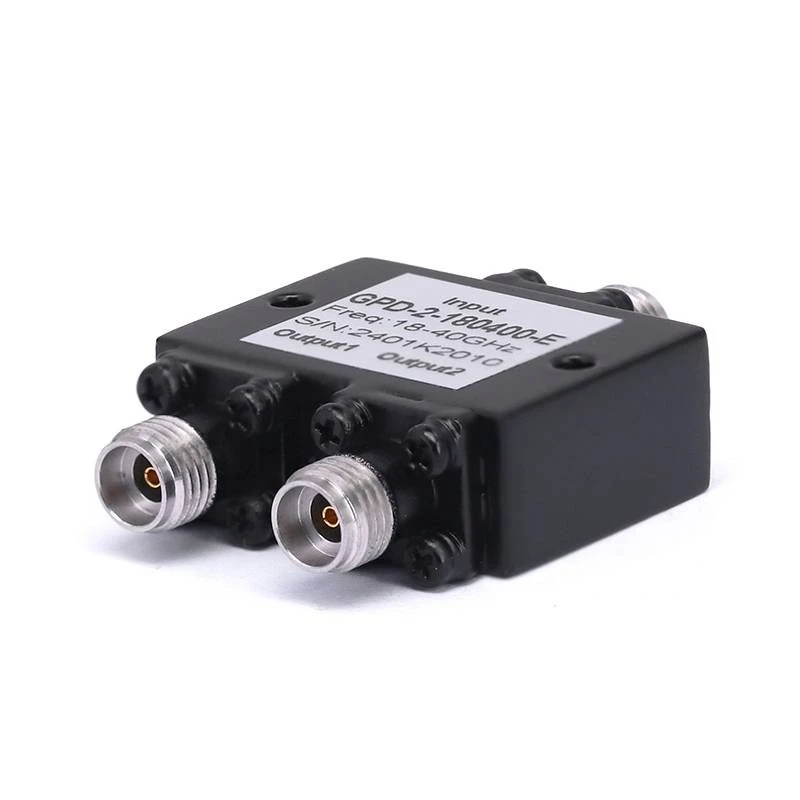
Our power dividers are engineered to have low amplitude imbalance. When comparing different power divider products, check the amplitude balance specifications. A power divider with lower amplitude imbalance will ensure more consistent performance across all output ports.
Size and Form Factor
The physical size and form factor of a power divider can also be an important consideration, especially in applications where space is limited. For example, in portable communication devices or compact RF systems, a smaller power divider may be preferred.
We offer a variety of power dividers in different sizes and form factors to meet the diverse needs of our customers. When comparing products, consider the available space in your system and choose a power divider that fits your physical requirements. However, keep in mind that smaller power dividers may sometimes have limitations in terms of power handling capacity or performance.
Cost
Cost is always a factor in any purchasing decision. When comparing power divider products, it's important to consider the overall value rather than just the upfront cost. A more expensive power divider may offer better performance, higher reliability, and longer lifespan, which can result in lower total cost of ownership in the long run.
We strive to offer competitive pricing for our power dividers without compromising on quality. When evaluating different suppliers, compare the prices of products with similar specifications. Also, consider the additional services and support offered by the supplier, such as technical assistance and warranty.
Supplier Reputation and Support
The reputation of the supplier and the support they provide are also important. A reliable supplier will have a track record of delivering high - quality products and providing excellent customer service. Look for suppliers who have been in the industry for a long time and have positive customer reviews.
As a power dividers supplier, we are committed to providing our customers with the best products and support. We have a team of experienced engineers who can offer technical advice and assistance throughout the product selection and implementation process. We also provide a comprehensive warranty for our products to give our customers peace of mind.
In conclusion, comparing different power divider products requires a careful evaluation of multiple factors, including frequency range, insertion loss, isolation, power handling capacity, phase and amplitude balance, size, cost, and supplier reputation. By considering these factors, you can make an informed decision and choose the power divider that best meets your specific needs.
If you are interested in our power divider products or have any questions about power divider selection, we encourage you to reach out to us for further discussion and potential procurement. We are here to help you find the perfect power divider solution for your application.
References
- Pozar, D. M. (2011). Microwave Engineering. Wiley.
- Collin, R. E. (2001). Foundations for Microwave Engineering. McGraw - Hill.


