

What are the applications of RF loads in telecommunications?
Leave a message

Radio Frequency (RF) loads are crucial components in the field of telecommunications. As a leading RF loads supplier, we understand the significance of these devices and their wide - ranging applications. In this blog, we will explore the various applications of RF loads in telecommunications, from testing and measurement to signal management.
Testing and Measurement
One of the most common applications of RF loads in telecommunications is for testing and measurement purposes. In the development and manufacturing of RF components and systems, it is essential to evaluate performance under different conditions. RF loads act as a stable termination for RF signals, allowing engineers to accurately measure parameters such as power, impedance, and frequency response.
For instance, when testing a power amplifier, an RF load with a specific impedance (usually 50 ohms) is connected to the output of the amplifier. This load mimics the real - world load that the amplifier will drive in a telecommunications system. By measuring the output power and other parameters with the RF load connected, engineers can determine if the amplifier meets the design specifications.
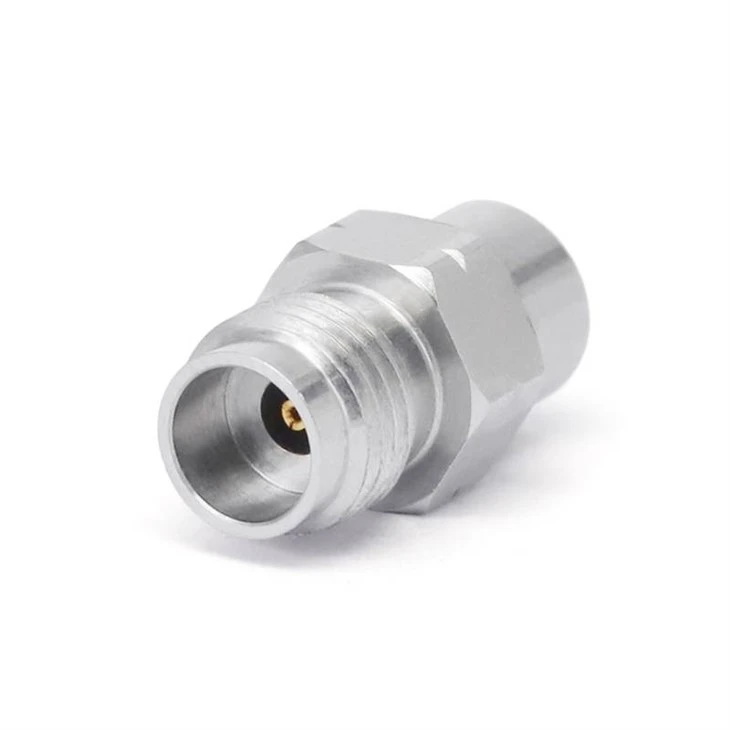
In addition, RF loads are used in network analyzers. These instruments are used to measure the scattering parameters (S - parameters) of RF devices. The RF load provides a known termination for the device under test, enabling accurate measurement of reflection coefficients and transmission losses. Our company offers a wide range of RF loads suitable for such testing and measurement applications, including 2.4mm RF Loads which are well - known for their high - frequency performance and precision.
Signal Management
RF loads also play a vital role in signal management within telecommunications systems. In some cases, it is necessary to absorb unwanted RF signals to prevent interference and ensure the proper functioning of the system.
In a multi - antenna system, for example, RF loads can be used to terminate unused antenna ports. This helps to reduce the amount of reflected energy in the system, which could otherwise cause signal degradation or interference. When an antenna is not in use or is malfunctioning, connecting an RF load to its port can effectively isolate the system from the unwanted antenna, maintaining the overall performance of the telecommunications network.
Furthermore, in RF distribution systems, RF loads are used to balance the power levels across different branches. By adjusting the impedance and power - handling capabilities of the RF loads, engineers can ensure that the signals are evenly distributed and that there is no excessive power reflection or loss. Our GPPO RF Loads are particularly suitable for these signal - management applications due to their compact size and reliable performance.
Simulator for Real - World Conditions
RF loads can serve as simulators for real - world conditions in telecommunications. In wireless communication systems, the quality of the signal can be affected by various factors such as distance, obstacles, and interference. By using RF loads in combination with other components, engineers can simulate these real - world scenarios in a laboratory environment.
For example, to test the performance of a wireless device in a high - interference environment, an RF load can be used to represent the background noise. By adjusting the power and frequency characteristics of the RF load, engineers can create a realistic interference scenario and evaluate how the wireless device responds to it. This helps in the development of more robust and reliable telecommunications systems. Our 3.5mm RF Loads offer excellent performance and flexibility for such simulation applications.
Power Dissipation and Protection
In high - power telecommunications systems, RF loads are used for power dissipation and protection. When a large amount of RF power needs to be absorbed or dissipated safely, RF loads with high - power - handling capabilities are employed.
For example, in a high - power transmitter, the RF load can be used as a dummy load during the testing phase. This allows the transmitter to operate at full power without radiating the signal into the environment, protecting nearby equipment and personnel. In addition, in the event of a malfunction or over - power situation, the RF load can act as a safety mechanism by absorbing the excess power and preventing damage to the transmitter and other components.
Isolation and Filtering
RF loads can also be used in combination with other components to provide isolation and filtering in telecommunications systems. In some cases, it is necessary to isolate different parts of a system to prevent interference between them. RF loads can be used to create a high - impedance path between two sections of a circuit, effectively isolating the signal flow.
Moreover, RF loads can be integrated into filter circuits to improve their performance. By adjusting the impedance and frequency response of the RF load, engineers can fine - tune the filtering characteristics of the circuit, allowing for better signal selectivity and rejection of unwanted frequencies.

Conclusion
In conclusion, RF loads are indispensable components in the telecommunications industry. Their applications range from testing and measurement to signal management, power dissipation, and isolation. As a trusted RF loads supplier, we offer a comprehensive range of RF loads, including 2.4mm RF Loads, GPPO RF Loads, and 3.5mm RF Loads, to meet the diverse needs of our customers.
If you are involved in the telecommunications field and are looking for high - quality RF loads for your projects, we invite you to contact us for a detailed discussion. Our team of experts is dedicated to providing you with the best solutions and support. Whether you need a standard RF load or a customized one, we have the expertise and resources to meet your requirements. Let's work together to build more efficient and reliable telecommunications systems.
References
- Pozar, D. M. (2011). Microwave Engineering. John Wiley & Sons.
- Collin, R. E. (2001). Foundations for Microwave Engineering. McGraw - Hill.
- Gupta, K. C., Garg, R., Bahl, I. J., & Bhartia, P. (2001). Microstrip Lines and Slotlines. Artech House.


