

What are the RF attenuators for high - frequency applications?
Leave a message

Hey there! As an RF attenuators supplier, I've been getting a lot of questions lately about what RF attenuators are for high - frequency applications. So, I thought I'd take the time to break it down for you all.
First off, let's talk about what RF attenuators actually are. In simple terms, an RF attenuator is a two - port electronic device designed to reduce the power of an RF signal without significantly distorting its waveform. It's like a volume control for radio frequency signals. You might be wondering, why would you want to reduce the power of a signal? Well, there are several good reasons for that, especially in high - frequency applications.
In high - frequency systems, signal levels can sometimes be too strong. For example, in a test and measurement setup, the signal coming from a high - power source might be so intense that it could damage the measuring equipment. An RF attenuator steps in to bring that signal down to a level that the equipment can handle safely. This is crucial for accurate and reliable measurements.
Another common use is in communication systems. When you're dealing with high - frequency wireless signals, you might have a situation where the received signal is too strong for the receiver. This can lead to issues like distortion and interference. By using an RF attenuator, you can adjust the signal strength to an optimal level, improving the overall performance of the communication system.
Now, let's get into the different types of RF attenuators that are commonly used in high - frequency applications.
Fixed Attenuators
Fixed attenuators are the simplest type. They provide a constant amount of attenuation. Once you install a fixed attenuator in your system, it will always reduce the signal power by the same amount. These are great for applications where you know exactly how much attenuation you need and where the signal conditions are relatively stable. For example, in a laboratory test setup where you're testing a specific device under controlled conditions, a fixed attenuator can be a cost - effective solution.
Variable Attenuators
Variable attenuators, on the other hand, allow you to adjust the amount of attenuation. This is extremely useful in situations where the signal strength can vary. For instance, in a wireless communication system where the signal strength can change depending on the distance between the transmitter and the receiver, a variable attenuator can be used to continuously adjust the signal level to maintain optimal performance.
Step - Attenuators
Step - attenuators are a type of variable attenuator that offer discrete steps of attenuation. You can select different attenuation levels in predefined increments. This is handy when you need a precise and repeatable amount of attenuation adjustment. In a calibration process, for example, step - attenuators can be used to set specific attenuation values to ensure accurate calibration of the equipment.
Types of Connectors for High - Frequency RF Attenuators
When it comes to high - frequency RF attenuators, the type of connector used is also very important. Different connectors are designed to work best at different frequency ranges and have different performance characteristics.
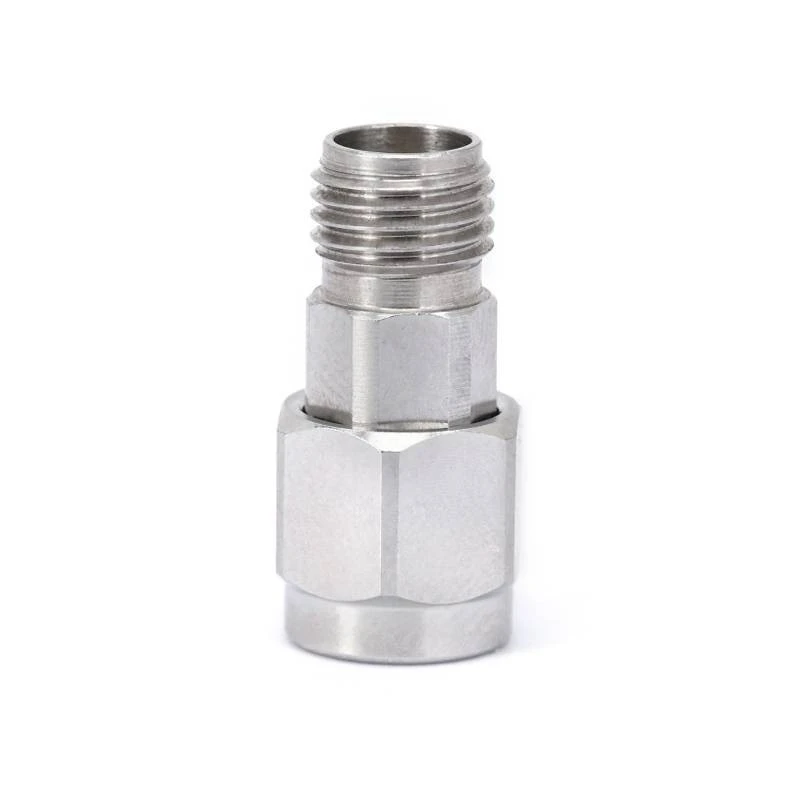
One of the most popular connectors for high - frequency applications is the SMA connector. SMA Attenuators are widely used because they offer good performance up to relatively high frequencies. They are compact, easy to install, and provide a reliable connection. SMA attenuators are commonly used in applications such as wireless communication devices, test and measurement equipment, and radar systems.
The 2.4mm connector is another option for high - frequency applications. 2.4mm Attenuators are designed to work at very high frequencies, often up to 50 GHz or more. They offer excellent electrical performance, low insertion loss, and high return loss, making them suitable for applications where high - precision and high - frequency performance are required, such as in microwave and millimeter - wave systems.
The 2.92mm connector, also known as the K connector, is also popular in high - frequency applications. 2.92mm Attenuators provide good performance up to around 40 GHz. They are a great choice for applications that require a balance between high - frequency performance and cost - effectiveness.
How to Choose the Right RF Attenuator for High - Frequency Applications
Choosing the right RF attenuator for your high - frequency application can be a bit tricky. Here are some factors you need to consider:
Frequency Range
The first thing you need to look at is the frequency range of the attenuator. Make sure that the attenuator you choose can operate effectively within the frequency range of your application. If you choose an attenuator with a frequency range that is too low, it may not provide the desired performance at the high frequencies you're working with.
Attenuation Value
Determine how much attenuation you need. This will depend on the specific requirements of your application. If you're not sure, you might need to do some testing or consult with an expert.
Power Handling
Consider the power handling capacity of the attenuator. If the signal power is too high for the attenuator, it could overheat and fail. Make sure the attenuator can handle the maximum power of the signal in your system.
Insertion Loss and Return Loss
Insertion loss is the amount of signal power that is lost when passing through the attenuator. Return loss is a measure of how much of the signal is reflected back from the attenuator. You want an attenuator with low insertion loss and high return loss to ensure efficient signal transmission.
Connector Type
As mentioned earlier, the connector type is important. Choose a connector that is compatible with your existing equipment and that offers good performance at the frequencies you're working with.
Why Choose Our RF Attenuators
As a leading supplier of RF attenuators, we take pride in offering high - quality products that meet the needs of a wide range of high - frequency applications. Our attenuators are designed and manufactured using the latest technology and high - quality materials to ensure excellent performance and reliability.
We offer a wide selection of fixed, variable, and step - attenuators with different attenuation values, frequency ranges, and connector types. Whether you need an SMA attenuator for a wireless communication project or a 2.4mm attenuator for a high - precision microwave system, we've got you covered.
Our team of experts is always available to help you choose the right attenuator for your specific application. We can provide technical support, answer your questions, and even offer custom solutions if needed.
If you're in the market for RF attenuators for high - frequency applications, we'd love to hear from you. Whether you're a small business looking for a cost - effective solution or a large corporation in need of high - end, high - performance attenuators, we can work with you to meet your requirements. Contact us today to start a conversation about your RF attenuator needs and let's see how we can help you take your high - frequency systems to the next level.

References
- Pozar, D. M. (2011). Microwave Engineering. Wiley.
- Collin, R. E. (2001). Foundations for Microwave Engineering. Wiley.


