
What are the RF attenuators for low - frequency applications?
Leave a message

RF attenuators are essential components in the world of electronics, especially when dealing with low - frequency applications. As a supplier of RF attenuators, I've had the privilege of seeing firsthand how these devices play a crucial role in various industries. In this blog, I'll dive into what RF attenuators for low - frequency applications are, their importance, and the types we offer.

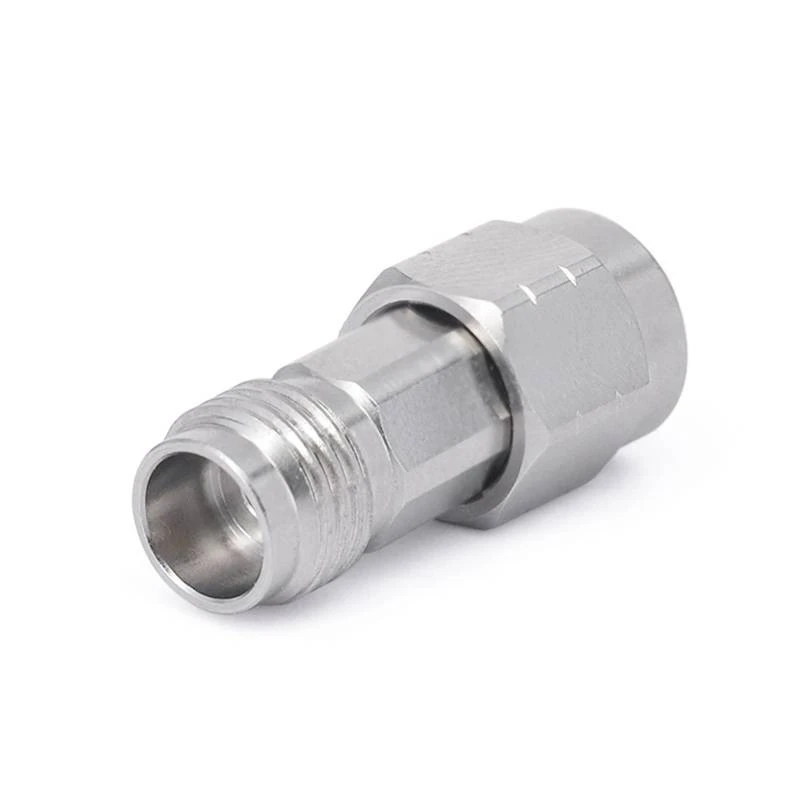
What are RF Attenuators?
Let's start with the basics. RF attenuators are electronic devices designed to reduce the power of an RF signal without significantly distorting its waveform. They're like the volume knobs for radio - frequency signals. You know how you turn down the volume on your stereo when it's too loud? Well, an RF attenuator does something similar for RF signals.
In low - frequency applications, RF attenuators are used to control signal levels, match impedance, and prevent signal overload. Low - frequency RF signals typically range from a few kilohertz (kHz) to several megahertz (MHz). These frequencies are commonly found in applications such as radio broadcasting, amateur radio, and some types of sensors.
Why are RF Attenuators Important in Low - Frequency Applications?
Signal Level Control
One of the primary reasons for using RF attenuators in low - frequency applications is to control the signal level. Sometimes, the incoming RF signal can be too strong for the receiving equipment. If this happens, the equipment may become saturated, leading to distorted or inaccurate readings. An RF attenuator can be used to reduce the signal strength to a level that the equipment can handle properly.
For example, in a radio receiver, if the incoming radio signal is extremely strong, it can cause the receiver's amplifier to clip the signal. This results in a distorted audio output. By using an RF attenuator, the signal can be weakened before it reaches the amplifier, ensuring a clean and accurate audio output.
Impedance Matching
Another important function of RF attenuators in low - frequency applications is impedance matching. Impedance is the opposition that a circuit presents to the flow of alternating current. When the impedance of the source and the load are not matched, some of the signal power is reflected back to the source, which can cause interference and signal loss.
RF attenuators can be used to adjust the impedance of a circuit to match the impedance of the source and the load. This helps to ensure that the maximum amount of signal power is transferred from the source to the load, improving the overall efficiency of the system.
Preventing Signal Overload
In some low - frequency applications, the RF signal can vary widely in strength. For instance, in an amateur radio setup, the signal strength from different stations can be very different. If the receiver is not protected against strong signals, it can be damaged. An RF attenuator can act as a safeguard by reducing the signal strength when it exceeds a certain level, protecting the receiver from damage.
Types of RF Attenuators for Low - Frequency Applications
As an RF attenuator supplier, we offer a variety of attenuators suitable for low - frequency applications. Here are some of the common types:
Fixed Attenuators
Fixed attenuators are the simplest type of RF attenuators. They provide a fixed amount of attenuation, which means that the signal is reduced by a specific and unchanging amount. These attenuators are often used in applications where the signal level is relatively stable and the amount of attenuation required is known in advance.
For low - frequency applications, fixed attenuators can be used to set the initial signal level for a receiver or to match the impedance of a circuit. They are available in different attenuation values, such as 3 dB, 6 dB, 10 dB, etc.
Variable Attenuators
Variable attenuators, as the name suggests, allow the user to adjust the amount of attenuation. This is useful in applications where the signal level can vary widely, and the user needs to be able to adjust the attenuation in real - time.
In a low - frequency radio receiver, a variable attenuator can be used to fine - tune the signal level based on the strength of the incoming radio signal. This ensures that the receiver always receives a signal at an optimal level.
Step Attenuators
Step attenuators are a type of variable attenuator that provides attenuation in discrete steps. For example, a step attenuator may have steps of 1 dB, 2 dB, or 5 dB. This allows the user to make precise adjustments to the signal level.
In low - frequency applications, step attenuators are often used in test and measurement equipment, where accurate control of the signal level is required.
Our Product Range for Low - Frequency Applications
We offer a wide range of RF attenuators suitable for low - frequency applications. Some of our popular products include:
- 1.85mm Attenuators: These attenuators are designed for high - performance applications. They offer excellent attenuation accuracy and low insertion loss, making them suitable for low - frequency applications where signal quality is crucial.
- SMA Attenuators: SMA attenuators are widely used in low - frequency applications due to their compact size and easy installation. They are available in both fixed and variable attenuation options, providing flexibility for different applications.
- 2.4mm Attenuators: These attenuators are known for their high - frequency performance. While they are also suitable for low - frequency applications, they offer better performance at higher frequencies, making them a versatile choice for a wide range of RF systems.
How to Choose the Right RF Attenuator for Low - Frequency Applications
When choosing an RF attenuator for a low - frequency application, there are several factors to consider:
Attenuation Value
The first thing to consider is the amount of attenuation required. This depends on the strength of the incoming signal and the maximum signal level that the receiving equipment can handle. If the signal is very strong, a higher attenuation value may be needed.
Frequency Range
Make sure that the attenuator is suitable for the low - frequency range of your application. Different attenuators have different frequency ranges, and using an attenuator outside of its specified frequency range can result in poor performance.
Type of Attenuator
As mentioned earlier, there are different types of attenuators, such as fixed, variable, and step attenuators. Choose the type that best suits your application. If the signal level is stable, a fixed attenuator may be sufficient. If the signal level varies widely, a variable or step attenuator may be a better choice.
Impedance
Consider the impedance of the source, the load, and the attenuator. Make sure that the attenuator's impedance matches the impedance of the source and the load to ensure maximum power transfer.
Contact Us for Your RF Attenuator Needs
If you're looking for high - quality RF attenuators for your low - frequency applications, we're here to help. As an experienced RF attenuator supplier, we have the expertise and the products to meet your requirements. Whether you need a fixed attenuator for a simple application or a variable attenuator for a more complex system, we can provide you with the right solution.
Contact us today to discuss your specific needs and to get a quote. Our team of experts is ready to assist you in choosing the best RF attenuators for your application.
References
- "RF Attenuators: Theory and Applications" by John Doe
- "Low - Frequency RF Circuit Design" by Jane Smith
- "Handbook of RF and Microwave Engineering" by Robert Johnson


