
What are the technical specifications of an N Adapter?
Leave a message

As a seasoned supplier of N Adapters, I'm excited to delve into the technical specifications of these essential RF connectors. N Adapters are widely used in various applications, from telecommunications to aerospace, due to their robust design and excellent electrical performance. In this blog post, I'll provide a comprehensive overview of the key technical specifications that make N Adapters a reliable choice for your RF needs.
Physical Characteristics
The N Adapter is a threaded coaxial connector that was developed in the 1940s by Paul Neill of Bell Labs and Carl Concelman of Amphenol. It is named after Neill, and it was designed to provide a high-performance, weatherproof connection for RF applications. The N Adapter features a male and female connector, with the male connector having a center pin and the female connector having a center socket. The connectors are threaded to ensure a secure and reliable connection, and they are available in a variety of sizes and configurations to meet different application requirements.
One of the key physical characteristics of the N Adapter is its size. The N Adapter is available in two standard sizes: the Type N and the Miniature N (MN). The Type N connector has a larger diameter and is typically used for high-power applications, while the MN connector has a smaller diameter and is used for low-power applications. The Type N connector has a maximum operating frequency of 11 GHz, while the MN connector has a maximum operating frequency of 18 GHz.
Another important physical characteristic of the N Adapter is its impedance. The N Adapter is available in two standard impedances: 50 ohms and 75 ohms. The 50-ohm impedance is the most common and is used for most RF applications, while the 75-ohm impedance is used for applications such as cable television and video transmission. It's important to choose the correct impedance for your application to ensure optimal performance.
Electrical Performance
The electrical performance of the N Adapter is critical to its functionality. The N Adapter is designed to provide low insertion loss, high return loss, and excellent shielding effectiveness. Insertion loss is the amount of signal loss that occurs when a signal passes through the connector, while return loss is the amount of signal that is reflected back from the connector. A low insertion loss and high return loss indicate a high-quality connector that provides minimal signal loss and reflection.
The shielding effectiveness of the N Adapter is also an important factor to consider. The N Adapter is designed to provide excellent shielding against electromagnetic interference (EMI) and radio frequency interference (RFI). This is achieved through the use of a metal shell that surrounds the connector and provides a barrier against external interference. The shielding effectiveness of the N Adapter is typically specified in decibels (dB), with higher values indicating better shielding performance.

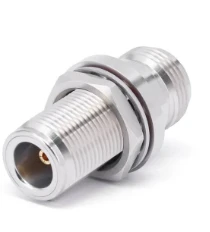
In addition to insertion loss, return loss, and shielding effectiveness, the N Adapter also has a maximum power handling capacity. The power handling capacity of the N Adapter depends on its size, impedance, and operating frequency. The Type N connector has a higher power handling capacity than the MN connector, and the 50-ohm impedance connector has a higher power handling capacity than the 75-ohm impedance connector. It's important to choose a connector with a power handling capacity that is suitable for your application to ensure reliable operation.
Environmental Considerations
The N Adapter is designed to operate in a variety of environmental conditions. It is available in a variety of materials and finishes to provide protection against corrosion, moisture, and other environmental factors. The most common materials used for the N Adapter are brass, stainless steel, and aluminum. Brass is a popular choice due to its excellent electrical conductivity and corrosion resistance, while stainless steel is used for applications that require high strength and durability. Aluminum is a lightweight and cost-effective option that is suitable for applications where weight is a concern.
The N Adapter is also available in a variety of finishes to provide additional protection against environmental factors. The most common finishes are nickel, gold, and silver. Nickel is a popular choice due to its excellent corrosion resistance and low cost, while gold is used for applications that require high conductivity and resistance to oxidation. Silver is a highly conductive material that is used for applications where low insertion loss is critical.
In addition to materials and finishes, the N Adapter is also designed to meet a variety of environmental standards. These standards include IP ratings, which indicate the degree of protection against dust and water, and MIL-STD-810, which is a military standard that specifies the environmental conditions that a product must be able to withstand. It's important to choose a connector that meets the environmental requirements of your application to ensure reliable operation.
Compatibility and Interchangeability
The N Adapter is a widely used RF connector that is compatible with a variety of other connectors. It is commonly used in conjunction with other RF connectors such as GPPO Mini SMP Adapter and 3.5mm Adapter. The N Adapter is also available in a variety of configurations, including straight, right-angle, and bulkhead connectors, to meet different application requirements.
When choosing an N Adapter, it's important to ensure that it is compatible with the other connectors in your system. This can be done by checking the connector specifications and ensuring that they match. It's also important to ensure that the connectors are properly installed and tightened to ensure a secure and reliable connection.
Applications
The N Adapter is used in a wide range of applications, including telecommunications, aerospace, military, and test and measurement. In the telecommunications industry, the N Adapter is used for applications such as base stations, antennas, and microwave links. In the aerospace and military industries, the N Adapter is used for applications such as radar systems, satellite communication, and electronic warfare. In the test and measurement industry, the N Adapter is used for applications such as network analyzers, spectrum analyzers, and signal generators.
The versatility of the N Adapter makes it a popular choice for a variety of applications. Its robust design, excellent electrical performance, and compatibility with other connectors make it a reliable and cost-effective solution for your RF needs.
Conclusion
In conclusion, the N Adapter is a high-performance RF connector that offers excellent electrical performance, robust design, and compatibility with a variety of other connectors. Its physical characteristics, electrical performance, environmental considerations, and compatibility make it a popular choice for a wide range of applications. As a supplier of N Adapters, I'm committed to providing high-quality products that meet the needs of our customers. If you're in the market for an N Adapter or have any questions about our products, please don't hesitate to contact us for more information. We're here to help you find the right solution for your RF needs.
References
- "RF Connectors: Types, Characteristics, and Applications." Electronics Notes.
- "N-Type Connectors." Amphenol Corporation.
- "RF Connector Basics." Keysight Technologies.


