
What is a parabolic antenna?
Leave a message

Hey there! As someone running an antennas supplier, I get asked a lot about different types of antennas. One that often piques people's curiosity is the parabolic antenna. So, let's dig into what a parabolic antenna is, how it works, and where it's used.
What's a Parabolic Antenna?
A parabolic antenna, in simple terms, is an antenna that uses a parabolic reflector to direct radio waves. The reflector is shaped like a parabola - you know, that U - shaped curve you might have studied in math class. This unique shape gives the parabolic antenna some pretty cool properties.
The basic structure of a parabolic antenna consists of a parabolic reflector and a feed antenna. The feed antenna is placed at the focal point of the parabolic reflector. When the antenna is transmitting, the feed antenna sends out radio waves. These waves hit the parabolic reflector and are then reflected in a parallel beam, which can travel long distances with minimal spread. When receiving, the incoming parallel radio waves hit the reflector and are focused onto the feed antenna.
How Does It Work?
Let's break down the working mechanism a bit more. When we're talking about transmission, the feed antenna acts as a source of radio waves. These waves radiate out in all directions, but when they hit the parabolic reflector, the shape of the reflector does some amazing things. Each point on the parabolic surface is designed in such a way that the distance from the focal point (where the feed antenna is) to the reflector and then to a plane perpendicular to the axis of the parabola is the same for all points. This means that the radio waves reflected from different parts of the reflector arrive at this plane in phase. As a result, they combine to form a strong, parallel beam of radio waves that can be sent out over long distances.
On the receiving end, it's the reverse process. The incoming parallel radio waves hit the parabolic reflector. Because of the parabolic shape, these waves are all reflected towards the focal point, where the feed antenna is located. The feed antenna then captures these waves and converts them into electrical signals that can be processed by a receiver.
Advantages of Parabolic Antennas
One of the biggest advantages of parabolic antennas is their high gain. Gain is a measure of how well an antenna can focus radio waves in a particular direction. Since parabolic antennas can direct radio waves into a narrow, parallel beam, they have a very high gain compared to other types of antennas. This high gain allows them to transmit and receive signals over long distances.
They also have excellent directivity. Directivity means that the antenna can send or receive signals mainly in one direction. This is great because it reduces interference from other directions. For example, if you're using a parabolic antenna for satellite communication, you only want to receive signals from the satellite and not from other sources in the sky. The high directivity of the parabolic antenna helps with this.
Applications of Parabolic Antennas
Parabolic antennas are used in a wide range of applications. One of the most common uses is in satellite communication. Satellites are located thousands of kilometers away from the Earth, so we need an antenna that can send and receive signals over these long distances. Parabolic antennas are perfect for this job because of their high gain and directivity. They're used both on the ground at satellite communication stations and on the satellites themselves.
Another important application is in radio astronomy. Astronomers use parabolic antennas to detect radio waves emitted by celestial objects such as stars, galaxies, and quasars. These radio waves can tell us a lot about the universe, like the composition of these objects, their movement, and their evolution. The high sensitivity and directivity of parabolic antennas are crucial for detecting these very weak signals from space.
They're also used in point - to - point microwave communication links. These links are often used to connect different buildings in a city or to provide high - speed data transfer between remote locations. The high gain and directivity of parabolic antennas ensure that the signals can be transmitted reliably over these links.
Comparing with Other Antennas
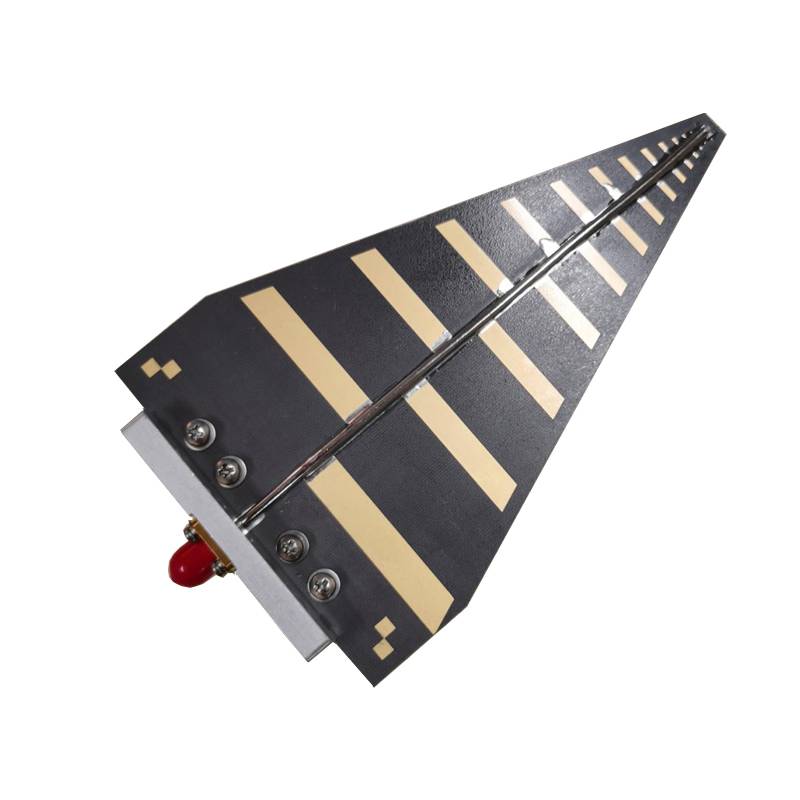
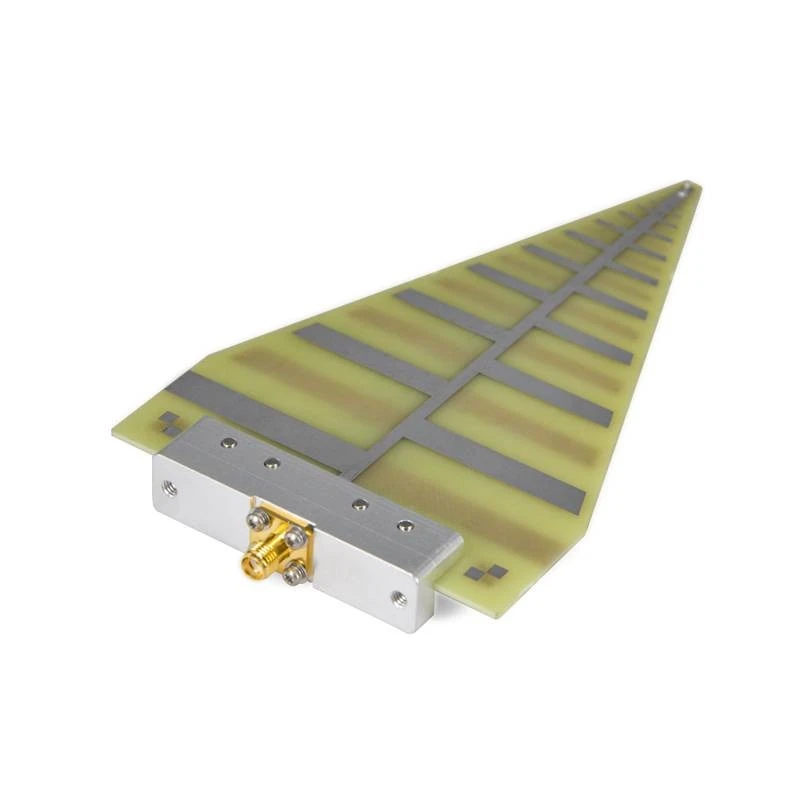
Now, let's compare parabolic antennas with some other types of antennas. For example, Log-periodic Antennas are known for their wide bandwidth. They can operate over a large range of frequencies, which makes them suitable for applications where you need to cover multiple frequency bands. However, they don't have the same high gain and directivity as parabolic antennas. Log - periodic antennas are more omnidirectional, which means they send and receive signals in a wider area, but with less focus.
Horn Antennas are another type of antenna. They're simple in design and are often used in applications where a moderate gain and directivity are required. Horn antennas are commonly used in radar systems and some types of microwave communication. But again, they don't have the extremely high gain and long - distance capabilities of parabolic antennas.
Why Choose Our Parabolic Antennas
As an antennas supplier, we offer a wide range of parabolic antennas. Our antennas are designed and manufactured with the latest technology to ensure high performance. We use high - quality materials in the construction of the reflectors and feed antennas, which means our antennas are durable and can withstand different environmental conditions.
We also provide customization options. If you have specific requirements for the gain, frequency range, or size of the parabolic antenna, we can work with you to design and build an antenna that meets your needs. Our team of experts is always ready to provide technical support and advice to help you choose the right antenna for your application.
Let's Talk
If you're in the market for a parabolic antenna or any other type of antenna, we'd love to hear from you. Whether you're involved in satellite communication, radio astronomy, or point - to - point microwave links, we have the right solution for you. Reach out to us to start a conversation about your antenna needs and let's see how we can work together to get you the best antenna for your project.
References
- Kraus, J. D., & Marhefka, R. J. (2002). Antennas for All Applications. McGraw - Hill.
- Balanis, C. A. (2016). Antenna Theory: Analysis and Design. Wiley.


