

What is a patch antenna?
Leave a message

What is a Patch Antenna?
In the world of wireless communication, antennas play a pivotal role in transmitting and receiving electromagnetic waves. Among the diverse range of antennas available, patch antennas have gained significant popularity due to their numerous advantages. As an antennas supplier, I am excited to delve into the details of patch antennas, exploring their structure, working principle, applications, and benefits.
Structure of a Patch Antenna
A patch antenna is a type of microstrip antenna, which consists of a thin metallic patch placed on a grounded dielectric substrate. The patch is typically made of a conductive material such as copper or aluminum, and it can have various shapes, including rectangular, circular, triangular, or elliptical. The most common shape is rectangular, as it is relatively easy to design and analyze.
The dielectric substrate provides mechanical support for the patch and also affects the antenna's performance. It is usually made of a low-loss material with a high dielectric constant, such as FR - 4 (a common printed - circuit board material), ceramic, or Teflon. The thickness of the substrate and its dielectric constant influence the antenna's resonant frequency, bandwidth, and radiation pattern.
On the bottom of the dielectric substrate, there is a ground plane, which is a large conducting surface. The ground plane serves as a reference for the electric field and helps to direct the radiation of the antenna in the desired direction.
Working Principle
The operation of a patch antenna is based on the principle of electromagnetic resonance. When an alternating current is applied to the patch through a feed line, the patch acts as a resonant cavity, storing and radiating electromagnetic energy.
The feed line can be connected to the patch in different ways, such as a microstrip line feed, a coaxial probe feed, or an aperture - coupled feed. The choice of the feed method depends on factors like the antenna's design requirements, frequency of operation, and impedance matching.
At resonance, the patch antenna radiates electromagnetic waves into the surrounding space. The radiation pattern of a patch antenna is typically omnidirectional in the plane parallel to the patch and has a null in the direction perpendicular to the patch. The radiation characteristics can be adjusted by changing the shape, size, and orientation of the patch, as well as the properties of the dielectric substrate.
Applications of Patch Antennas
Patch antennas have a wide range of applications in various fields, thanks to their unique features.
- Wireless Communication Systems: In mobile phones, tablets, and other portable devices, patch antennas are commonly used for Wi - Fi, Bluetooth, and cellular communication. Their small size, low profile, and ease of integration make them ideal for these applications. For example, many smartphones use patch antennas to support multiple frequency bands, enabling seamless connectivity.
- Global Navigation Satellite Systems (GNSS): Patch antennas are widely used in GNSS receivers, such as GPS devices. They can be designed to receive signals from multiple satellite constellations, providing accurate positioning information. The ability to be integrated into small devices like car navigation systems and handheld GPS units makes them highly valuable in this field.
- Radar Systems: In some radar applications, patch antennas can be used as part of the radar array. Their low - profile design and ability to be arranged in arrays make them suitable for applications where space is limited, such as in airborne or automotive radar systems.
- Satellite Communication: Patch antennas are also used in satellite communication terminals. They can be used for both uplink and downlink communication, providing a cost - effective and reliable solution for satellite - based communication services.
Advantages of Patch Antennas
There are several reasons why patch antennas are so popular among engineers and designers.
- Low - Profile Design: One of the most significant advantages of patch antennas is their low - profile nature. They can be easily integrated into small and thin devices without adding much bulk. This makes them ideal for applications where space is a critical constraint, such as in wearable devices and mobile phones.
- Lightweight: Patch antennas are generally lightweight, which is beneficial for applications where weight needs to be minimized, such as in aerospace and portable devices.
- Ease of Fabrication: They are relatively easy to fabricate using printed - circuit board (PCB) manufacturing techniques. This makes them cost - effective to produce in large quantities, making them a popular choice for mass - market products.
- Versatility: Patch antennas can be designed to operate at different frequencies and with different radiation patterns. By changing the shape, size, and material properties of the patch and the substrate, engineers can customize the antenna's performance to meet specific application requirements.
Comparison with Other Antenna Types
When compared to other types of antennas, such as Log - periodic Antennas and Horn Antennas, patch antennas have their own unique advantages and disadvantages.
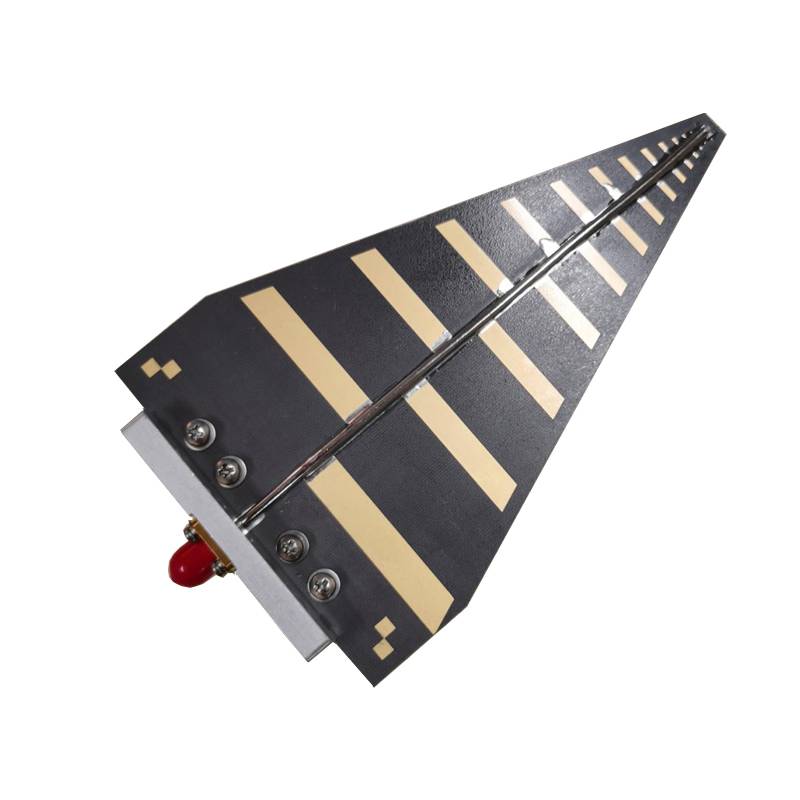
- Log - periodic Antennas: Log - periodic antennas are known for their wide bandwidth and high gain over a broad frequency range. However, they are usually larger in size and more complex in structure compared to patch antennas. Patch antennas, on the other hand, are more compact and suitable for applications where space is limited, but they typically have a narrower bandwidth.
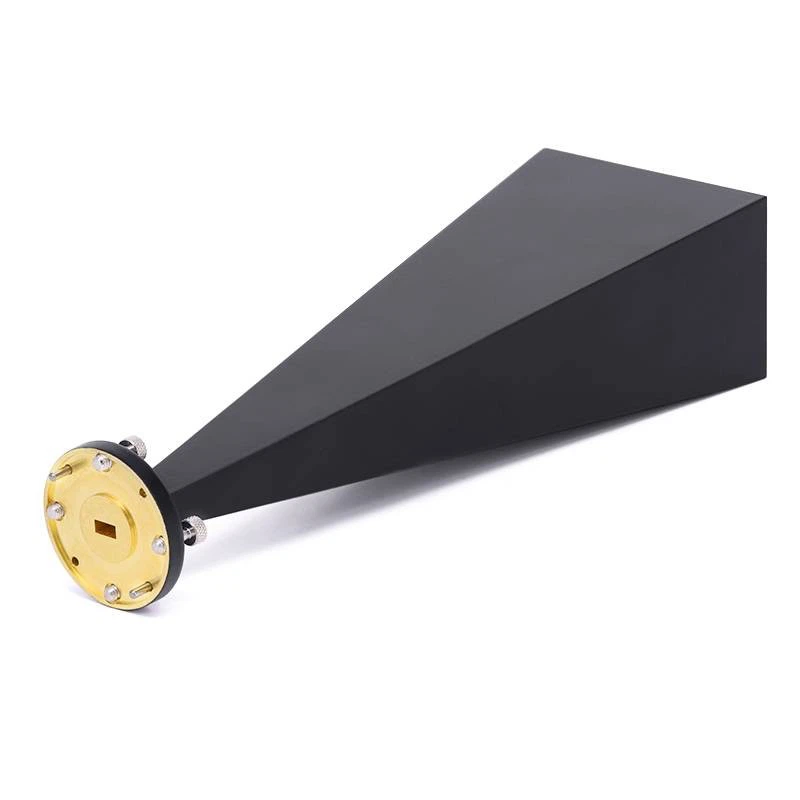
- Horn Antennas: Horn antennas offer high directivity and gain, making them suitable for applications such as radar and satellite communication where long - distance communication is required. However, they are relatively large and bulky. Patch antennas are more lightweight and low - profile, but they may not provide the same level of directivity and gain as horn antennas.
Design Considerations for Patch Antennas
When designing a patch antenna, several factors need to be considered to achieve the desired performance.
- Resonant Frequency: The resonant frequency of the patch antenna is determined by the size of the patch and the dielectric constant of the substrate. By adjusting these parameters, the antenna can be designed to operate at a specific frequency or frequency band.
- Bandwidth: The bandwidth of a patch antenna is influenced by the thickness of the substrate, the shape of the patch, and the feed method. To increase the bandwidth, techniques such as using a thicker substrate or a stacked patch configuration can be employed.
- Radiation Pattern: The radiation pattern of the patch antenna can be controlled by changing the shape and orientation of the patch. For example, a rectangular patch antenna can be designed to have a more directional or omnidirectional radiation pattern depending on the application requirements.
- Impedance Matching: Proper impedance matching between the patch antenna and the feed line is crucial for efficient power transfer. This can be achieved by adjusting the feed position and the dimensions of the patch and the feed line.
Conclusion
Patch antennas are a versatile and widely used type of antenna in modern wireless communication systems. Their low - profile design, lightweight, ease of fabrication, and customizable performance make them suitable for a variety of applications, from mobile phones to satellite communication.
As an antennas supplier, we understand the importance of providing high - quality patch antennas that meet the specific needs of our customers. Whether you are looking for a patch antenna for a consumer electronics device, a navigation system, or a radar application, we have the expertise and resources to design and manufacture the right antenna for you.
If you are interested in purchasing patch antennas or have any questions about our products and services, please do not hesitate to contact us. We are ready to engage in in - depth discussions with you to understand your requirements and provide you with the best solutions. Our team of experienced engineers and technicians is committed to delivering top - notch antennas that will enhance the performance of your wireless systems.
References
- Balanis, C. A. (2016). Antenna Theory: Analysis and Design. Wiley.
- Stutzman, W. L., & Thiele, G. A. (2012). Antenna Theory and Design. Wiley.


