

What is the beamwidth of a horn antenna?
Leave a message

Hey there! As a supplier of Horn Antennas, I often get asked about the beamwidth of horn antennas. So, let's dig into what beamwidth actually means and why it's super important when it comes to these antennas.
First off, what's beamwidth? Well, think of an antenna as a flashlight. When you shine a flashlight, the light spreads out in a certain pattern. The beamwidth of an antenna is kind of like the angle over which the antenna radiates most of its power. It's measured in degrees, and it tells you how wide or narrow the antenna's radiation pattern is.
For horn antennas, the beamwidth is a key characteristic. Horn antennas are used in a bunch of different applications, like radar systems, satellite communication, and wireless networks. And the beamwidth plays a big role in how well these antennas work in those applications.
There are two main types of beamwidth we usually talk about: the horizontal beamwidth and the vertical beamwidth. The horizontal beamwidth is the angle in the horizontal plane where the antenna's radiation drops to half of its maximum power (also known as the -3 dB point). The vertical beamwidth is the same thing, but measured in the vertical plane.
Let's say you're using a horn antenna for a radar system. A narrow beamwidth can be really useful in this case. Why? Because a narrow beam allows the radar to focus its energy in a specific direction. This means it can detect objects more precisely and reduce interference from other sources. For example, if you're trying to detect a small aircraft in the sky, a horn antenna with a narrow beamwidth can help you zero in on that target without getting distracted by other signals.
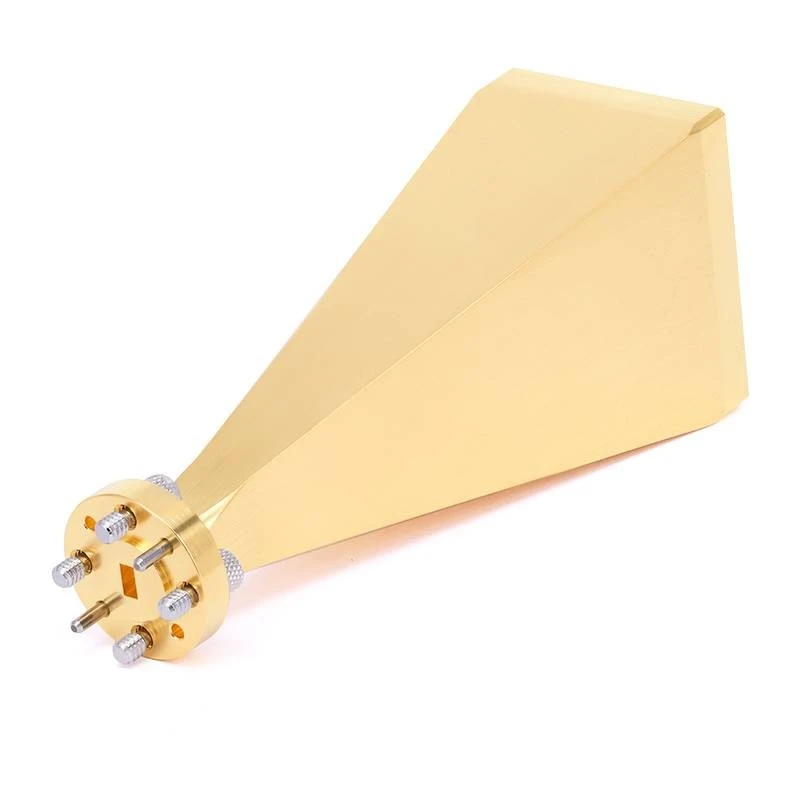
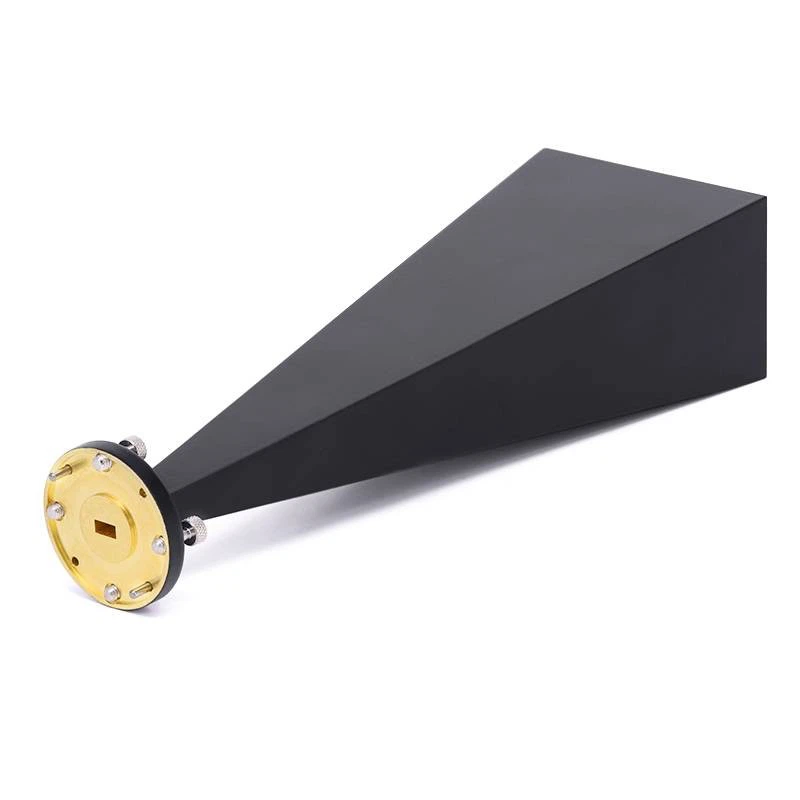
On the other hand, if you're using a horn antenna for a wireless network in a large area, you might want a wider beamwidth. A wider beam can cover a larger area, so more devices can connect to the network. It's like using a wide - angle flashlight to light up a big room.
Now, how is the beamwidth of a horn antenna determined? There are a few factors at play. One of the main factors is the size of the horn. Generally speaking, larger horns tend to have narrower beamwidths. This is because a larger horn can direct the electromagnetic waves more precisely. Just like a bigger and more focused flashlight beam.
The frequency of the signal also affects the beamwidth. Higher frequencies usually result in narrower beamwidths. As the frequency increases, the wavelength of the electromagnetic wave decreases. This allows the antenna to direct the waves more tightly, resulting in a narrower radiation pattern.
Another thing to consider is the shape of the horn. There are different types of horn antennas, like pyramidal horns, conical horns, and sectoral horns. Each shape has its own unique beamwidth characteristics. For example, a pyramidal horn antenna has different horizontal and vertical beamwidths, which can be adjusted depending on the design of the horn.
Let's compare horn antennas with Log - periodic Antennas for a moment. Log - periodic antennas are known for their wide frequency range, but their beamwidth characteristics are different. Log - periodic antennas typically have a relatively wide beamwidth over their operating frequency range. This makes them suitable for applications where you need to cover a large area with a single antenna. Horn antennas, on the other hand, can offer more focused radiation patterns, which is great for applications that require high precision.
So, why should you care about the beamwidth when choosing a horn antenna? Well, it all boils down to your specific application. If you need to communicate with a specific target, like a satellite in a particular orbit, you'll want an antenna with a narrow beamwidth to ensure a strong and reliable connection. But if you're setting up a local wireless network in a big open space, a wider beamwidth might be more suitable.
As a supplier of horn antennas, we understand that different customers have different needs. That's why we offer a wide range of horn antennas with various beamwidths. Whether you're a researcher working on a high - precision experiment or a network engineer setting up a large - scale wireless network, we've got an antenna that can meet your requirements.
If you're in the market for a horn antenna, it's important to do your research and understand your needs. Think about the application, the frequency range, and the area you need to cover. And if you have any questions, don't hesitate to reach out to us. Our team of experts is always here to help you choose the right antenna with the right beamwidth for your project.
We're also constantly working on improving our products. We invest in research and development to create horn antennas that offer better performance, more precise beamwidth control, and higher efficiency. So, you can be sure that when you choose our horn antennas, you're getting a top - notch product.
In conclusion, the beamwidth of a horn antenna is a crucial factor that can make or break the success of your project. It determines how the antenna radiates its energy and how well it can communicate with other devices. Whether you need a narrow beam for precision or a wide beam for coverage, there's a horn antenna out there for you.
If you're interested in learning more about our horn antennas or have any questions about beamwidth and antenna selection, feel free to contact us. We're ready to start a conversation and help you find the perfect solution for your needs. Let's work together to make your project a success!
References
- Antenna Theory: Analysis and Design by Constantine A. Balanis
- Microwave Engineering by David M. Pozar


