
What is the difference between a broadband and a tunable antenna?
Leave a message

Hey there! As an antennas supplier, I often get asked about the difference between broadband and tunable antennas. It's a topic that can be a bit confusing, but I'm here to break it down for you in a way that's easy to understand.
Let's start with broadband antennas. These bad boys are designed to work over a wide range of frequencies. Think of them as the all - purpose tools in the antenna world. They can handle a large bandwidth without needing to be adjusted for different frequencies. This makes them really convenient in situations where you need to cover multiple frequency bands at once.
One of the key advantages of broadband antennas is their simplicity. You set them up, and they're ready to go. They don't require constant tweaking or tuning as the frequency of the signal changes. For example, in a wireless communication system that needs to support different types of signals like Wi - Fi, Bluetooth, and cellular frequencies all at the same time, a broadband antenna can do the job.
There are different types of broadband antennas. For instance, Log - periodic Antennas are a popular choice. They have a unique design that allows them to operate over a wide frequency range. The structure of a log - periodic antenna is made up of a series of dipole elements of different lengths. These elements are arranged in a specific pattern, and this pattern enables the antenna to be effective across a broad spectrum of frequencies.
Another type is the Horn Antennas. Horn antennas are also broadband in nature. They're often used in applications where high gain and a wide frequency response are required. They work by gradually expanding the electromagnetic wave as it travels through the horn - shaped structure. This expansion helps in reducing reflections and improving the antenna's performance over a wide range of frequencies.
Now, let's talk about tunable antennas. Unlike broadband antennas, tunable antennas are designed to be adjusted to work at specific frequencies. They offer a lot of flexibility because you can change their operating frequency according to your needs. This is really useful in scenarios where you need to optimize the antenna's performance for a particular frequency or when the frequency of the signal you're dealing with changes.
For example, in a military communication system, the frequency of the communication signals can change rapidly to avoid interference or jamming. A tunable antenna can be adjusted on the fly to match the new frequency, ensuring that the communication link remains stable.
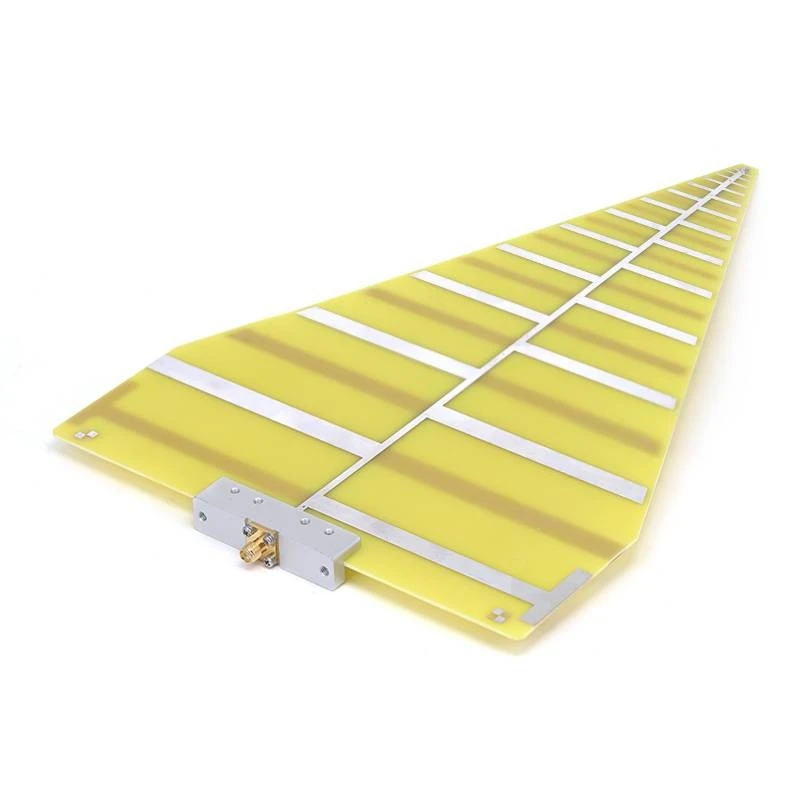

Tunable antennas usually have some kind of tuning mechanism. This could be an electronic circuit that changes the electrical properties of the antenna, such as its capacitance or inductance. By altering these properties, the resonant frequency of the antenna can be adjusted.
One of the main benefits of tunable antennas is their ability to provide high - performance at a specific frequency. Since they can be tuned precisely, they can achieve better gain, radiation pattern, and efficiency compared to broadband antennas at that particular frequency.
However, tunable antennas also have their drawbacks. They're more complex than broadband antennas. The tuning mechanism adds to the cost and the potential for failure. You also need to have a way to control the tuning, which might require additional equipment and expertise.
In terms of applications, broadband antennas are great for general - purpose use. They're commonly used in consumer electronics like smartphones, laptops, and routers. These devices need to support multiple wireless standards, and a broadband antenna can handle all of them without any issues.
On the other hand, tunable antennas are more likely to be found in specialized applications. Besides the military example I mentioned earlier, they're also used in scientific research, where experiments might require the antenna to operate at very specific frequencies.
Let's compare them in a few more aspects. When it comes to size, broadband antennas tend to be larger. This is because they need to cover a wide range of frequencies, and a larger physical size often helps in achieving a broader bandwidth. Tunable antennas, on the other hand, can be made smaller because they're optimized for a specific frequency at a time.
In terms of cost, broadband antennas are generally more cost - effective. They have a simpler design and don't require the additional components for tuning. Tunable antennas, with their complex tuning mechanisms, are more expensive to manufacture and maintain.
Now, if you're in the market for antennas, whether it's a broadband or a tunable one, we've got you covered. As an antennas supplier, we offer a wide range of high - quality antennas to meet your specific needs. Whether you're a consumer looking for an antenna for your home router or a business in need of specialized antennas for your communication systems, we can provide the right solution.
If you're not sure which type of antenna is best for you, our team of experts is here to help. We can analyze your requirements and recommend the most suitable antenna for your application. We understand that every situation is unique, and we're committed to providing you with the best possible product and service.
So, if you're interested in purchasing antennas, don't hesitate to reach out. We're ready to have a chat with you about your needs and find the perfect antenna solution for you.
References
- Antenna Theory and Design, Third Edition by Constantine A. Balanis
- Principles of Electronic Communication Systems by Louis E. Frenzel


