

What is the gain of an antenna?
Leave a message

Antennas are fundamental components in modern communication systems, playing a crucial role in transmitting and receiving electromagnetic waves. One of the most important parameters that define an antenna's performance is its gain. As an antennas supplier, understanding the concept of antenna gain is essential for providing our customers with the best solutions for their specific needs.
Understanding Antenna Gain
Antenna gain is a measure of how effectively an antenna can radiate or receive electromagnetic energy in a particular direction compared to a reference antenna. It is a dimensionless quantity, usually expressed in decibels (dB). A higher gain indicates that the antenna can focus more of its radiated power in a specific direction, resulting in a stronger signal in that direction and potentially longer communication distances.
The reference antenna commonly used for gain measurement is the isotropic antenna. An isotropic antenna is a theoretical antenna that radiates power uniformly in all directions. It serves as a baseline for comparison, and an antenna's gain is essentially a measure of how much better it is than an isotropic radiator in a given direction.
Types of Antenna Gain
There are two main types of antenna gain: directive gain and power gain.
Directive Gain
Directive gain, also known as directivity, focuses on the radiation pattern of the antenna. It measures how well an antenna can concentrate its radiated power in a specific direction compared to an isotropic antenna. An antenna with high directive gain has a narrow radiation pattern, meaning it radiates most of its power in a particular direction and very little in other directions. This is useful in applications where a strong signal is required in a specific direction, such as point-to-point communication links.
Power Gain
Power gain takes into account not only the directivity of the antenna but also its efficiency. Efficiency refers to how well the antenna can convert the input electrical power into radiated electromagnetic power. An antenna with high power gain not only has a narrow radiation pattern but also minimizes losses due to factors such as resistance and impedance mismatches. Power gain is a more practical measure of an antenna's performance in real-world applications.
Factors Affecting Antenna Gain
Several factors can influence an antenna's gain, including its physical size, shape, and operating frequency.
Physical Size
In general, larger antennas tend to have higher gain. This is because a larger antenna can capture or radiate more electromagnetic energy. For example, a large parabolic dish antenna can achieve very high gain by focusing the incoming or outgoing waves onto a small feed antenna. However, the relationship between size and gain is not always linear, and other factors such as the antenna's design and operating frequency also play important roles.
Shape
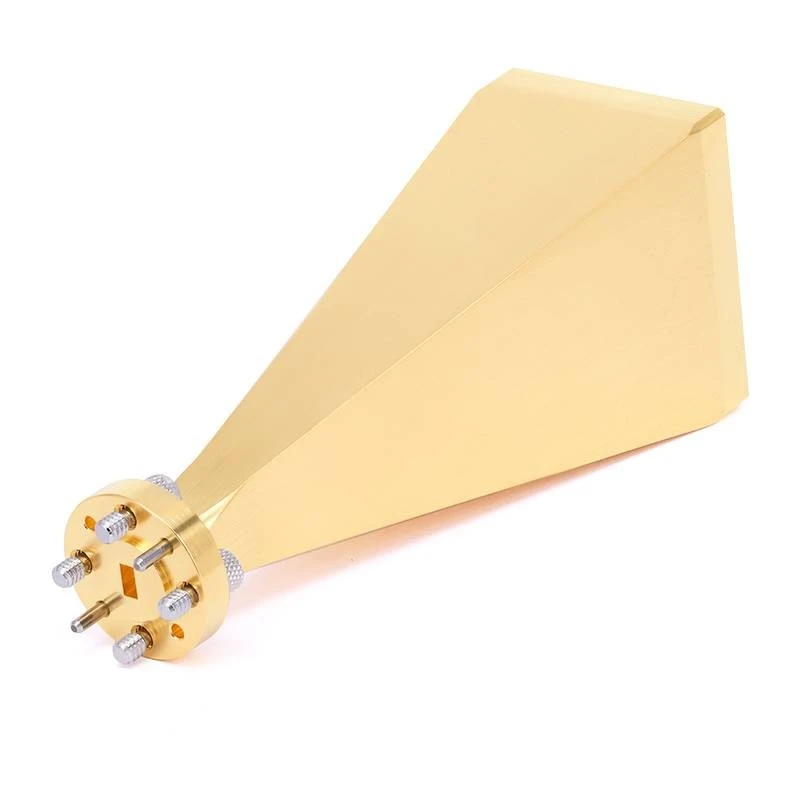
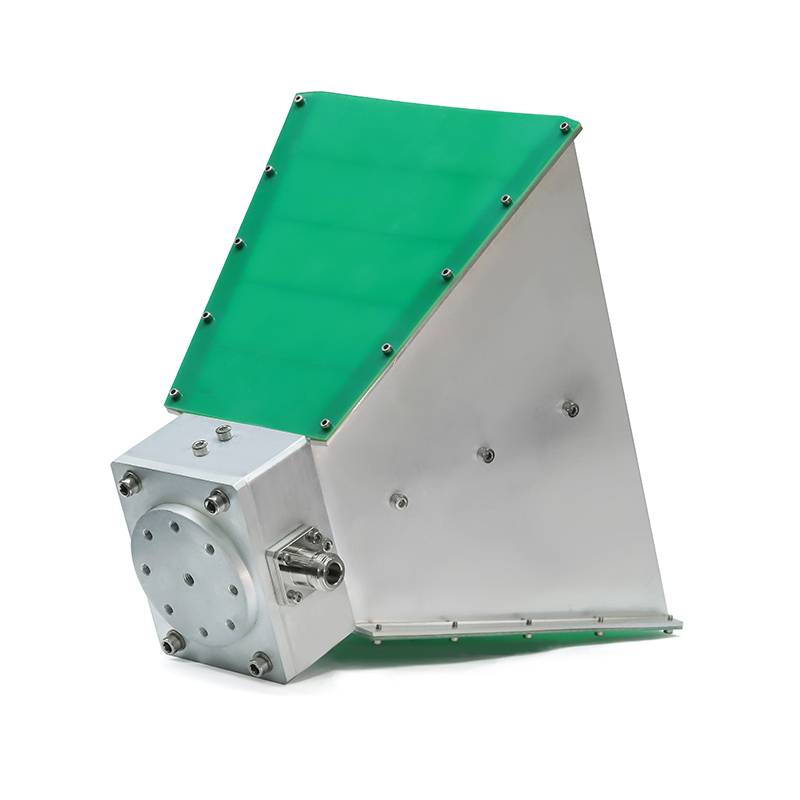
The shape of an antenna also affects its gain. Different antenna designs have different radiation patterns and gain characteristics. For instance, Log-periodic Antennas are designed to have a relatively constant gain over a wide frequency range. They are often used in applications where a broadband antenna is required, such as in radio and television broadcasting. On the other hand, Horn Antennas are known for their high gain and low side-lobe levels, making them suitable for applications such as radar and satellite communication.
Operating Frequency
The operating frequency of an antenna is another important factor. Higher frequency antennas generally have higher gain for a given physical size. This is because the wavelength of the electromagnetic wave is shorter at higher frequencies, allowing the antenna to capture or radiate more energy. However, higher frequency antennas also tend to have narrower bandwidths, which may limit their use in some applications.
Applications of High-Gain Antennas
High-gain antennas are used in a wide range of applications where a strong and focused signal is required.
Point-to-Point Communication
In point-to-point communication systems, such as microwave links and fiber-optic backhaul, high-gain antennas are used to establish reliable connections over long distances. By focusing the signal in a specific direction, these antennas can overcome the attenuation of the electromagnetic wave as it travels through the atmosphere, ensuring a strong and stable communication link.
Satellite Communication
Satellite communication systems rely on high-gain antennas to communicate with satellites in space. These antennas need to be able to transmit and receive signals over long distances and in the presence of interference. High-gain antennas can provide the necessary signal strength and directionality to establish a reliable link with the satellite.
Radar Systems
Radar systems use high-gain antennas to detect and track objects at long distances. The high gain of the antenna allows the radar to send out a powerful signal and receive the reflected signal from the target. This enables the radar to accurately determine the position, speed, and other characteristics of the target.
Choosing the Right Antenna Gain
Selecting the appropriate antenna gain depends on the specific requirements of the application. In some cases, a high-gain antenna may be necessary to achieve the desired communication range or signal strength. However, in other cases, a lower-gain antenna may be more suitable, especially if a wide coverage area is required.
When choosing an antenna, it is important to consider factors such as the distance between the transmitter and receiver, the operating frequency, the environment in which the antenna will be used, and the available power. Our team of experts at [Antenna Supplier Name] can help you evaluate your needs and select the right antenna with the appropriate gain for your application.
Conclusion
Antenna gain is a critical parameter that determines an antenna's performance in transmitting and receiving electromagnetic waves. Understanding the concept of antenna gain, the factors that affect it, and its applications is essential for selecting the right antenna for a given application. As an antennas supplier, we are committed to providing our customers with high-quality antennas that meet their specific requirements. Whether you need a high-gain antenna for long-distance communication or a low-gain antenna for wide-area coverage, we have the expertise and products to help you achieve your goals.
If you are interested in learning more about our antenna products or have specific requirements for your application, please feel free to contact us. Our sales team is ready to assist you in selecting the right antenna and discussing the details of your project. We look forward to the opportunity to work with you and provide you with the best antenna solutions.
References
- Balanis, C. A. (2016). Antenna Theory: Analysis and Design (4th ed.). Wiley.
- Stutzman, W. L., & Thiele, G. A. (2012). Antenna Theory and Design (3rd ed.). Wiley.
- Kraus, J. D., & Marhefka, R. J. (2002). Antennas for All Applications (3rd ed.). McGraw-Hill.


