

What is the power handling capacity of a horn antenna?
Leave a message

As a trusted supplier of Horn Antennas, I often encounter inquiries about the power handling capacity of these remarkable devices. Understanding the power handling capacity is crucial for anyone looking to use horn antennas in various applications, from telecommunications to radar systems. In this blog post, I will delve into the concept of power handling capacity, the factors that influence it, and why it matters in real - world scenarios.
What is Power Handling Capacity?
Power handling capacity refers to the maximum amount of power that a horn antenna can safely handle without suffering significant damage or degradation in performance. It is typically measured in watts (W) and is a critical specification for determining the suitability of a horn antenna for a particular application. When an antenna is subjected to power levels beyond its capacity, it can lead to overheating, arcing, and even permanent damage to the antenna structure.

Factors Affecting Power Handling Capacity
1. Material and Construction
The materials used in the construction of a horn antenna play a significant role in its power handling capacity. High - quality conductors, such as copper or aluminum, are commonly used due to their excellent electrical conductivity and heat dissipation properties. The thickness and quality of the conductive material also matter. A thicker conductor can handle more power as it has lower resistance, which reduces the amount of heat generated when current flows through it.
The dielectric material used inside the horn antenna, if any, also affects power handling. Dielectric materials with low loss tangents are preferred as they minimize the amount of power absorbed and converted into heat. For example, some horn antennas use Teflon - based dielectrics, which have very low loss characteristics and can withstand high - power levels.
2. Physical Dimensions
The size of the horn antenna is another important factor. Larger horn antennas generally have a higher power handling capacity. This is because they have a larger surface area for heat dissipation and can accommodate more electromagnetic energy without reaching critical power densities. The flare angle of the horn also matters. A wider flare angle can distribute the power more evenly across the antenna, reducing the risk of localized heating.
3. Frequency of Operation
The frequency at which the horn antenna operates has a direct impact on its power handling capacity. At higher frequencies, the skin effect becomes more pronounced. The skin effect causes the current to flow mostly near the surface of the conductor, increasing the effective resistance and thus generating more heat. As a result, horn antennas operating at higher frequencies may have a lower power handling capacity compared to those operating at lower frequencies.
4. Environmental Conditions
The operating environment can also influence the power handling capacity of a horn antenna. High ambient temperatures can reduce the antenna's ability to dissipate heat, which in turn lowers its power handling capacity. Humidity and the presence of contaminants in the air can also cause arcing and corrosion, further degrading the antenna's performance and power - handling capabilities.
Importance of Power Handling Capacity in Different Applications
1. Telecommunications
In telecommunications, horn antennas are often used for point - to - point links and satellite communications. These applications require high - power signals to ensure reliable communication over long distances. If the power handling capacity of the horn antenna is not sufficient, it can lead to signal degradation, increased bit error rates, and even complete communication failure. For example, in a satellite ground station, a horn antenna with inadequate power handling may not be able to transmit or receive high - power signals from the satellite, resulting in poor communication quality.
2. Radar Systems
Radar systems rely on high - power signals to detect and track objects. Horn antennas are commonly used as radar transmitters and receivers. The power handling capacity of the horn antenna in a radar system is critical to ensure accurate detection and long - range performance. If the antenna cannot handle the high - power pulses generated by the radar transmitter, it can cause damage to the antenna and reduce the overall effectiveness of the radar system.
3. Testing and Measurement
In testing and measurement applications, horn antennas are used to radiate or receive electromagnetic signals for the purpose of evaluating the performance of other devices. High - power signals may be required to simulate real - world conditions. A horn antenna with a high power handling capacity is essential to ensure accurate and reliable testing results.
Our Horn Antennas and Power Handling Capacity
As a leading supplier of Horn Antennas, we understand the importance of power handling capacity. Our horn antennas are designed and manufactured using the highest quality materials and advanced manufacturing techniques to ensure optimal power handling performance.
We offer a wide range of horn antennas with different power handling capacities to meet the diverse needs of our customers. Whether you need a horn antenna for low - power applications or high - power radar systems, we have the right solution for you. Our engineering team can also provide customized solutions based on your specific requirements.
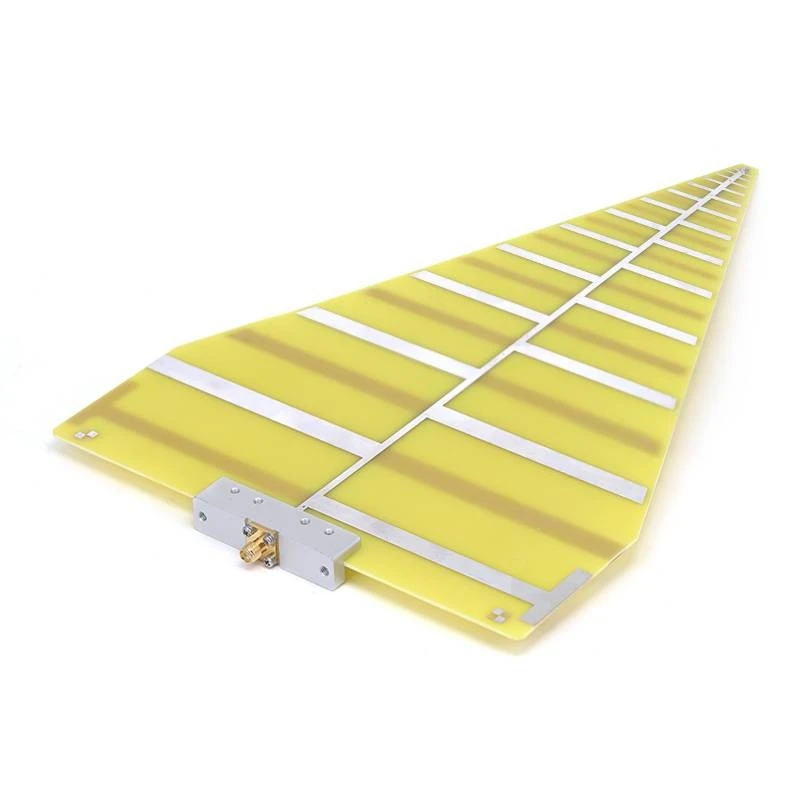
In addition to our standard horn antennas, we also offer Log - periodic Antennas for applications that require a wide frequency range. Log - periodic antennas are known for their broadband characteristics and can be used in conjunction with horn antennas in some applications.
Contact Us for Your Antenna Needs
If you are in the market for high - quality horn antennas or need more information about power handling capacity, we encourage you to contact us. Our experienced sales team is ready to assist you in selecting the right antenna for your application. We can provide detailed technical specifications, performance data, and pricing information. Whether you are a telecommunications company, a radar system manufacturer, or a testing laboratory, we have the expertise and products to meet your needs. Let's start a conversation about how our horn antennas can enhance your projects.
References
- Balanis, C. A. (2016). Antenna Theory: Analysis and Design. Wiley.
- Silver, S. (Ed.). (1949). Microwave Antenna Theory and Design. MIT Radiation Laboratory Series.
- Stutzman, W. L., & Thiele, G. A. (2012). Antenna Theory and Design. Wiley.


