
What is the role of DC blocks in signal processing?
Leave a message

Hey there! As a supplier of DC blocks, I've been getting a lot of questions lately about what these little gadgets actually do in signal processing. So, I thought I'd take a few minutes to break it down for you and explain the role of DC blocks in a way that's easy to understand.
First things first, let's talk about what a DC block is. Simply put, a DC block is a device that blocks direct current (DC) while allowing alternating current (AC) to pass through. It's like a filter that separates the DC component of a signal from the AC component. This might seem like a small thing, but it's actually incredibly important in many different applications.
One of the most common uses of DC blocks is in audio systems. In an audio signal, there's often a DC offset, which is a constant voltage that can cause problems for speakers and other audio equipment. If this DC offset isn't removed, it can cause the speaker cones to move out of their neutral position, which can lead to distortion and even damage to the speakers over time. By using a DC block, you can remove this DC offset and ensure that only the AC audio signal is passed through to the speakers, resulting in cleaner, clearer sound.

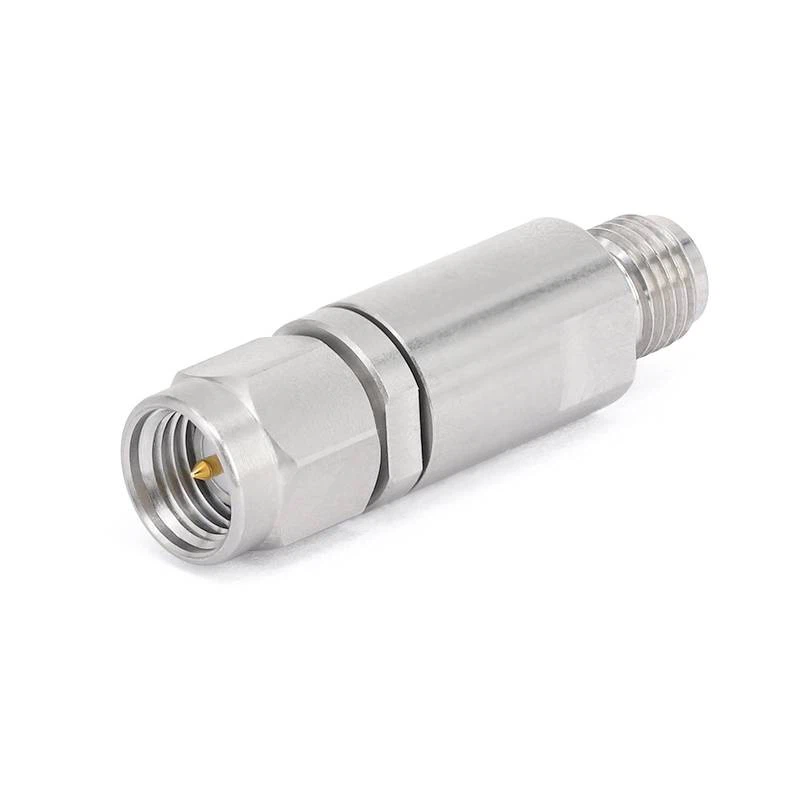
Another important application of DC blocks is in radio frequency (RF) systems. In RF signals, DC components can interfere with the proper functioning of the system. For example, in a wireless communication system, a DC offset in the RF signal can cause problems with the receiver's ability to accurately detect and decode the signal. By using a DC block, you can remove this DC component and improve the overall performance of the RF system.
DC blocks are also commonly used in test and measurement equipment. When measuring electrical signals, it's often important to separate the DC and AC components of the signal to get an accurate reading. For example, in a power supply, you might want to measure the AC ripple voltage while ignoring the DC voltage. A DC block can be used to block the DC voltage and allow only the AC ripple voltage to be measured.
Now that we've talked about some of the common applications of DC blocks, let's take a closer look at how they work. There are several different types of DC blocks, but the most common type is a capacitor-based DC block. A capacitor is an electronic component that stores electrical energy in an electric field. When a DC voltage is applied to a capacitor, it charges up to the voltage of the DC source and then blocks any further DC current from flowing. However, when an AC voltage is applied to the capacitor, it alternately charges and discharges, allowing the AC current to pass through.
In a capacitor-based DC block, the capacitor is connected in series with the signal path. The DC component of the signal is blocked by the capacitor, while the AC component is allowed to pass through. The value of the capacitor determines the frequency range over which the DC block will work effectively. A larger capacitor will block lower frequencies, while a smaller capacitor will block higher frequencies.
Another type of DC block is an inductor-based DC block. An inductor is an electronic component that stores electrical energy in a magnetic field. When a DC current is applied to an inductor, it creates a magnetic field that opposes the flow of the DC current. However, when an AC current is applied to the inductor, the magnetic field changes direction, allowing the AC current to pass through.
In an inductor-based DC block, the inductor is connected in series with the signal path. The DC component of the signal is blocked by the inductor, while the AC component is allowed to pass through. Like a capacitor-based DC block, the value of the inductor determines the frequency range over which the DC block will work effectively. A larger inductor will block lower frequencies, while a smaller inductor will block higher frequencies.
So, now that you know what a DC block is and how it works, you might be wondering why you would need one. Well, there are several reasons why you might want to use a DC block in your signal processing system.
First of all, as we mentioned earlier, a DC block can help to improve the performance of your audio system by removing the DC offset from the audio signal. This can result in cleaner, clearer sound and can help to prevent damage to your speakers.
Secondly, a DC block can help to improve the performance of your RF system by removing the DC component from the RF signal. This can help to reduce interference and improve the overall reliability of the system.
Finally, a DC block can be used in test and measurement equipment to separate the DC and AC components of a signal and get an accurate reading. This can be especially important in applications where precise measurements are required.
At our company, we offer a wide range of DC blocks to meet the needs of different applications. Our Inner DC Blocks are designed to provide high performance and reliability in a compact and cost-effective package. Whether you're working on an audio system, an RF system, or a test and measurement application, we have the right DC block for you.
If you're interested in learning more about our DC blocks or if you have any questions about signal processing, please don't hesitate to contact us. We're always happy to help and can provide you with more information about our products and services.
In conclusion, DC blocks play an important role in signal processing by separating the DC and AC components of a signal. They are used in a wide range of applications, including audio systems, RF systems, and test and measurement equipment. By using a DC block, you can improve the performance of your system and ensure that your equipment is operating at its best. If you're in the market for a DC block, be sure to check out our Inner DC Blocks and see how they can benefit your application.
References
- "Signal Processing: Principles and Practice" by John G. Proakis and Dimitris G. Manolakis
- "RF Circuit Design" by Chris Bowick
- "Audio Engineering Handbook" by Glen Ballou


