
What is the power handling capacity of an antenna?
Leave a message

As a seasoned antennas supplier, I've encountered numerous inquiries regarding the power handling capacity of antennas. This technical aspect is crucial for both amateur radio enthusiasts and large - scale telecommunication companies. It determines how much power an antenna can safely handle without suffering damage or significant performance degradation. In this blog, I'll delve deep into the concept of an antenna's power handling capacity, factors that influence it, and why it matters in various applications.

Understanding Power Handling Capacity
The power handling capacity of an antenna refers to the maximum amount of electrical power that the antenna can receive or transmit without experiencing physical damage or a substantial reduction in its efficiency. It is typically measured in watts (W) and is a critical specification when selecting an antenna for a particular application. For example, in high - power radio broadcasting, an antenna with a low power handling capacity may overheat, leading to melted components or even a complete failure of the antenna system.
When an antenna is exposed to power levels beyond its capacity, several things can happen. The most common issue is overheating. The electrical energy is converted into heat within the antenna's conductors and dielectric materials. If the heat cannot be dissipated effectively, it can cause the materials to expand, warp, or melt. This not only damages the antenna itself but can also lead to changes in its radiation pattern, which can affect the quality of the transmitted or received signal.
Factors Influencing Power Handling Capacity
1. Antenna Design
The physical design of an antenna plays a significant role in determining its power handling capacity. Different types of antennas have different power - handling capabilities. For instance, Log - periodic Antennas are known for their wide - band performance. Their design consists of a series of dipole elements of different lengths, which are arranged in a logarithmic pattern. This design allows them to handle relatively high power levels because the power is distributed across multiple elements, reducing the stress on any single component.
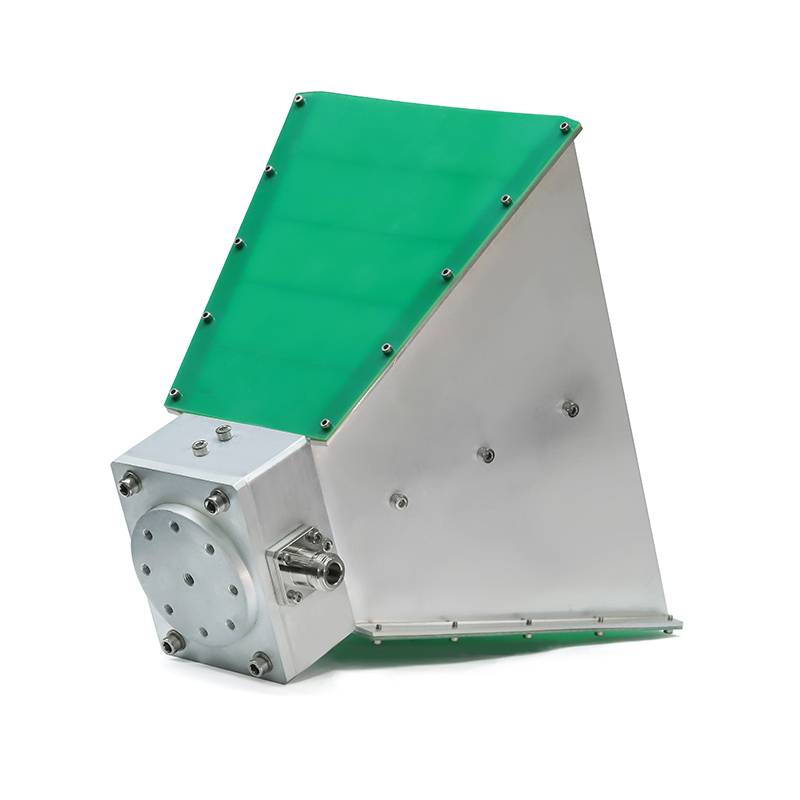
On the other hand, Horn Antennas are often used in high - frequency applications. Their smooth, flared shape helps in efficient radiation of electromagnetic waves. Horn antennas can handle high power levels because of their large surface area, which allows for better heat dissipation. The larger the surface area of an antenna, the more effectively it can radiate heat away from its components.
2. Materials Used
The materials used in the construction of an antenna are also crucial. Conductors with high conductivity, such as copper or silver - plated copper, are commonly used because they can carry electrical current with minimal resistance. Lower resistance means less power is dissipated as heat, allowing the antenna to handle higher power levels.
Dielectric materials, which separate the conductors in an antenna, also affect power handling. Materials with low loss tangent, such as Teflon or certain types of ceramics, are preferred because they absorb less energy from the electromagnetic field. This reduces the amount of heat generated within the dielectric and helps the antenna maintain its performance at higher power levels.
3. Environmental Conditions
The environment in which an antenna operates can have a significant impact on its power handling capacity. In hot and humid conditions, the ability of an antenna to dissipate heat is reduced. High humidity can also cause corrosion of the antenna's conductors, which increases resistance and reduces power handling.
In addition, exposure to extreme weather conditions, such as strong winds, heavy rain, or snow, can cause physical damage to the antenna. Even minor damage, such as a bent element, can change the antenna's impedance and reduce its power handling capacity.
Importance of Power Handling Capacity in Different Applications
1. Radio Broadcasting
In radio broadcasting, high - power transmitters are used to cover large areas. Antennas with high power handling capacity are essential to ensure reliable transmission. For example, in AM radio broadcasting, where power levels can reach several kilowatts, an antenna with a low power handling capacity would quickly overheat and fail. A well - designed antenna with sufficient power handling can maintain a stable radiation pattern, ensuring that the radio signal is transmitted clearly over a wide area.
2. Wireless Communication Networks
In wireless communication networks, such as cellular networks, base station antennas need to handle a significant amount of power to provide coverage to a large number of users. As the demand for high - speed data and voice services increases, the power requirements of these antennas also rise. Antennas with high power handling capacity can support the increased traffic without experiencing performance issues.
3. Radar Systems
Radar systems use high - power pulses to detect and track objects. The antennas in radar systems must be able to handle these high - power pulses without damage. A radar antenna with insufficient power handling capacity may not be able to transmit strong enough signals, reducing the range and accuracy of the radar system.
How to Determine the Right Power Handling Capacity
When selecting an antenna, it's essential to consider the power requirements of your specific application. First, determine the maximum power output of your transmitter. This information is usually provided in the transmitter's specifications. Then, choose an antenna with a power handling capacity that is at least equal to or greater than the transmitter's maximum power output.
It's also important to consider any future expansion or changes in your system. If you plan to increase the power of your transmitter in the future, it's advisable to choose an antenna with a higher power handling capacity to accommodate these changes.
Conclusion
The power handling capacity of an antenna is a critical factor that can significantly impact the performance and reliability of any wireless communication system. As an antennas supplier, I understand the importance of providing customers with antennas that meet their specific power requirements. Whether you're involved in radio broadcasting, wireless communication, or radar systems, choosing the right antenna with the appropriate power handling capacity is essential for optimal performance.
If you're in the market for antennas and need help selecting the right one for your application, don't hesitate to reach out. Our team of experts is ready to assist you in finding the perfect antenna solution. We offer a wide range of antennas with different power handling capacities to meet the diverse needs of our customers. Contact us today to start the procurement process and take your wireless communication to the next level.
References
- Balanis, C. A. (2016). Antenna Theory: Analysis and Design. Wiley.
- Kraus, J. D., & Marhefka, R. J. (2002). Antennas for All Applications. McGraw - Hill.


