

What is the return loss of DC blocks?
Leave a message

Return loss is a crucial parameter when it comes to DC blocks, and understanding its significance can greatly influence the performance and application of these essential components. As a supplier of DC blocks, I am well - versed in the intricacies of return loss and its implications for our products.
Understanding Return Loss
Return loss is a measure of how well a device or component matches the impedance of the transmission line it is connected to. In simple terms, it quantifies the amount of signal that is reflected back from the device rather than being transmitted through it. It is expressed in decibels (dB) and is calculated as the ratio of the power of the reflected signal to the power of the incident signal.
Mathematically, return loss (RL) is given by the formula: (RL = - 20\log_{10}\left(\frac{V_{r}}{V_{i}}\right)), where (V_{r}) is the voltage of the reflected signal and (V_{i}) is the voltage of the incident signal. A high return loss value indicates that most of the signal is being transmitted through the device, while a low return loss value implies significant signal reflection.
Importance of Return Loss in DC Blocks
DC blocks are used to block direct current (DC) while allowing alternating current (AC) signals to pass through. They are commonly employed in a variety of applications, such as radio frequency (RF) systems, telecommunications, and test and measurement equipment.
In these applications, minimizing signal reflection is of utmost importance. High return loss in DC blocks ensures that the AC signals are transmitted efficiently with minimal distortion. This is crucial for maintaining the integrity of the signal, especially in high - frequency applications where even small amounts of signal reflection can cause interference and degrade the overall performance of the system.
For example, in a wireless communication system, a DC block with poor return loss can lead to signal loss, reduced range, and increased bit error rates. On the other hand, a DC block with high return loss allows the RF signals to be transmitted cleanly, resulting in better signal quality and improved system performance.
Factors Affecting Return Loss in DC Blocks
Several factors can affect the return loss of DC blocks. One of the primary factors is the impedance matching between the DC block and the transmission line. If the impedance of the DC block does not match the impedance of the transmission line, a significant amount of signal will be reflected back.
The design and construction of the DC block also play a crucial role in determining its return loss. The materials used, the physical dimensions of the components, and the manufacturing process can all have an impact on the impedance characteristics of the DC block. For instance, using high - quality dielectric materials with low loss tangent can help improve the return loss performance of the DC block.
Frequency is another important factor. The return loss of a DC block can vary with frequency, and it is essential to specify the return loss performance over the operating frequency range of the application. In general, the return loss tends to degrade at higher frequencies due to the increased parasitic effects and the limitations of the materials and components used in the DC block.
Measuring Return Loss in DC Blocks
Measuring the return loss of DC blocks typically involves using a network analyzer. A network analyzer is a sophisticated instrument that can measure the scattering parameters (S - parameters) of a device, including the return loss (S11).
To measure the return loss of a DC block, the DC block is connected to the network analyzer using appropriate test cables. The network analyzer then sends a known signal to the DC block and measures the reflected signal. The return loss is calculated based on the ratio of the reflected signal power to the incident signal power.
It is important to note that the measurement setup should be carefully calibrated to ensure accurate results. Any errors in the calibration can lead to inaccurate return loss measurements, which can have a significant impact on the evaluation and selection of DC blocks for specific applications.
Our DC Blocks and Return Loss Performance
As a supplier of DC blocks, we understand the importance of providing products with excellent return loss performance. Our DC blocks are designed and manufactured using state - of - the - art technology and high - quality materials to ensure optimal impedance matching and minimal signal reflection.
We offer a wide range of DC blocks with different specifications to meet the diverse needs of our customers. Whether you need a DC block for a low - frequency application or a high - frequency application, we have the right product for you.
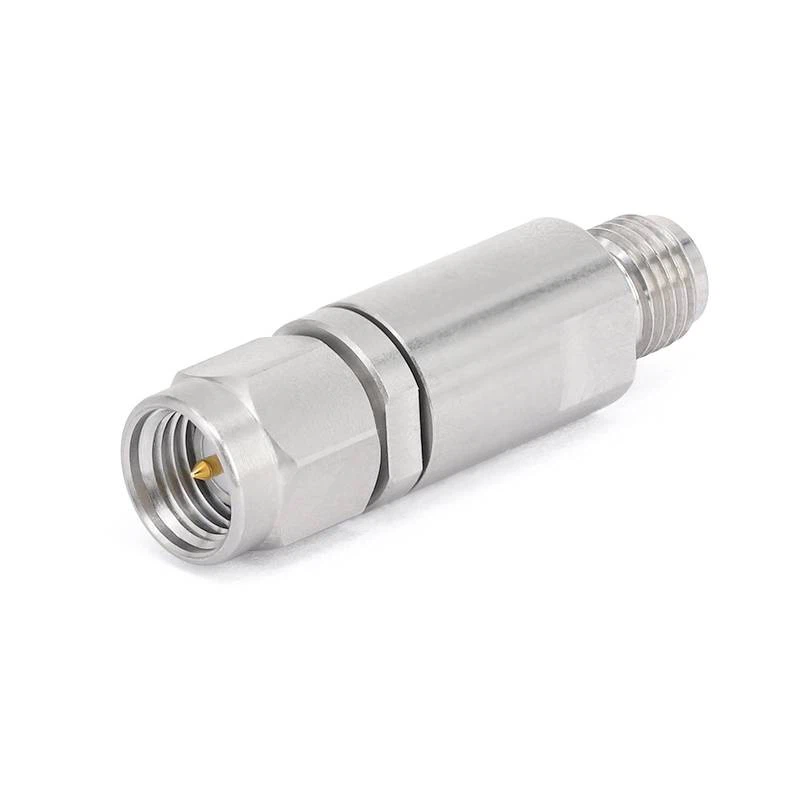
Our Inner DC Blocks are specifically designed to provide high return loss performance over a wide frequency range. These DC blocks are constructed using advanced materials and precision manufacturing techniques to ensure consistent and reliable performance.
We also conduct rigorous testing on all our DC blocks to ensure that they meet or exceed the specified return loss requirements. Our quality control process includes comprehensive S - parameter testing using the latest network analyzers to verify the return loss performance of each DC block before it is shipped to our customers.
Choosing the Right DC Block Based on Return Loss
When selecting a DC block for your application, it is important to consider the return loss requirements. You should first determine the operating frequency range of your application and the acceptable level of signal reflection.
If your application requires high - frequency operation and minimal signal distortion, you should look for DC blocks with high return loss values over the entire operating frequency range. On the other hand, if your application is less sensitive to signal reflection, you may be able to choose a DC block with a lower return loss, which may be more cost - effective.
It is also advisable to consult with our technical experts. We have a team of experienced engineers who can provide you with detailed information about the return loss performance of our DC blocks and help you select the right product for your specific application.
Conclusion
Return loss is a critical parameter for DC blocks, and understanding its significance is essential for ensuring the optimal performance of DC - blocking applications. At our company, we are committed to providing high - quality DC blocks with excellent return loss performance. Our products are designed to meet the diverse needs of our customers, and we offer comprehensive technical support to help you select the right DC block for your application.
If you are interested in learning more about our DC blocks or have any questions regarding return loss or other technical specifications, please do not hesitate to contact us. We are eager to engage in procurement discussions and help you find the best DC block solutions for your specific requirements.

References
- Pozar, D. M. (2011). Microwave Engineering. Wiley.
- Collin, R. E. (2001). Foundations for Microwave Engineering. Wiley.
- Agilent Technologies. (2009). Network Analyzer Basics Application Note.


