

What is the size of an N Adapter?
Leave a message

When it comes to RF (Radio Frequency) adapters, the N Adapter stands out as a crucial component in many communication and electronic systems. As a trusted N Adapter supplier, I often receive inquiries about the size of an N Adapter. In this blog, I'll delve into the details of the N Adapter's size, its significance, and how it compares to other types of adapters.
Understanding the Basics of N Adapters
N Adapters are widely used in RF applications due to their excellent performance and reliability. They are designed to connect different RF components, such as antennas, cables, and instruments, ensuring seamless signal transmission. The N Adapter is named after its inventor, Paul Neill of Bell Labs, and is known for its robust construction and high - frequency capabilities.
Physical Dimensions of N Adapters
The size of an N Adapter is defined by a set of standard specifications. The outer diameter of the male N connector is approximately 0.68 inches (17.272 mm). This relatively large size contributes to its mechanical stability and durability. The female N connector has a corresponding inner diameter to fit the male connector snugly.
The length of an N Adapter can vary depending on its type and application. For a straight N - to - N adapter, the length is typically around 1 to 1.5 inches (25.4 to 38.1 mm). However, right - angle N Adapters may have different lengths due to their design. The right - angle configuration is useful in situations where space is limited or when a specific orientation of the connected components is required.
The threading on an N Adapter is also an important aspect of its size. N connectors use a 3/4 - 16 UNEF (Unified Extra Fine) thread. This thread pitch ensures a secure and reliable connection between the adapter and other RF components. The threading is precision - machined to meet strict industry standards, which helps to maintain the integrity of the RF signal.
Significance of the Size
The size of an N Adapter is not just a random specification; it has several important implications. Firstly, the relatively large size of the N Adapter allows for better power handling. In high - power RF applications, such as in radio transmitters and base stations, the larger physical dimensions help to dissipate heat more effectively. This prevents overheating, which can degrade the performance of the adapter and other connected components.
Secondly, the size of the N Adapter affects its mechanical stability. The larger connectors are less likely to be accidentally disconnected or damaged during normal use. This is especially important in industrial and outdoor environments where the equipment may be subject to vibrations, shocks, and rough handling.
Finally, the size of the N Adapter is related to its frequency range. The N Adapter is designed to operate at frequencies up to 11 GHz. The physical dimensions are optimized to minimize signal loss and reflections at these frequencies. The larger size helps to maintain the characteristic impedance of the RF system, which is crucial for efficient signal transmission.
Comparison with Other Adapters
To better understand the size of an N Adapter, it's useful to compare it with other types of RF adapters. For example, the GPPO Mini SMP Adapter is much smaller in size. The GPPO Mini SMP Adapter is designed for high - frequency applications up to 65 GHz. Its small size makes it suitable for use in compact electronic devices, such as smartphones and tablets. However, due to its small size, it has a lower power - handling capacity compared to the N Adapter.
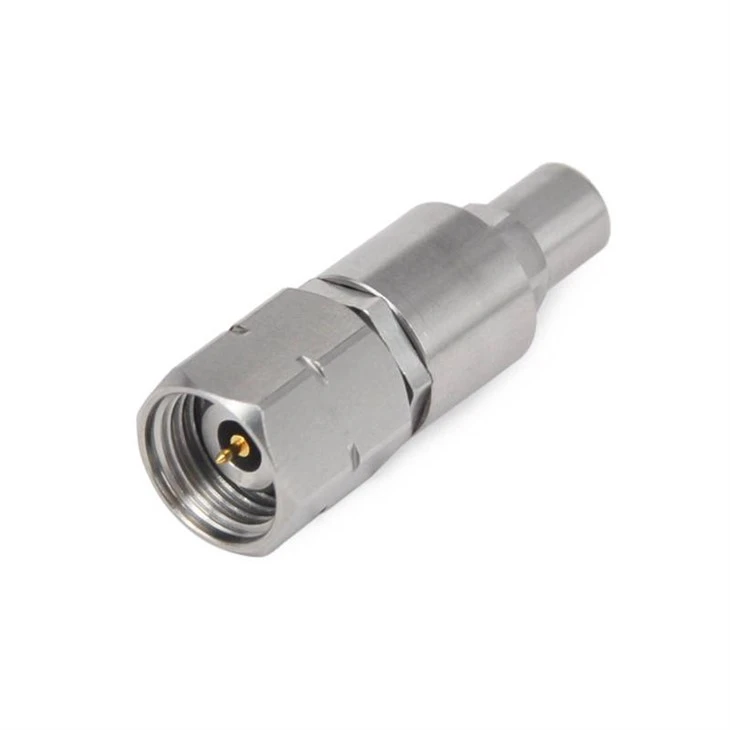

The 2.92mm Adapter is another popular RF adapter. It is often used in microwave and millimeter - wave applications. The 2.92mm Adapter is smaller than the N Adapter, with an outer diameter of approximately 0.115 inches (2.92 mm). It is capable of operating at frequencies up to 40 GHz. The smaller size of the 2.92mm Adapter allows for higher - frequency operation but may have limitations in terms of power handling and mechanical robustness.
The 3.5mm Adapter is also a well - known RF adapter. It has an outer diameter of about 0.138 inches (3.5 mm) and can operate at frequencies up to 34 GHz. Similar to the 2.92mm Adapter, the 3.5mm Adapter is smaller and more suitable for high - frequency, low - power applications compared to the N Adapter.
Quality and Size Consistency
As a supplier of N Adapters, we understand the importance of maintaining consistent size and quality. Our manufacturing process is highly controlled to ensure that each N Adapter meets the exact specifications. We use advanced machining techniques and quality control measures to guarantee that the outer diameter, length, and threading of the adapters are within the tolerance limits.
We also conduct rigorous testing on our N Adapters to ensure their performance. This includes testing for impedance matching, insertion loss, and return loss. By maintaining high - quality standards, we can provide our customers with reliable N Adapters that will perform well in their RF systems.
Conclusion and Call to Action
In conclusion, the size of an N Adapter is an important factor that affects its performance, power handling, and mechanical stability. The relatively large size of the N Adapter makes it suitable for high - power, high - reliability RF applications. When compared to other types of RF adapters, such as the GPPO Mini SMP Adapter, 2.92mm Adapter, and 3.5mm Adapter, the N Adapter offers a unique combination of size, power handling, and frequency range.
If you are in the market for high - quality N Adapters or have any questions about their size and application, I encourage you to reach out to us for a detailed discussion. We are committed to providing you with the best RF adapter solutions for your specific needs.
References
- "RF Connectors and Adapters: A Technical Guide", published by a leading RF technology research institute.
- Industry standards documents related to N connectors and adapters.


