
Why is a low noise figure important in RF amplifiers?
Leave a message

In the realm of radio frequency (RF) technology, the performance of amplifiers stands as a cornerstone for numerous applications, from wireless communication systems to radar and satellite communications. Among the various parameters that define the quality of an RF amplifier, the noise figure holds a position of paramount importance. As a leading RF amplifiers supplier, I've witnessed firsthand how a low noise figure can transform the efficiency and reliability of RF systems. In this blog, I'll delve into the reasons why a low noise figure is crucial in RF amplifiers, exploring its impact on system performance and the benefits it offers to our customers.
Understanding the Noise Figure
Before we explore the significance of a low noise figure, it's essential to understand what it represents. The noise figure (NF) of an RF amplifier is a measure of how much the amplifier degrades the signal-to-noise ratio (SNR) of the input signal. In simpler terms, it quantifies the amount of additional noise that the amplifier adds to the signal as it passes through. A lower noise figure indicates that the amplifier adds less noise, preserving the integrity of the original signal.
Mathematically, the noise figure is defined as the ratio of the input SNR to the output SNR, expressed in decibels (dB). For example, an amplifier with a noise figure of 1 dB adds relatively little noise compared to one with a noise figure of 3 dB. The goal in RF amplifier design is to minimize the noise figure as much as possible, ensuring that the amplifier amplifies the desired signal without introducing excessive noise.
Signal Integrity and Sensitivity
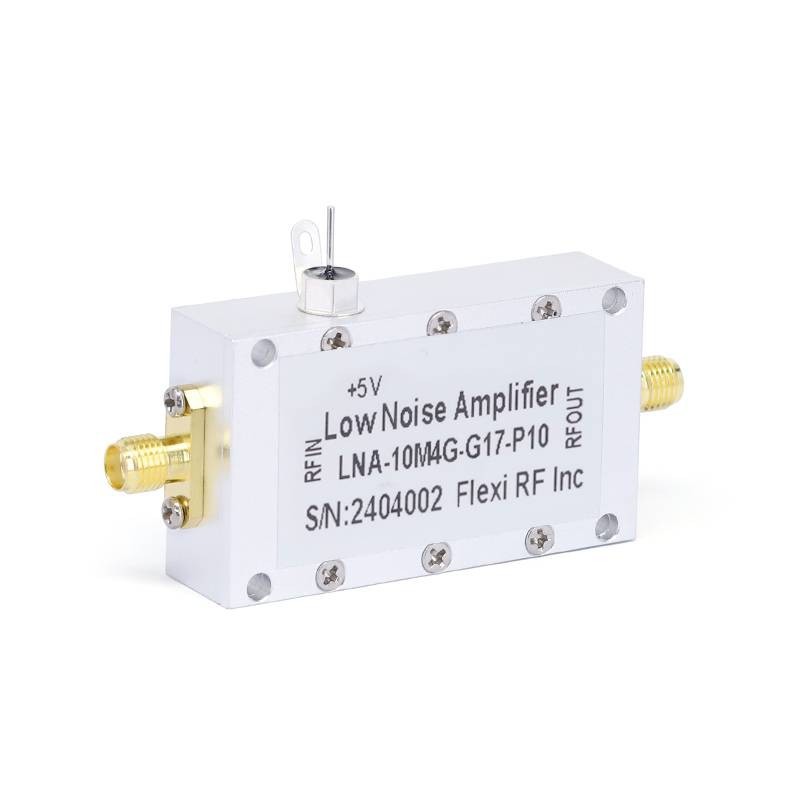
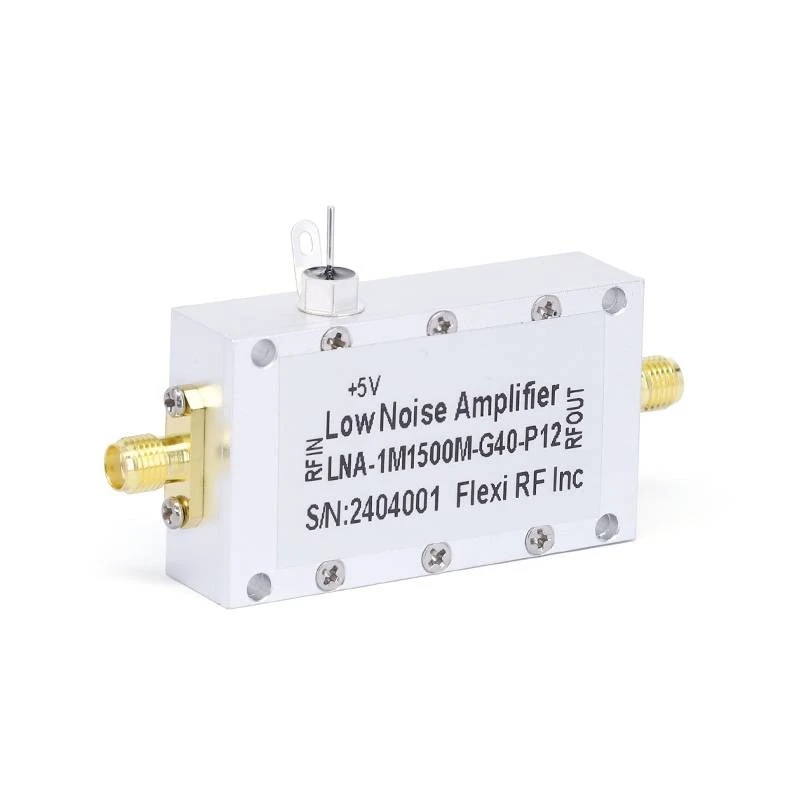
One of the primary reasons why a low noise figure is important in RF amplifiers is its impact on signal integrity and sensitivity. In many RF applications, the received signals are extremely weak, often buried in background noise. A low-noise amplifier (LNA) with a low noise figure can amplify these weak signals without significantly degrading the SNR, allowing the receiver to detect and process the signals more accurately.
For instance, in wireless communication systems such as cellular networks, a low-noise amplifier at the front end of the receiver can improve the sensitivity of the system, enabling it to receive signals from greater distances or in areas with high interference. This translates to better call quality, faster data transfer rates, and improved coverage for end-users. Similarly, in radar systems, a low-noise amplifier can enhance the ability to detect small targets at long ranges by amplifying the weak radar echoes without adding excessive noise.
Improved System Performance
A low noise figure also contributes to improved overall system performance. By preserving the SNR of the input signal, a low-noise amplifier reduces the likelihood of errors and interference in the system. This is particularly important in applications where the accuracy of the received signal is critical, such as in satellite communications and military radar systems.
In satellite communications, for example, the signals transmitted from satellites are often very weak by the time they reach the Earth's surface. A low-noise amplifier at the ground station can amplify these signals with minimal noise, ensuring that the data transmitted by the satellite can be received and decoded accurately. This is essential for applications such as weather forecasting, remote sensing, and global positioning systems (GPS).
In military radar systems, a low-noise amplifier can enhance the detection and tracking capabilities of the radar, allowing it to distinguish between different targets and provide more accurate information about their location and movement. This is crucial for national security and defense applications.
Reduced Power Consumption
Another advantage of using RF amplifiers with a low noise figure is reduced power consumption. In many RF systems, the noise figure is directly related to the power consumption of the amplifier. A low-noise amplifier typically requires less power to achieve the same level of performance as a high-noise amplifier, resulting in lower energy consumption and longer battery life for portable devices.
For example, in mobile phones and other wireless devices, a low-noise amplifier with a low noise figure can reduce the power consumption of the receiver, extending the battery life of the device. This is particularly important for users who rely on their devices for extended periods of time without access to a power source.
Competitive Advantage in the Market
As an RF amplifiers supplier, offering products with a low noise figure provides a significant competitive advantage in the market. Customers are increasingly demanding high-performance RF amplifiers that can deliver superior signal quality and reliability. By providing amplifiers with a low noise figure, we can meet the needs of our customers and differentiate ourselves from our competitors.
In addition, a low noise figure is often a key specification in many RF applications, and customers may require amplifiers with a specific noise figure to meet the requirements of their systems. By offering a wide range of RF amplifiers with low noise figures, we can provide our customers with more options and flexibility, allowing them to choose the amplifier that best suits their needs.
Conclusion
In conclusion, a low noise figure is of utmost importance in RF amplifiers. It plays a crucial role in maintaining signal integrity, improving system sensitivity, enhancing overall system performance, reducing power consumption, and providing a competitive advantage in the market. As an RF amplifiers supplier, we understand the significance of a low noise figure and are committed to providing our customers with high-quality amplifiers that meet their specific requirements.
If you're in the market for RF amplifiers and are looking for products with a low noise figure, click here to explore our range of Low Noise Amplifiers. Our team of experts is also available to assist you in selecting the right amplifier for your application. Contact us today to discuss your needs and start a procurement洽谈.
References
- Pozar, D. M. (2011). Microwave Engineering (4th ed.). Wiley.
- Razavi, B. (2012). RF Microelectronics (2nd ed.). Prentice Hall.
- Vendelin, G. D., Pavio, A. M., & Rohde, U. L. (2005). Microwave Circuit Design Using Linear and Nonlinear Techniques (2nd ed.). Wiley.


