
How to reduce the harmonic distortion in power dividers?
Leave a message

Harmonic distortion in power dividers is a critical issue that can significantly impact the performance of various electronic systems. As a leading power dividers supplier, we understand the importance of minimizing harmonic distortion to ensure optimal functionality and reliability of our products. In this blog post, we will explore several effective strategies to reduce harmonic distortion in power dividers.
Understanding Harmonic Distortion in Power Dividers
Before delving into the methods of reducing harmonic distortion, it is essential to understand what harmonic distortion is and how it occurs in power dividers. Harmonic distortion refers to the presence of unwanted harmonic frequencies in the output signal of a power divider. These harmonic frequencies are integer multiples of the fundamental frequency of the input signal.
In power dividers, harmonic distortion can be caused by several factors, including non - linearities in the active and passive components, impedance mismatches, and the effects of parasitic elements. Non - linearities in transistors or diodes used in power dividers can generate harmonics when the input signal exceeds the linear operating range of these components. Impedance mismatches between the power divider and the connected circuits can also lead to reflections and the generation of harmonics. Parasitic elements such as stray capacitance and inductance can cause resonance at harmonic frequencies, further exacerbating the distortion problem.
Selecting High - Quality Components
One of the most fundamental ways to reduce harmonic distortion in power dividers is to select high - quality components. High - quality resistors, capacitors, and inductors have lower non - linearities and better tolerance values. For example, using precision resistors with low temperature coefficients can help maintain a stable impedance over a wide range of operating conditions, reducing the likelihood of impedance mismatches that can lead to harmonic distortion.
When it comes to active components, such as amplifiers used in some power dividers, choosing devices with high linearity is crucial. Modern semiconductor technologies offer amplifiers with excellent linearity performance, which can significantly reduce the generation of harmonics. By carefully selecting components based on their specifications and performance characteristics, we can minimize the sources of non - linearity in power dividers.
Optimizing Circuit Design
Circuit design plays a vital role in reducing harmonic distortion. One of the key aspects of circuit design is impedance matching. Ensuring that the input and output impedances of the power divider are well - matched to the source and load impedances can significantly reduce reflections and the associated harmonic generation. This can be achieved through the use of impedance - matching networks, such as LC networks or transmission line transformers.
Another important design consideration is the layout of the power divider circuit. Minimizing the length of traces and reducing the presence of parasitic elements can help prevent resonance at harmonic frequencies. For example, using a multi - layer PCB design can help isolate different signal paths and reduce the coupling between them, which can contribute to harmonic distortion. Additionally, proper grounding techniques can help reduce noise and interference, which can also affect the harmonic performance of the power divider.
Using Filtering Techniques
Filtering is an effective way to reduce harmonic distortion in power dividers. Low - pass filters can be used to remove high - frequency harmonics from the output signal. These filters can be designed to have a cut - off frequency that allows the fundamental frequency to pass through while attenuating the harmonic frequencies.
There are different types of low - pass filters, such as Butterworth, Chebyshev, and elliptic filters. Each type has its own characteristics in terms of pass - band ripple, stop - band attenuation, and phase response. The choice of filter type depends on the specific requirements of the power divider application. For example, if a flat pass - band response is required, a Butterworth filter may be a suitable choice.
In addition to low - pass filters, notch filters can also be used to target specific harmonic frequencies. Notch filters are designed to have a high attenuation at a particular frequency or a narrow range of frequencies. By using notch filters, we can selectively remove the most problematic harmonic frequencies from the output signal.
Thermal Management
Thermal management is often overlooked but is an important factor in reducing harmonic distortion in power dividers. High temperatures can cause the performance of components to degrade, leading to increased non - linearities and harmonic generation. For example, the resistance of resistors can change with temperature, which can affect the impedance matching of the power divider circuit.
Proper thermal management techniques, such as using heat sinks, fans, or thermal vias, can help dissipate heat from the power divider components. By maintaining a stable operating temperature, we can ensure that the components operate within their specified linear range, reducing the likelihood of harmonic distortion.
Testing and Calibration
Testing and calibration are essential steps in ensuring that the power divider has low harmonic distortion. During the manufacturing process, we use advanced testing equipment to measure the harmonic content of the output signal. This allows us to identify any potential issues with the power divider and make necessary adjustments.
Calibration can be used to fine - tune the performance of the power divider. By adjusting the values of components or the settings of the power divider circuit, we can optimize the output signal and reduce harmonic distortion. Regular testing and calibration can also help us monitor the long - term performance of the power divider and ensure that it continues to meet the required specifications.
Our Product Offerings
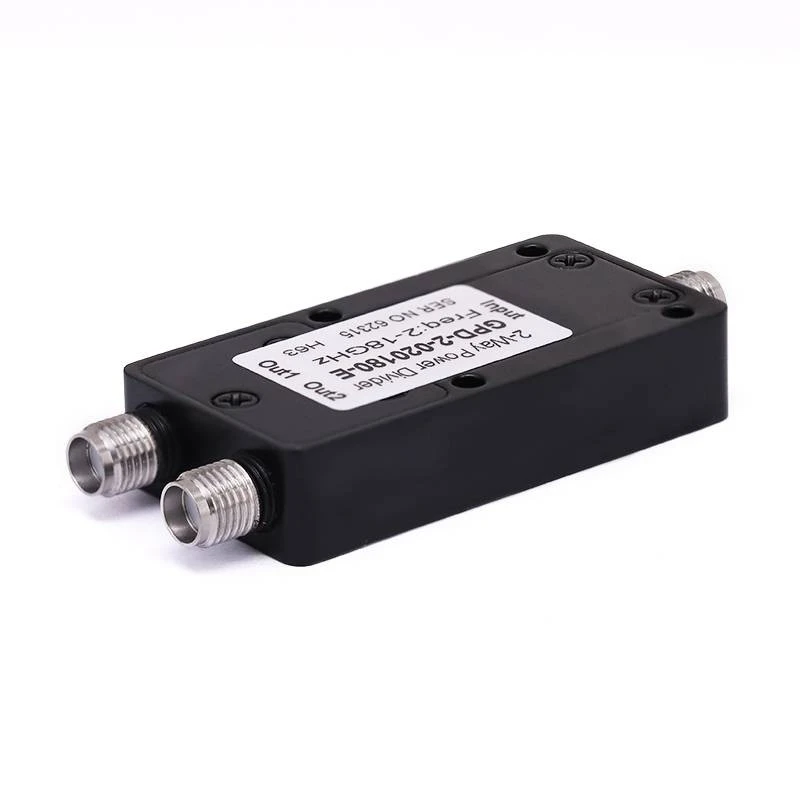
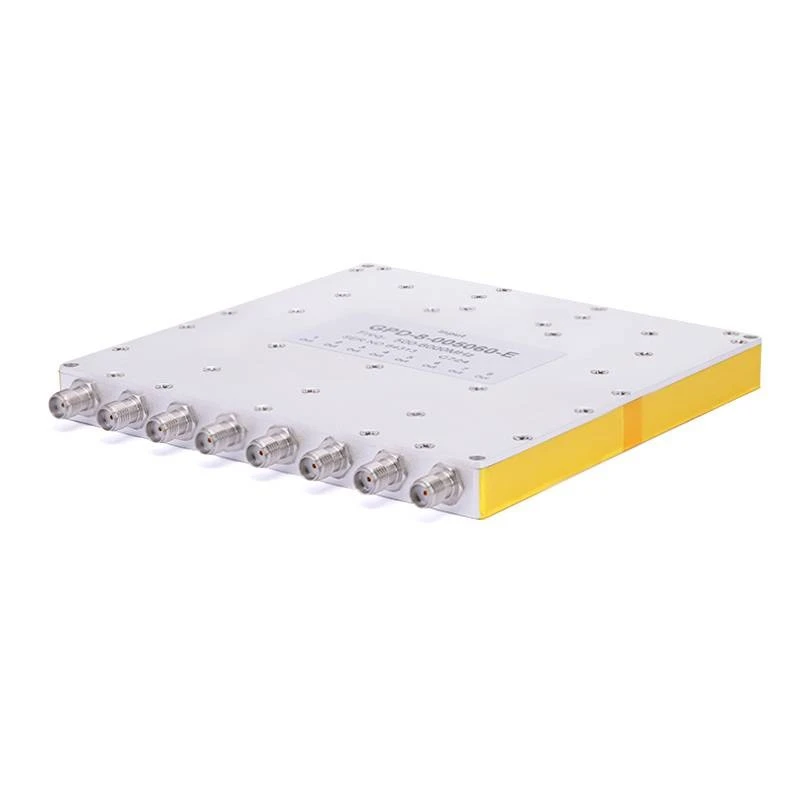
As a power dividers supplier, we offer a wide range of power dividers, including 2 - Way Power Dividers, 8 - Way Power Dividers, and 3 - Way Power Dividers. Our power dividers are designed with the latest technologies and high - quality components to minimize harmonic distortion. We also conduct rigorous testing and calibration to ensure that our products meet the highest standards of performance.
If you are looking for power dividers with low harmonic distortion for your application, we invite you to contact us for more information. Our team of experts can provide you with detailed technical support and help you select the most suitable power divider for your needs. Whether you are in the telecommunications, aerospace, or defense industry, we have the right power divider solution for you.
Conclusion
Reducing harmonic distortion in power dividers is a multi - faceted challenge that requires careful consideration of component selection, circuit design, filtering techniques, thermal management, and testing and calibration. By implementing these strategies, we can ensure that our power dividers offer high - performance and reliable operation. As a power dividers supplier, we are committed to providing our customers with the best - in - class products that meet their specific requirements. If you are interested in our power dividers or have any questions about reducing harmonic distortion, please feel free to contact us for a procurement discussion.
References
- Smith, R. A. (2015). RF Circuit Design. McGraw - Hill Education.
- Pozar, D. M. (2012). Microwave Engineering. John Wiley & Sons.
- Hayt, W. H., & Kemmerly, J. E. (2007). Engineering Circuit Analysis. McGraw - Hill.


