
What is the power gain of a horn antenna?
Leave a message

Yo, what's up everyone! I'm stoked to be here and talk to you about one of our hottest products at our company - horn antennas. And more specifically, we're gonna dig into the power gain of these bad boys.
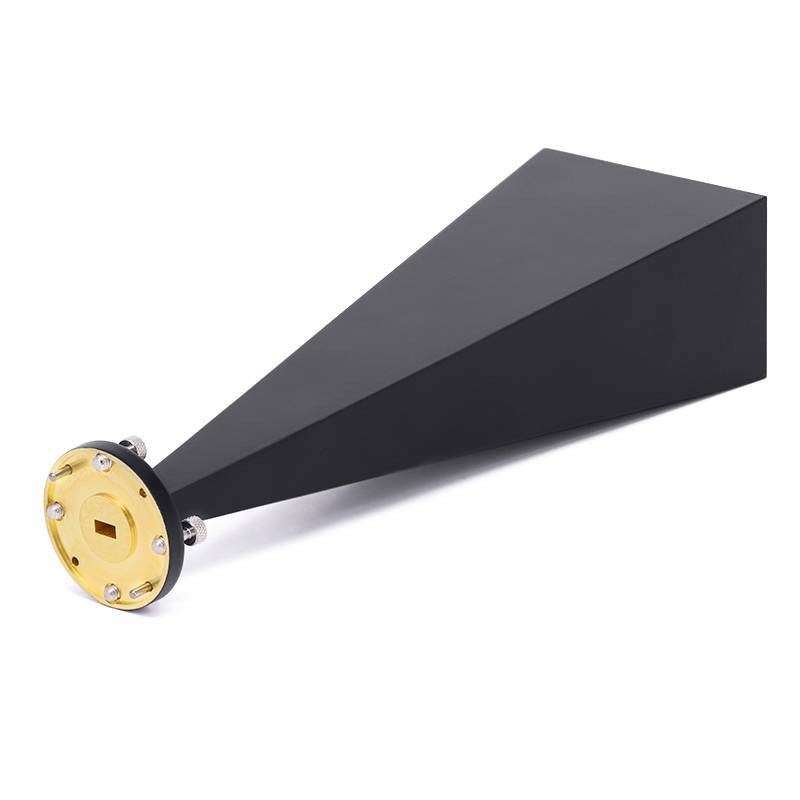
First off, let me give you a quick intro if you're not too familiar with horn antennas. They're a type of antenna that's shaped like a horn. Yeah, I know, pretty obvious from the name. But the shape isn't just for show. It plays a crucial role in how these antennas work.
Horn antennas are used in a whole bunch of applications. You'll find them in radar systems, satellite communications, and even in some radio astronomy setups. They're super versatile and can handle a wide range of frequencies.
So, what exactly is power gain when it comes to horn antennas? Well, power gain is a measure of how well an antenna can focus the radio waves it receives or transmits. Think of it like a flashlight. A regular flashlight spreads light out in all directions, but if you have a flashlight with a reflector, it can focus the light into a beam that's much more intense in one direction. That's kind of what power gain does for an antenna. It takes the power that's going into the antenna and focuses it in a specific direction, making the signal stronger in that area.
Now, let's get into the nitty - gritty of how power gain is calculated for horn antennas. The power gain of a horn antenna depends on a few factors. One of the most important ones is the size of the horn. Generally speaking, the bigger the horn, the higher the power gain. That's because a larger horn can capture more of the radio waves and direct them in the desired direction.
Another factor is the frequency of the signal. Different frequencies interact with the horn antenna in different ways. Higher frequencies tend to have a higher power gain in horn antennas compared to lower frequencies. This is because the wavelength of higher - frequency signals is shorter, and the horn can more effectively focus these shorter wavelengths.
There are also different types of horn antennas, and each type has its own characteristics when it comes to power gain. For example, there are pyramidal horn antennas, which are shaped like a pyramid. These are commonly used in many applications because they offer a good balance between power gain and bandwidth. Then there are conical horn antennas, which are shaped like a cone. They're often used in applications where a more circular radiation pattern is needed.
Let's talk a bit about the benefits of having a high - power gain horn antenna. If you're using a horn antenna for transmitting a signal, a high power gain means that your signal can travel further and be received more clearly at the other end. This is crucial in applications like satellite communications, where the signal has to travel vast distances through space.
On the receiving end, a high - power gain horn antenna can pick up weaker signals. This is super important in radio astronomy, where scientists are trying to detect extremely faint signals from distant stars and galaxies. A horn antenna with a high power gain can make it easier to detect these signals and gather more data.
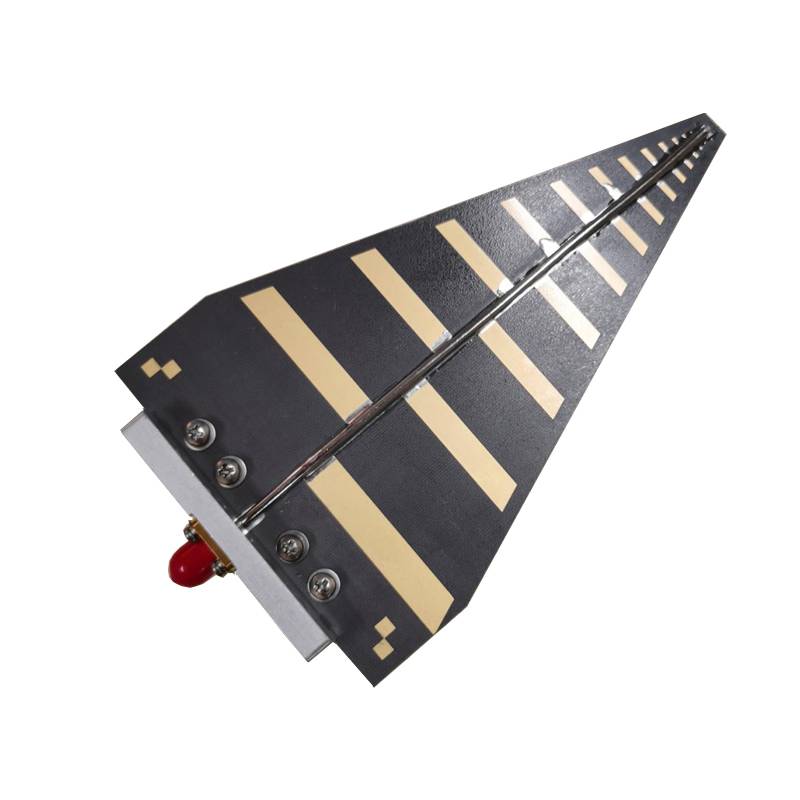
Now, I want to mention that we also offer Log-periodic Antennas at our company. These antennas have their own unique properties and are great for applications where a wide range of frequencies need to be covered. But today, we're really focused on our Horn Antennas.
When you're looking at the power gain of a horn antenna, you'll often see it expressed in decibels (dB). Decibels are a logarithmic unit that makes it easier to compare the power gain of different antennas. A higher dB value means a higher power gain.
We've spent a lot of time and effort in our R & D department to optimize the power gain of our horn antennas. We use the latest technology and materials to ensure that our antennas offer the best possible performance. Our engineers are constantly testing and tweaking the designs to make sure that we're getting the most out of every antenna we produce.
One of the things that sets our horn antennas apart is the quality of the construction. We use high - grade materials that are durable and can withstand harsh environmental conditions. Whether you're using our antennas in a desert, on a mountaintop, or in a marine environment, you can count on them to keep performing at their best.
We also offer a wide range of horn antennas with different power gains to suit your specific needs. If you're working on a small - scale project that doesn't require a very high power gain, we have antennas that are perfect for that. And if you're involved in a large - scale project like a major radar system, we can provide you with high - power gain horn antennas that will meet your requirements.
Another important aspect to consider when it comes to power gain is the radiation pattern of the horn antenna. The radiation pattern shows how the antenna distributes the radio waves in space. A well - designed horn antenna will have a radiation pattern that is focused in the direction you want, with minimal radiation in other directions. This helps to reduce interference and improve the overall efficiency of the antenna.
In conclusion, the power gain of a horn antenna is a crucial factor that can make or break the performance of your communication or detection system. Whether you're a scientist, an engineer, or someone involved in the telecommunications industry, having a high - power gain horn antenna can significantly enhance your operations.
If you're interested in learning more about our horn antennas or have any questions about power gain, we'd love to hear from you. We're always happy to have a chat and help you find the perfect antenna for your project. Whether you need a single antenna or a large quantity for a big - scale project, we've got you covered. So, don't hesitate to reach out and start a conversation about how our horn antennas can meet your needs.
References
- Antenna Engineering Handbook, 4th Edition
- Electromagnetic Waves and Radiating Systems by John D. Kraus


