

How to measure the performance of an RF connector accurately?
Leave a message

Accurately measuring the performance of RF connectors is crucial in the realm of radio frequency technology. As an RF connectors supplier, we understand the significance of providing high - quality products and ensuring their performance meets the strict requirements of various applications. In this blog, we will explore the key aspects and methods for measuring the performance of RF connectors.
1. Understanding the Basics of RF Connectors
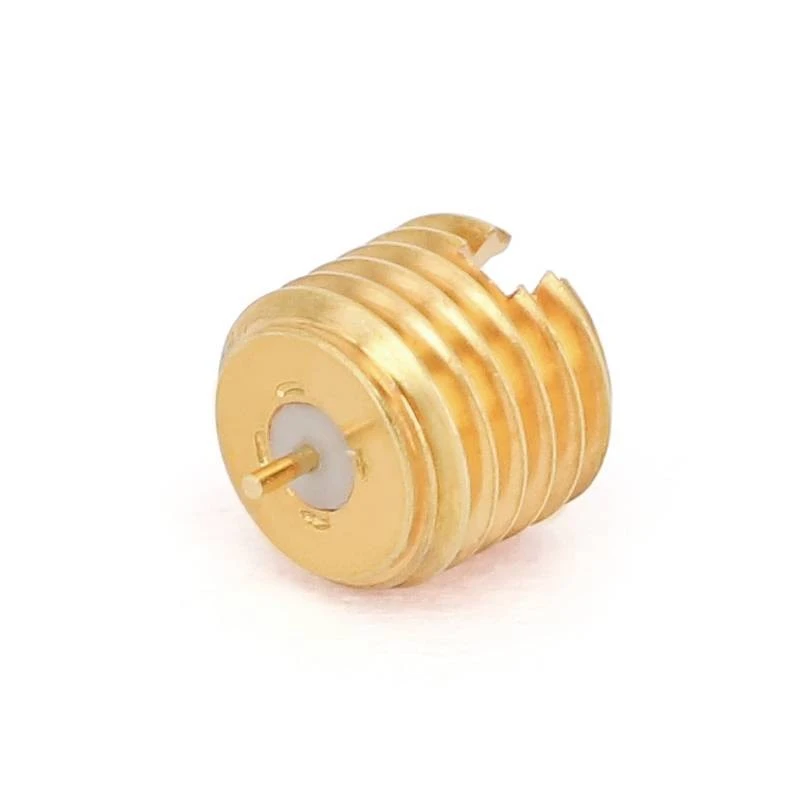
RF connectors are used to join sections of the RF transmission line, such as coaxial cables, printed circuit boards, and antennas. They play a vital role in maintaining signal integrity and minimizing signal loss during the transmission of radio frequency signals. Different types of RF connectors are available, including Field Replaceable Connectors, PCB Connectors, and Terminal Connectors, each designed for specific applications and environments.
2. Key Performance Parameters of RF Connectors
2.1 Insertion Loss
Insertion loss is one of the most important performance parameters of RF connectors. It measures the amount of signal power lost when the connector is inserted into the transmission line. A lower insertion loss indicates better connector performance, as less signal power is dissipated. Insertion loss is typically expressed in decibels (dB).
To measure insertion loss, a vector network analyzer (VNA) is commonly used. The VNA sends a known signal through the connector and measures the output signal. By comparing the input and output signal powers, the insertion loss can be calculated. The measurement should be carried out over the frequency range of interest, as insertion loss can vary with frequency.
2.2 Return Loss
Return loss is a measure of the amount of signal power reflected back from the connector. It is caused by impedance mismatches between the connector and the transmission line. A high return loss indicates a good impedance match and less signal reflection. Return loss is also expressed in decibels (dB).
Similar to insertion loss measurement, a VNA is used to measure return loss. The VNA sends a signal to the connector and measures the reflected signal. The ratio of the reflected power to the incident power is used to calculate the return loss. Measuring return loss at different frequencies helps to identify any frequency - dependent impedance mismatches.
2.3 Characteristic Impedance
Characteristic impedance is the ratio of the voltage to the current in a transmission line. For RF connectors, maintaining a consistent characteristic impedance is essential for minimizing signal reflections and ensuring proper signal transmission. Common characteristic impedances for RF connectors are 50 ohms and 75 ohms.
The characteristic impedance of an RF connector can be measured using a time - domain reflectometer (TDR). The TDR sends a fast - rising pulse into the connector and measures the reflections. By analyzing the shape and timing of the reflections, the characteristic impedance can be determined.

2.4 Voltage Standing Wave Ratio (VSWR)
VSWR is a measure of the impedance matching between the connector and the transmission line. It is related to return loss and is defined as the ratio of the maximum voltage to the minimum voltage along the transmission line. A VSWR of 1:1 indicates a perfect impedance match, while higher VSWR values indicate greater impedance mismatches.
VSWR can be calculated from the return loss using the formula: VSWR=(1 + Γ)/(1 - Γ), where Γ is the reflection coefficient. A VNA can be used to measure VSWR by first measuring the return loss and then calculating the VSWR using the above formula.
2.5 Isolation
Isolation is a measure of the ability of an RF connector to prevent the coupling of signals between different ports or channels. In multi - port connectors, good isolation is required to avoid interference between signals. Isolation is typically expressed in decibels (dB), with higher values indicating better isolation.
To measure isolation, a VNA can be used. The VNA sends a signal to one port of the connector and measures the signal leakage to other ports. The ratio of the input signal power to the leaked signal power is used to calculate the isolation.
3. Measurement Setup and Considerations
3.1 Calibration
Calibration is a critical step in accurate RF connector performance measurement. Before measuring any parameter, the measurement equipment, such as the VNA or TDR, must be calibrated. Calibration ensures that the measurement results are accurate and reliable.
There are different calibration methods available, such as short - open - load - through (SOLT) calibration. In SOLT calibration, a short circuit, an open circuit, a load with known impedance, and a through connection are used to calibrate the measurement equipment. The calibration process compensates for the effects of the measurement cables, fixtures, and the equipment itself.
3.2 Test Fixtures
Test fixtures are used to hold the RF connectors during the measurement process. They should be designed to minimize any additional losses or reflections that could affect the measurement results. The test fixtures should have a proper impedance match with the connector and the measurement equipment.
For example, when measuring PCB connectors, a PCB test fixture can be used. The test fixture should have a similar layout and impedance as the actual PCB where the connector will be used. This helps to ensure that the measurement results are representative of the connector's performance in the real - world application.
3.3 Environmental Conditions
Environmental conditions can also affect the performance of RF connectors. Temperature, humidity, and vibration can cause changes in the electrical properties of the connector materials, leading to variations in performance. Therefore, it is important to control the environmental conditions during the measurement process.
Measurements should be carried out in a controlled environment, such as a temperature - and humidity - controlled laboratory. If the connector is intended for use in harsh environments, additional tests can be conducted to simulate these conditions and evaluate the connector's performance under stress.
4. Quality Control and Testing Standards
As an RF connectors supplier, we adhere to strict quality control and testing standards. International standards, such as IEC (International Electrotechnical Commission) and MIL - STD (Military Standard), provide guidelines for the performance requirements and testing methods of RF connectors.
For example, MIL - STD - 348 specifies the electrical, mechanical, and environmental requirements for RF connectors used in military applications. By following these standards, we can ensure that our products meet the highest quality and performance requirements.
5. Conclusion and Call to Action
Accurately measuring the performance of RF connectors is essential for ensuring their reliability and suitability for various applications. By using the right measurement methods and equipment, and following strict quality control standards, we can provide high - quality RF connectors that meet the needs of our customers.
If you are in the market for RF connectors and are interested in learning more about our products or discussing your specific requirements, we encourage you to contact us for a detailed consultation. Our team of experts is ready to assist you in finding the best RF connector solutions for your projects.
References
- "RF Connectors Handbook" by Eric Bogatin
- IEC standards related to RF connectors
- MIL - STD - 348 Military Standard for RF connectors


