

How to reduce the insertion loss of VNA test cables?
Leave a message

In the realm of RF and microwave testing, Vector Network Analyzers (VNAs) play a pivotal role. VNA test cables are essential components in these testing setups, as they connect the VNA to the Device Under Test (DUT). However, one common challenge faced by engineers and technicians is the insertion loss of these cables. Insertion loss can significantly affect the accuracy of test results, leading to inaccurate measurements and potentially flawed conclusions. As a VNA Test Cables supplier, we understand the importance of minimizing insertion loss, and in this blog, we will explore several effective strategies to achieve this goal.
Understanding Insertion Loss
Before delving into the methods of reducing insertion loss, it's crucial to understand what it is. Insertion loss is the reduction in signal power that occurs when a device, such as a cable, is inserted into a transmission line. In the context of VNA test cables, it is primarily caused by two factors: conductor loss and dielectric loss.
Conductor loss is due to the resistance of the cable's conductors. As the signal travels through the conductors, some of the electrical energy is converted into heat, resulting in a loss of signal power. Dielectric loss, on the other hand, occurs because of the electrical properties of the cable's insulating material. When an alternating electric field is applied to the dielectric, some energy is dissipated as heat, leading to further signal loss.
Selecting the Right Cable
One of the most fundamental steps in reducing insertion loss is selecting the right cable for the application. Different types of cables have different characteristics, and choosing the appropriate one can make a significant difference in insertion loss performance.
- Cable Type: Coaxial cables are the most commonly used type of VNA test cables. They come in various forms, such as semi - rigid, flexible, and semi - flexible. Semi - rigid cables generally have lower insertion loss compared to flexible cables because they have a more stable physical structure, which reduces signal leakage and attenuation. However, they are less flexible and more difficult to install. Flexible cables, on the other hand, are easier to handle but may have slightly higher insertion loss. When the application requires high flexibility, semi - flexible cables can be a good compromise, offering a balance between flexibility and low insertion loss.
- Cable Size: The size of the cable also affects insertion loss. Larger diameter cables typically have lower insertion loss because they have lower resistance in the conductors and less dielectric loss. For example, a 7/8 - inch coaxial cable will generally have lower insertion loss than a 1/2 - inch cable at the same frequency. However, larger cables are also heavier and more expensive, so a balance needs to be struck between performance and practicality.
- Cable Material: The materials used in the cable construction can have a significant impact on insertion loss. High - quality conductors, such as copper or silver - plated copper, have lower resistance and therefore lower conductor loss. Similarly, using a low - loss dielectric material, such as PTFE (Polytetrafluoroethylene), can reduce dielectric loss. When selecting a cable, it's important to consider the quality of the materials used in its construction. You can find a wide range of high - quality VNA Test Cables on our website, which are designed with the best materials to minimize insertion loss.
Proper Cable Installation
Even if you select the right cable, improper installation can still lead to increased insertion loss. Here are some key points to keep in mind during cable installation:

- Avoid Sharp Bends: Bending a cable too sharply can cause the internal structure of the cable to deform, leading to increased signal loss. The minimum bend radius of a cable is specified by the manufacturer, and it's important to adhere to this specification during installation. For example, if the minimum bend radius of a cable is specified as 10 times the cable diameter, the cable should not be bent with a radius smaller than this value.
- Secure Connections: Loose or poorly connected cable connectors can introduce additional insertion loss. It's important to ensure that the connectors are properly tightened and that there is no dirt or debris on the connector surfaces. Before making a connection, clean the connector pins and sockets with a suitable cleaning agent to remove any contaminants.
- Reduce Cable Length: The longer the cable, the higher the insertion loss. Therefore, it's advisable to use the shortest cable possible for the application. However, make sure that the cable is long enough to reach the DUT without being stretched or bent excessively.
Cable Maintenance
Regular cable maintenance is essential for keeping insertion loss at a minimum. Over time, cables can be damaged due to environmental factors, mechanical stress, or normal wear and tear. Here are some maintenance tips:
- Inspect Regularly: Periodically inspect the cables for any signs of damage, such as cuts, abrasions, or kinks. If any damage is found, the cable should be replaced immediately to prevent further degradation of performance.
- Store Properly: When not in use, cables should be stored properly to prevent damage. Coil the cables neatly and store them in a dry, clean environment. Avoid storing cables in areas where they may be exposed to extreme temperatures, humidity, or chemicals.
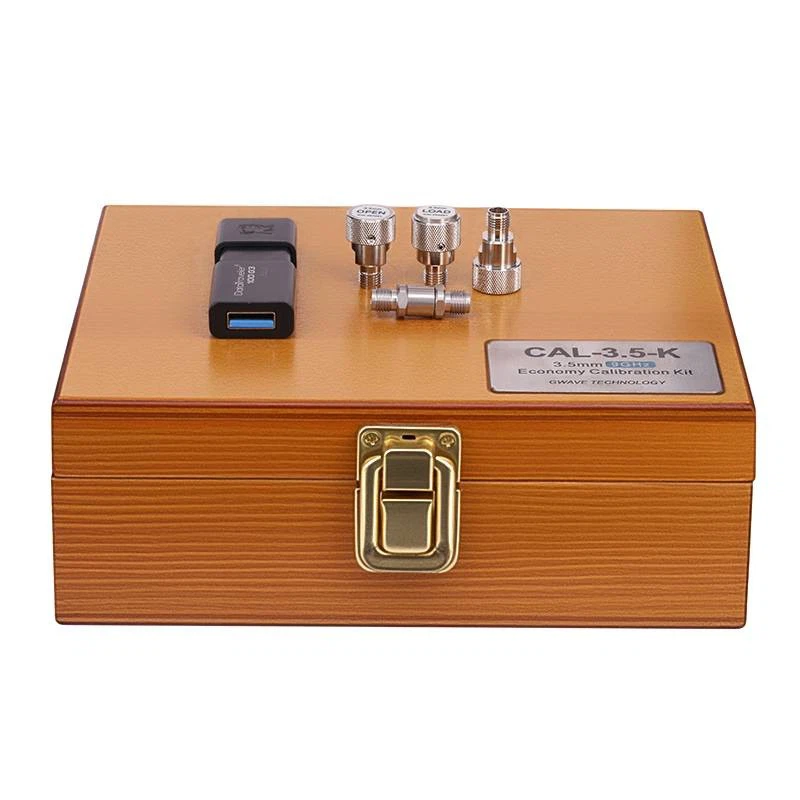
- Calibrate Regularly: Calibration is an important part of cable maintenance. Using a Calibration Kits can help to compensate for any changes in cable characteristics over time. Regular calibration ensures that the test results are accurate and that the insertion loss is within acceptable limits.
Temperature and Environmental Considerations
The temperature and environmental conditions can also affect the insertion loss of VNA test cables.
- Temperature: As the temperature increases, the resistance of the cable conductors also increases, leading to higher conductor loss and therefore higher insertion loss. In high - temperature environments, it's important to use cables that are designed to withstand these conditions. Some cables are specifically engineered to have low temperature coefficients of resistance, which means that their insertion loss changes less with temperature variations.
- Humidity and Moisture: Moisture can penetrate the cable insulation and cause dielectric breakdown, leading to increased insertion loss. In humid environments, it's important to use cables with proper moisture - resistant insulation. Additionally, ensure that the cable connectors are properly sealed to prevent moisture ingress.
Using Amplifiers and Equalizers
In some cases, despite taking all the above measures, the insertion loss may still be too high for the application. In such situations, using amplifiers or equalizers can be a viable solution.
- Amplifiers: Amplifiers can be used to boost the signal strength and compensate for the insertion loss. However, it's important to choose an amplifier with the appropriate gain and bandwidth for the application. Additionally, amplifiers can introduce noise, so it's necessary to consider the noise figure of the amplifier when making a selection.
- Equalizers: Equalizers are devices that can be used to correct the frequency - dependent insertion loss of a cable. They work by boosting the frequencies that have higher insertion loss, thereby flattening the frequency response of the cable. Equalizers can be particularly useful in applications where a wide frequency range needs to be tested.
Conclusion
Reducing the insertion loss of VNA test cables is crucial for accurate RF and microwave testing. By selecting the right cable, installing it properly, maintaining it regularly, and considering environmental factors, you can significantly minimize insertion loss. In some cases, using amplifiers or equalizers may also be necessary. As a VNA Test Cables supplier, we are committed to providing high - quality cables and solutions to help you achieve the best test results. If you have any questions or need assistance in selecting the right cables for your application, please feel free to contact us for procurement and further discussions.
References
- "RF and Microwave Engineering" by Pozar, David M.
- "Coaxial Cable Handbook" by White, J. F.


