
What are the electrical properties of VNA test cables?
Leave a message

Hey there! As a supplier of VNA Test Cables, I'm super excited to dive into the electrical properties of these nifty cables with you.
First off, let's talk about what VNA Test Cables are. They're crucial components in the field of test and measurement. VNA stands for Vector Network Analyzer, and these cables are used to connect the analyzer to the device under test. If you want to learn more about them, you can check out this link: VNA Test Cables.
One of the most important electrical properties of VNA Test Cables is characteristic impedance. Characteristic impedance is basically the ratio of voltage to current in a traveling wave on the cable. For most VNA Test Cables, the standard characteristic impedance is 50 ohms. This is because a lot of RF (Radio Frequency) equipment is designed to work with a 50 - ohm impedance. When the impedance of the cable matches the impedance of the equipment, it ensures maximum power transfer and minimizes signal reflections.
Let me give you an example. Imagine you're trying to pour water through a hose. If the hose has a kink in it, the water flow will be disrupted, and some of the water might even splash back. Similarly, if the impedance of the VNA Test Cable doesn't match the impedance of the VNA or the device under test, the signal can reflect back, causing errors in the measurement. So, having the right characteristic impedance is like having a smooth - flowing hose for your electrical signals.
Another key property is attenuation. Attenuation refers to the loss of signal strength as it travels through the cable. It's measured in decibels per unit length (dB/m or dB/ft). The amount of attenuation depends on several factors, such as the frequency of the signal, the length of the cable, and the construction of the cable.
Higher frequencies tend to experience more attenuation than lower frequencies. This is because at higher frequencies, the electrical signals interact more with the materials in the cable, causing more energy to be dissipated as heat. For example, a VNA Test Cable might have an attenuation of 0.5 dB/m at 1 GHz, but this could increase to 2 dB/m at 10 GHz.

The length of the cable also plays a big role. The longer the cable, the more the signal will attenuate. So, when you're choosing a VNA Test Cable, you need to consider the distance between the VNA and the device under test. If you need to measure signals over a long distance, you might want to choose a cable with lower attenuation or use signal amplifiers to boost the signal strength.
VSWR, or Voltage Standing Wave Ratio, is another important electrical property. VSWR is a measure of how well the cable is matched to the load (the device under test). It's the ratio of the maximum voltage to the minimum voltage on the cable. A VSWR of 1:1 means that the cable is perfectly matched to the load, and there are no signal reflections. In reality, it's almost impossible to achieve a perfect 1:1 VSWR, but a lower VSWR is always better.
A high VSWR can lead to problems such as reduced power transfer, inaccurate measurements, and even damage to the equipment. For example, if the VSWR is too high, the reflected signal can cause the VNA to overheat or malfunction. So, when you're selecting VNA Test Cables, you should look for cables with a low VSWR, especially if you're working with high - power signals.
Phase stability is also a critical property, especially when you're making precise measurements. Phase stability refers to how much the phase of the signal changes over time, temperature, and frequency. In some applications, such as antenna measurements or microwave circuit testing, even a small change in phase can lead to significant errors in the measurement.
For example, if you're testing an antenna, the phase of the signal can affect the radiation pattern of the antenna. If the phase of the signal from the VNA Test Cable changes, it can make the antenna appear to have a different radiation pattern than it actually does. So, for these types of applications, you need VNA Test Cables with high phase stability.
Now, let's talk about how these electrical properties can be affected by the cable's construction. The inner conductor of the VNA Test Cable is usually made of copper or a copper alloy. Copper is a good conductor of electricity, which helps to reduce attenuation. The outer conductor, also known as the shield, is used to protect the inner conductor from external electromagnetic interference. A good shield can also help to reduce VSWR by preventing signal leakage.
The dielectric material between the inner and outer conductors also plays a role in the electrical properties of the cable. Different dielectric materials have different dielectric constants, which can affect the characteristic impedance, attenuation, and phase stability of the cable. For example, cables with a low - dielectric - constant material, such as PTFE (Polytetrafluoroethylene), tend to have lower attenuation and better phase stability than cables with a high - dielectric - constant material.
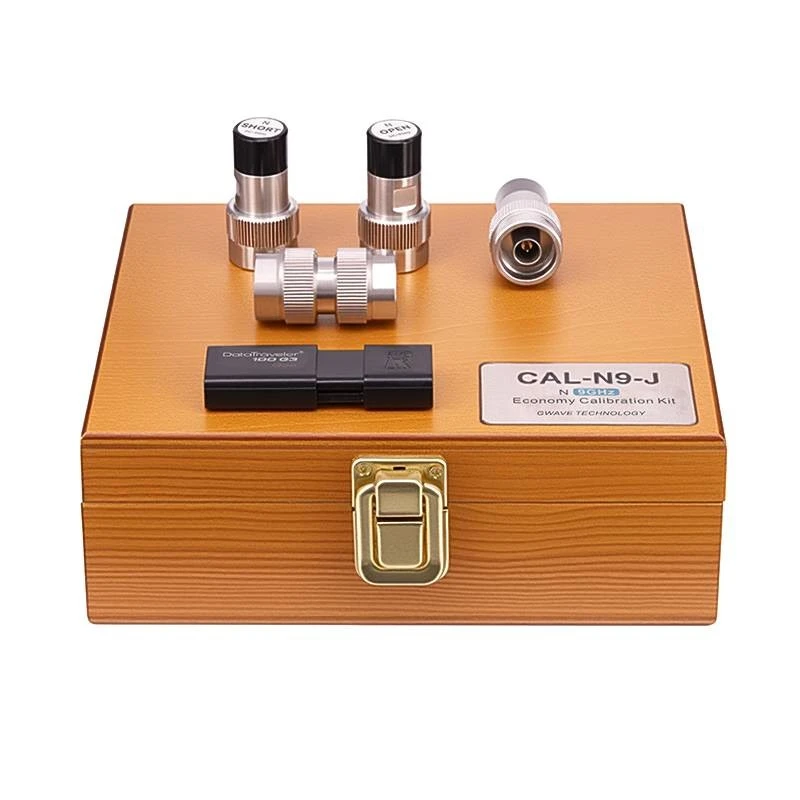
When it comes to maintaining the electrical properties of VNA Test Cables, calibration is essential. Calibration helps to ensure that the measurements made with the cables are accurate. You can use Calibration Kits to calibrate your VNA and the cables. These kits usually contain a set of known standards, such as open, short, and load circuits. By measuring these standards with the VNA and the cables, you can correct for any errors caused by the cables' electrical properties.
In conclusion, the electrical properties of VNA Test Cables, such as characteristic impedance, attenuation, VSWR, phase stability, are all crucial for accurate test and measurement. As a supplier, I understand the importance of these properties, and I'm committed to providing high - quality VNA Test Cables that meet your needs. Whether you're working on a small - scale project or a large - scale industrial application, having the right VNA Test Cables can make a huge difference in the accuracy and reliability of your measurements.
If you're interested in purchasing VNA Test Cables or have any questions about their electrical properties, feel free to reach out. We're here to help you find the best cables for your specific requirements. Let's work together to ensure your test and measurement processes are as accurate and efficient as possible!
References:
- "RF and Microwave Circuit Design for Wireless Applications" by Chris Bowick
- "Antenna Theory: Analysis and Design" by Constantine A. Balanis


