

What are the power divider frequency stability requirements?
Leave a message

Hey there! As a power dividers supplier, I've been getting a ton of questions lately about the frequency stability requirements for power dividers. So, I thought I'd take a deep dive into this topic and share what I've learned over the years.
First off, let's talk about what power dividers are. In simple terms, a power divider is a device that splits an input signal into two or more output signals. They're used in a wide range of applications, from telecommunications and radar systems to satellite communications and test equipment. And when it comes to these applications, frequency stability is crucial.
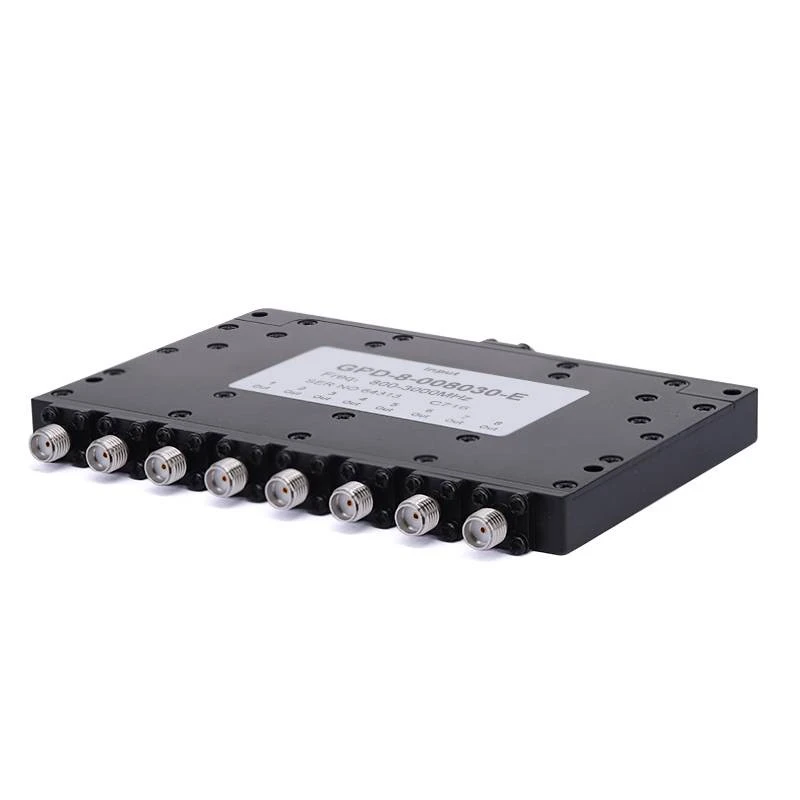

Frequency stability refers to how well a power divider maintains a consistent output frequency over time and under different operating conditions. If the frequency of the output signals varies too much, it can lead to all sorts of problems, like signal interference, reduced performance, and even system failures.
So, what are the key frequency stability requirements for power dividers? Well, it really depends on the specific application. But in general, there are a few factors that you need to consider.
Temperature Stability
One of the biggest factors that can affect frequency stability is temperature. As the temperature changes, the electrical properties of the materials used in the power divider can also change, which can cause the output frequency to shift.
For example, in a high - temperature environment, the resistance of the conductors in the power divider may increase, and the capacitance of the components may change. These changes can lead to a shift in the resonant frequency of the power divider, resulting in a change in the output frequency.
To ensure good temperature stability, power dividers are often designed with materials that have low temperature coefficients. These materials are less affected by temperature changes, which helps to keep the output frequency more stable. At our company, we use high - quality materials and advanced manufacturing techniques to minimize the impact of temperature on our power dividers.
Aging Effects
Another important factor is aging. Over time, the components in a power divider can degrade, which can also affect frequency stability. For instance, the dielectric materials in capacitors may break down, and the contacts in connectors may corrode.
To combat aging effects, we conduct extensive testing on our power dividers to ensure that they can maintain their frequency stability over a long period of time. We also use high - quality components that are designed to have a long lifespan.
Power Handling
The amount of power that a power divider can handle also plays a role in frequency stability. When a power divider is operating at high power levels, it can generate heat, which can cause the temperature to rise and affect the frequency.
In addition, high - power signals can cause non - linear effects in the power divider, such as harmonic distortion. These non - linear effects can also lead to changes in the output frequency.
That's why it's important to choose a power divider that is rated for the appropriate power level for your application. We offer a wide range of power dividers with different power handling capabilities, so you can find the one that best suits your needs.
Phase Stability
Phase stability is closely related to frequency stability. In many applications, it's not just the frequency of the output signals that matters, but also the phase relationship between them.
For example, in a phased - array antenna system, the phase of the signals fed to each antenna element needs to be carefully controlled to achieve the desired radiation pattern. Any changes in the phase of the output signals from the power divider can affect the performance of the antenna system.
We design our power dividers to have excellent phase stability, ensuring that the phase relationship between the output signals remains consistent over time and under different operating conditions.
Now, let's talk about some of the specific types of power dividers we offer and how they meet these frequency stability requirements.
We have 2 - Way Power Dividers, which are commonly used in applications where you need to split a signal into two equal parts. These power dividers are designed with high - quality components and advanced circuit topologies to ensure excellent frequency stability. They can operate over a wide frequency range and are suitable for a variety of applications, from RF testing to wireless communication systems.
Our 6 - Way Power Dividers are ideal for applications where you need to split a signal into six output signals. These power dividers are carefully engineered to provide consistent output power and frequency stability across all six output ports. They're often used in multi - channel communication systems and radar applications.
And then there are our 8 - Way Power Dividers. These are great for applications that require an even greater number of output signals. With their high - performance design, they can maintain stable output frequencies even when operating at high power levels.
If you're in the market for power dividers, whether it's for a new project or to upgrade an existing system, I'd love to have a chat with you. We can discuss your specific requirements and help you find the right power dividers that meet your frequency stability needs.
In conclusion, frequency stability is a critical factor when it comes to power dividers. By understanding the key factors that affect frequency stability and choosing the right power divider for your application, you can ensure the reliable performance of your system. So, don't hesitate to reach out if you have any questions or if you're ready to start the procurement process.
References
- "RF and Microwave Passive Components for Communication Systems" by Inder Bahl and Amitabh Bhartia
- "Microwave Engineering" by David M. Pozar


