

What is the group delay of a horn antenna?
Leave a message

As a supplier specializing in Horn Antennas, I often encounter inquiries about the technical aspects of these remarkable devices. One question that frequently arises is, "What is the group delay of a horn antenna?" In this blog post, I'll delve into the concept of group delay, its significance in horn antennas, and how it impacts their performance in various applications.
Understanding Group Delay
Before we explore the group delay of horn antennas, let's first understand what group delay is. In the context of signal processing and communication systems, group delay is defined as the rate of change of the phase shift of a signal with respect to angular frequency. Mathematically, it can be expressed as the negative derivative of the phase response with respect to frequency.
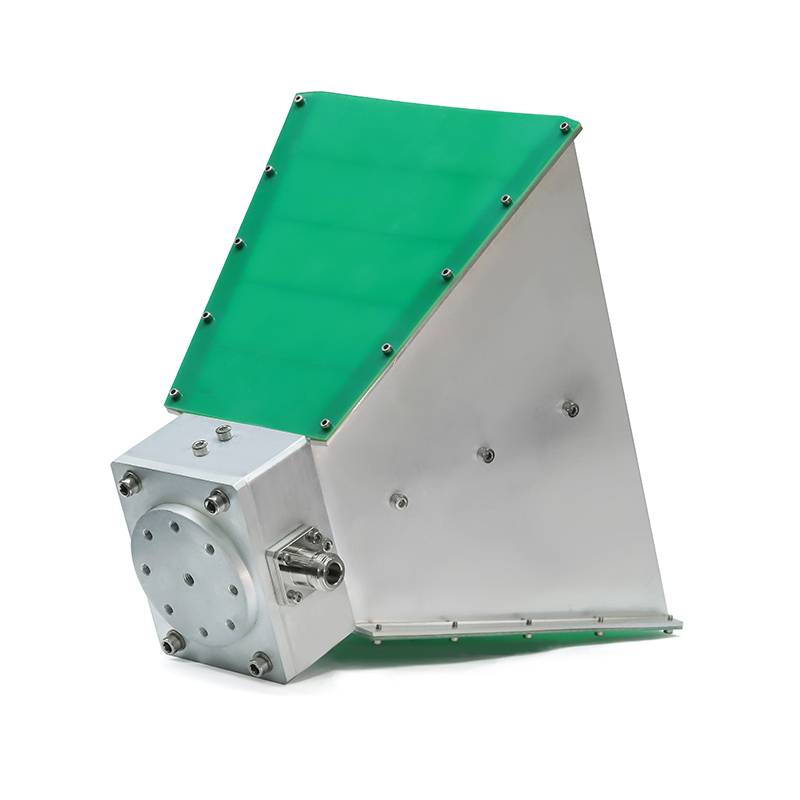
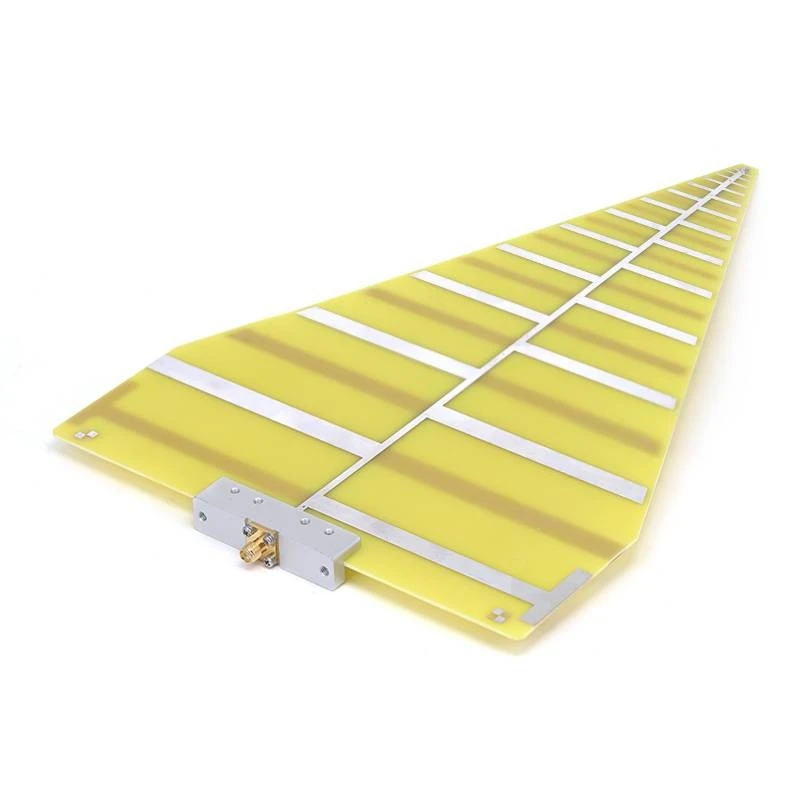
Group delay is crucial because it affects the shape and timing of a signal as it passes through a system. In an ideal system, all frequency components of a signal would experience the same delay, resulting in a flat group delay response. However, in real-world systems, including horn antennas, the group delay can vary with frequency, leading to distortion and dispersion of the signal.
Group Delay in Horn Antennas
Horn antennas are widely used in a variety of applications, including radar systems, satellite communications, and wireless networks. These antennas are known for their high gain, wide bandwidth, and directional radiation patterns. However, like any other antenna, horn antennas exhibit a non-uniform group delay response.
The group delay of a horn antenna is influenced by several factors, including its physical dimensions, the material used in its construction, and the operating frequency range. The shape and size of the horn determine the way electromagnetic waves propagate through it, which in turn affects the phase shift and group delay of the signal. Additionally, the dielectric properties of the materials used in the antenna can introduce additional phase shifts and contribute to the overall group delay.
Significance of Group Delay in Horn Antenna Applications
The group delay of a horn antenna can have a significant impact on its performance in different applications. Here are some examples:
Radar Systems
In radar systems, accurate timing and phase information are crucial for target detection and ranging. A non-uniform group delay in the horn antenna can cause the radar pulses to spread out in time, leading to a loss of range resolution and reduced accuracy in target detection. Therefore, it is essential to minimize the group delay variation in horn antennas used in radar applications to ensure optimal performance.
Satellite Communications
Satellite communication systems rely on the efficient transmission and reception of signals over long distances. The group delay of the horn antennas used in these systems can affect the timing and phase accuracy of the signals, which can result in communication errors and reduced data throughput. By carefully controlling the group delay of the horn antennas, satellite operators can improve the reliability and performance of their communication links.
Wireless Networks
In wireless networks, such as Wi-Fi and 5G, the group delay of the horn antennas can impact the quality of the signal received by the devices. A non-uniform group delay can cause inter-symbol interference (ISI), which can degrade the signal quality and reduce the data transfer rate. By using horn antennas with a low and flat group delay response, wireless network operators can enhance the performance and reliability of their networks.
Measuring and Controlling Group Delay in Horn Antennas
Measuring the group delay of a horn antenna requires specialized equipment, such as a vector network analyzer (VNA). The VNA can measure the phase response of the antenna over a specified frequency range and calculate the group delay based on the derivative of the phase response.
Once the group delay of the horn antenna is measured, it can be optimized by making adjustments to its physical design and construction. For example, the shape and size of the horn can be modified to reduce the group delay variation. Additionally, the use of low-loss materials with uniform dielectric properties can help minimize the phase shifts and improve the overall group delay performance of the antenna.
Our Horn Antennas and Group Delay Performance
At our company, we take great pride in providing high-quality Horn Antennas with excellent group delay performance. Our team of experienced engineers uses advanced design and manufacturing techniques to ensure that our horn antennas meet the strictest industry standards.
We offer a wide range of Horn Antennas, including Log-periodic Antennas and other specialized models, each designed to provide optimal performance in different applications. Our horn antennas are carefully tested and calibrated to ensure that they have a low and flat group delay response over their operating frequency range.
Whether you are looking for a horn antenna for radar, satellite communications, wireless networks, or any other application, we have the expertise and resources to provide you with the right solution. Our commitment to quality and customer satisfaction is unwavering, and we are dedicated to helping you achieve your communication goals.
Conclusion
In conclusion, the group delay of a horn antenna is an important parameter that can significantly impact its performance in various applications. By understanding the concept of group delay and its influence on horn antenna design and operation, you can make informed decisions when selecting an antenna for your specific needs.
As a leading supplier of Horn Antennas, we are committed to providing our customers with the highest quality products and the best possible service. If you have any questions about group delay or our horn antennas, or if you would like to discuss your specific requirements, please do not hesitate to contact us. We look forward to the opportunity to work with you and help you find the perfect antenna solution.
References
- Balanis, C. A. (2016). Antenna Theory: Analysis and Design (4th ed.). Wiley.
- Pozar, D. M. (2011). Microwave Engineering (4th ed.). Wiley.
- Stutzman, W. L., & Thiele, G. A. (2012). Antenna Theory and Design (3rd ed.). Wiley.


