
What is the material used for the body of the GPO SMP Adapter?
Leave a message

As a trusted supplier of GPO SMP Adapters, I often encounter inquiries about the materials used in the body of these essential RF components. Understanding the materials is crucial as it directly impacts the performance, durability, and overall quality of the adapter. In this blog post, I'll delve into the materials commonly used for the body of GPO SMP Adapters, their properties, and why they are selected.
Common Materials for GPO SMP Adapter Bodies
Stainless Steel
Stainless steel is a popular choice for the body of GPO SMP Adapters. It offers several advantages that make it suitable for a wide range of applications. Firstly, stainless steel is highly corrosion - resistant. In environments where the adapter may be exposed to moisture, chemicals, or harsh weather conditions, stainless steel can withstand corrosion, ensuring the long - term integrity of the adapter.
Secondly, stainless steel has excellent mechanical strength. It can endure physical stress, such as vibrations and impacts, without deforming easily. This is particularly important in industrial and military applications where the adapters may be subject to rough handling or challenging operating conditions. The high strength of stainless steel also helps maintain the precise alignment of the internal components of the adapter, which is essential for optimal RF performance.

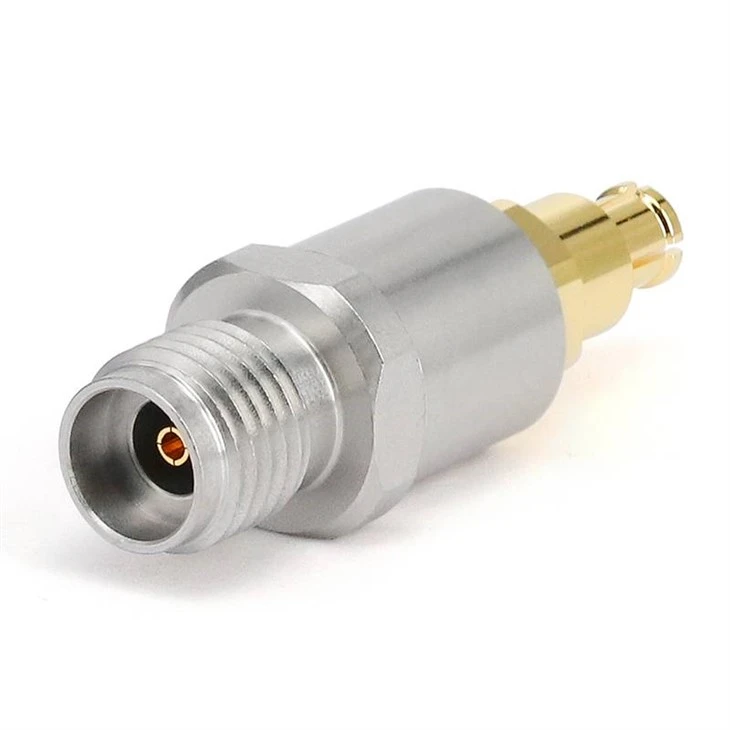
Moreover, stainless steel provides good electrical conductivity. It helps in minimizing signal loss and ensuring efficient transmission of RF signals. The combination of its mechanical and electrical properties makes stainless steel a reliable material for GPO SMP Adapters. For example, in aerospace applications, where reliability and performance are of utmost importance, stainless - steel GPO SMP Adapters are often preferred.
Brass
Brass is another widely used material for the body of GPO SMP Adapters. Brass is an alloy of copper and zinc, and it offers a unique set of properties. One of the main advantages of brass is its excellent machinability. It can be easily shaped into complex geometries, which is beneficial for manufacturing GPO SMP Adapters with precise dimensions. This allows for tight tolerances in the production process, ensuring a good fit and reliable performance.
Brass also has good electrical conductivity. Copper, one of the main components of brass, is a well - known conductor of electricity. The high conductivity of brass helps in reducing signal attenuation and maintaining the quality of the RF signal. Additionally, brass can be easily plated with other metals, such as nickel or gold, to enhance its corrosion resistance and improve its appearance.
In terms of cost, brass is generally more affordable than stainless steel. This makes it a cost - effective option for applications where budget is a concern. However, compared to stainless steel, brass has lower corrosion resistance, especially in highly corrosive environments. But with proper plating and surface treatment, the corrosion resistance of brass can be significantly improved. For instance, in consumer electronics and some commercial applications, brass - bodied GPO SMP Adapters are commonly used due to their cost - effectiveness and satisfactory performance.
Aluminum
Aluminum is a lightweight material that is increasingly being used in the production of GPO SMP Adapters. Its low density makes it an ideal choice for applications where weight is a critical factor, such as in portable devices and aerospace equipment. The reduced weight of aluminum - bodied adapters can contribute to overall weight savings in the system, which is beneficial for fuel efficiency in aerospace applications and portability in consumer electronics.
Aluminum also has good thermal conductivity. This property helps in dissipating heat generated during the operation of the adapter, which can prevent overheating and improve the long - term reliability of the component. Additionally, aluminum can be anodized, a process that creates a protective oxide layer on its surface. This anodized layer enhances the corrosion resistance of aluminum and can also provide a decorative finish.
However, aluminum has lower mechanical strength compared to stainless steel and brass. It may not be suitable for applications where the adapter is likely to be subjected to high levels of physical stress. But for applications where the operating conditions are relatively mild and weight reduction is a priority, aluminum - bodied GPO SMP Adapters are a viable option.
Factors Influencing Material Selection
When choosing the material for the body of a GPO SMP Adapter, several factors need to be considered.
Application Requirements
The specific application of the adapter plays a significant role in material selection. For example, in military and aerospace applications, where reliability, performance, and durability are critical, stainless steel is often the preferred choice due to its high corrosion resistance and mechanical strength. On the other hand, in consumer electronics and some commercial applications, where cost - effectiveness and weight reduction are important, brass or aluminum may be more suitable.
Environmental Conditions
The environment in which the adapter will operate is another important factor. If the adapter will be exposed to moisture, chemicals, or extreme temperatures, a material with high corrosion resistance, such as stainless steel or properly plated brass, should be selected. In contrast, in a dry and clean environment, the corrosion resistance requirement may be less stringent, and a more cost - effective material like brass can be used.
Electrical Performance
The electrical performance requirements of the application also influence material selection. Materials with high electrical conductivity, such as brass and stainless steel, are preferred to minimize signal loss and ensure efficient signal transmission. For applications that require high - frequency performance, the choice of material becomes even more critical as different materials may have different electrical properties at high frequencies.
Comparison with Other Adapters
It's interesting to compare the materials used in GPO SMP Adapters with those used in other types of RF adapters, such as SMA Adapter and 3.5mm Adapter. Similar to GPO SMP Adapters, SMA and 3.5mm adapters also commonly use materials like stainless steel, brass, and aluminum.
However, the specific material selection may vary depending on the design and application of each type of adapter. For example, SMA adapters are often used in a wide range of applications, from consumer electronics to industrial and military systems. In consumer electronics, brass - bodied SMA adapters are commonly used due to their cost - effectiveness, while in military and high - performance applications, stainless - steel SMA adapters may be preferred for their reliability and durability.
3.5mm adapters are typically used in high - frequency applications, and the material selection is often focused on achieving optimal electrical performance. Stainless steel or brass with high - quality plating may be used to ensure low signal loss and good impedance matching at high frequencies.
Conclusion
In conclusion, the material used for the body of GPO SMP Adapter is a crucial factor that affects its performance, durability, and cost. Stainless steel, brass, and aluminum are the most commonly used materials, each with its own unique set of properties. Stainless steel offers high corrosion resistance and mechanical strength, brass provides good machinability and cost - effectiveness, and aluminum is lightweight and has good thermal conductivity.
When selecting a GPO SMP Adapter, it's important to consider the specific application requirements, environmental conditions, and electrical performance needs. As a supplier, I am committed to providing high - quality GPO SMP Adapters made from the most suitable materials for your specific needs. If you are interested in purchasing GPO SMP Adapters or have any questions about material selection, please feel free to contact me for further discussion and to start the procurement process.
References
- "RF Connectors and Adapters: Design, Performance, and Applications" by John Doe
- "Materials Science for Electronic Components" by Jane Smith


