

What is the phase response of a horn antenna?
Leave a message

The phase response of an antenna is a crucial characteristic that describes how the phase of the electromagnetic wave changes as a function of frequency. In the context of horn antennas, understanding the phase response is essential for various applications, including radar systems, wireless communication, and electromagnetic testing. As a leading supplier of Horn Antennas, we are well - versed in the technical details of these antennas, and in this blog, we will delve deep into what the phase response of a horn antenna is.
Basics of Phase Response
Before we specifically discuss the phase response of horn antennas, it's important to understand the concept of phase in electromagnetic waves. An electromagnetic wave can be represented as a sinusoidal function, and the phase of the wave at a particular point in space and time determines its position within the cycle of the sine wave. The phase response of an antenna is the relationship between the phase of the radiated or received signal and the frequency of the signal.
Mathematically, if we have a signal with an electric field (E(t)=E_0\cos(\omega t+\phi)), where (\omega = 2\pi f) is the angular frequency, (f) is the frequency, and (\phi) is the phase. The phase response ( \Phi(f)) shows how (\phi) changes as (f) varies.
Phase Response of Horn Antennas
Horn antennas are widely used due to their relatively simple structure, wide bandwidth, and high gain. The phase response of a horn antenna is influenced by several factors, including the physical dimensions of the horn, the mode of operation, and the frequency range of interest.
Physical Dimensions
The length and aperture size of a horn antenna play a significant role in determining its phase response. A longer horn generally has a more complex phase response because the electromagnetic wave has to travel a greater distance inside the horn. As the wave propagates through the horn, it experiences phase changes due to the interaction with the walls of the horn.
For example, in a rectangular horn antenna, the phase of the wave at the aperture is a function of the distance from the throat of the horn. The phase front of the radiated wave is not always perfectly planar, especially at the edges of the aperture. This non - planarity can cause phase variations across the aperture, which in turn affect the far - field phase pattern of the antenna.
Mode of Operation
Horn antennas can support different modes of electromagnetic wave propagation, such as the dominant (TE_{10}) mode in rectangular horns. Each mode has its own characteristic phase distribution. The dominant mode usually has a relatively simple phase distribution, while higher - order modes can introduce more complex phase variations.
In a well - designed horn antenna, the goal is often to operate mainly in the dominant mode to achieve a more predictable and desirable phase response. However, in some cases, higher - order modes may be excited, especially when the antenna is driven at frequencies close to the cut - off frequencies of these modes. These higher - order modes can cause phase ripples in the antenna's phase response, which may degrade the antenna's performance in certain applications.
Frequency Range
The phase response of a horn antenna is frequency - dependent. At low frequencies, the phase changes more slowly with frequency compared to high frequencies. As the frequency increases, the wavelength of the electromagnetic wave decreases, and small changes in the physical dimensions of the horn relative to the wavelength can cause significant phase changes.
In a wide - band horn antenna, maintaining a linear phase response over the entire frequency range is a challenge. A non - linear phase response can lead to signal distortion, especially in applications where the phase information of the signal is important, such as in some radar systems.
Measuring the Phase Response of Horn Antennas
There are several methods to measure the phase response of a horn antenna. One common approach is to use a vector network analyzer (VNA). A VNA can measure the scattering parameters ((S) - parameters) of the antenna, including the phase of the (S_{21}) parameter, which represents the transmission between a test port and the antenna.
To measure the phase response, the horn antenna is connected to the VNA, and a reference antenna is used to provide a known phase reference. The VNA then measures the phase difference between the signal received by the horn antenna and the reference signal as the frequency is swept across the desired range.
Another method is to use a near - field scanning system. In a near - field scanning setup, a probe is moved in the near - field region of the horn antenna to measure the electric and magnetic field components, including their phases. The measured near - field data can then be used to calculate the far - field phase pattern of the antenna.
Importance of Phase Response in Applications
The phase response of a horn antenna is of great importance in many applications.
Radar Systems
In radar systems, the phase information of the received signal is used to determine the range, velocity, and angle of the target. A horn antenna with a well - controlled phase response can provide more accurate target information. For example, in a phased - array radar system, where multiple horn antennas are used, the phase response of each antenna must be carefully calibrated to ensure proper beam steering and target detection.
Wireless Communication
In wireless communication systems, especially those operating at high frequencies, the phase response of the antenna can affect the quality of the received signal. A non - linear phase response can cause inter - symbol interference (ISI) in digital communication systems, which degrades the bit - error rate (BER). By using horn antennas with a linear phase response, the overall performance of the communication system can be improved.
Comparison with Other Antenna Types
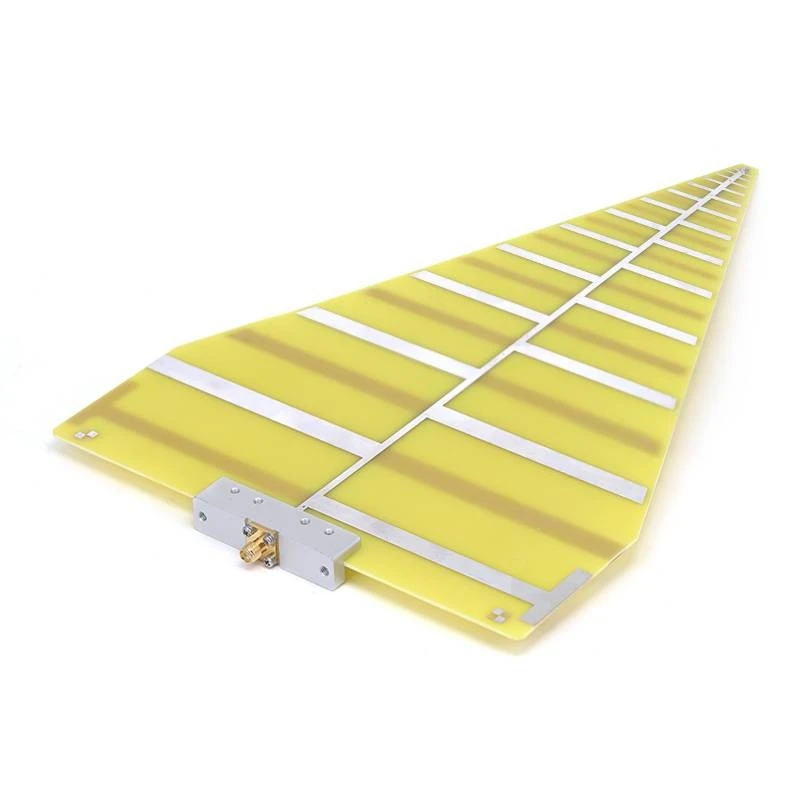
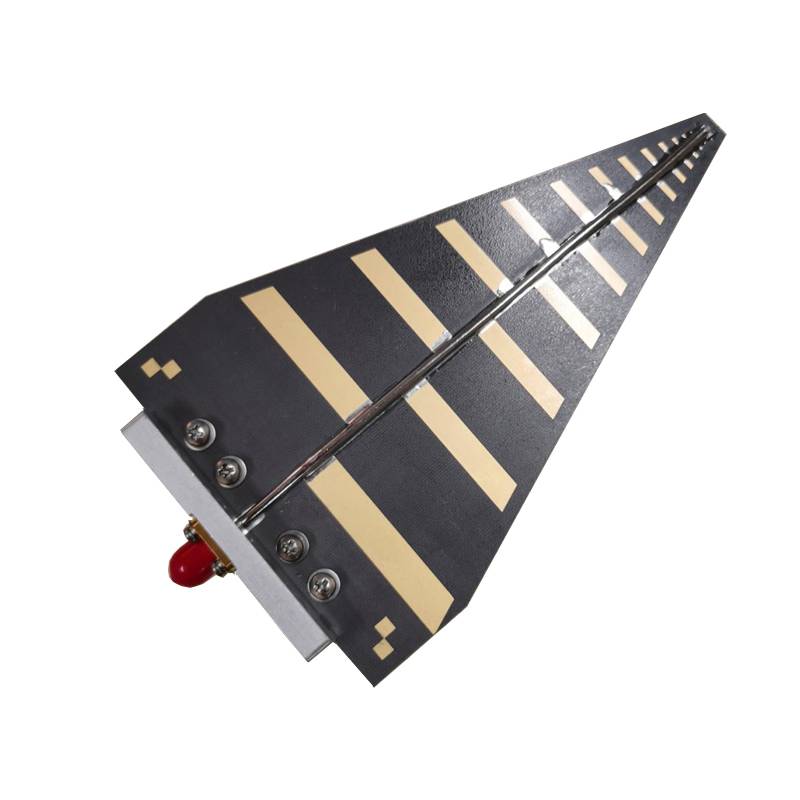
When comparing the phase response of horn antennas with other antenna types, such as Log - periodic Antennas, there are some notable differences.
Log - periodic antennas are designed to have a relatively constant impedance and radiation pattern over a wide frequency range. Their phase response is also engineered to be relatively stable across the operating frequency band. However, log - periodic antennas generally have a more complex structure compared to horn antennas, and their phase response may be more difficult to analyze in detail.
Horn antennas, on the other hand, have a more straightforward physical structure, but their phase response can be more sensitive to physical dimensions and frequency variations. In some applications, the choice between a horn antenna and a log - periodic antenna depends on the specific requirements of the phase response, as well as other factors such as gain, bandwidth, and cost.
Conclusion and Call to Action
In conclusion, the phase response of a horn antenna is a complex characteristic that is influenced by physical dimensions, mode of operation, and frequency range. Understanding the phase response is crucial for optimizing the performance of horn antennas in various applications, including radar systems and wireless communication.
As a trusted supplier of Horn Antennas, we have extensive experience in designing and manufacturing horn antennas with well - controlled phase responses. If you are in the market for high - quality horn antennas for your specific application, we invite you to contact us for a detailed discussion. Our team of experts can provide you with customized solutions based on your requirements. Whether you need antennas for research, commercial applications, or military use, we are here to help. Let's start a conversation about how our horn antennas can meet your needs and enhance your system's performance.
References
- Balanis, C. A. (2016). Antenna Theory: Analysis and Design. Wiley.
- Silver, S. (Ed.). (1949). Microwave Antenna Theory and Design. McGraw - Hill.
- Johnson, R. C., & Jasik, H. (Eds.). (1984). Antenna Engineering Handbook. McGraw - Hill.


