
What is the return loss of an RF connector?
Leave a message

Yo, what's up everyone! As a supplier of RF connectors, I've been getting a lot of questions lately about return loss. So, I thought I'd take a few minutes to break it down for you and explain what it is, why it matters, and how it affects your RF systems.
Let's start with the basics. Return loss is a measure of how much of the RF power that's sent into a connector gets reflected back. In an ideal world, all the power would be transmitted through the connector and into the system. But in reality, some of it gets bounced back. This reflection can cause all sorts of problems, like signal degradation, interference, and reduced system performance.

To understand return loss better, you need to know a bit about impedance. Impedance is like the electrical resistance of an RF system. It's measured in ohms, and for most RF applications, the standard impedance is 50 ohms. When the impedance of the source, the connector, and the load (the device the connector is attached to) are all matched, the RF power flows smoothly through the system. But if there's an impedance mismatch, some of the power gets reflected.
Return loss is expressed in decibels (dB). A higher return loss value means less power is being reflected. For example, a return loss of 20 dB is better than a return loss of 10 dB because it indicates that less power is bouncing back. Generally, you want a return loss of at least 15 dB to 20 dB in your RF systems to ensure good performance.
Now, let's talk about why return loss matters. In RF systems, even a small amount of reflected power can have a big impact. For starters, it can reduce the amount of power that actually reaches the load. This means your system might not work as efficiently as it should. It can also cause interference with other signals in the system, leading to noise and distortion.
In applications like wireless communication, radar systems, and satellite communication, where signal quality is crucial, a high return loss can be the difference between a clear, reliable signal and a weak, fuzzy one. So, it's super important to choose RF connectors with low reflection and high return loss.
As an RF connector supplier, we offer a wide range of connectors designed to minimize return loss. For example, our Terminal Connectors are engineered to provide excellent impedance matching, which helps reduce reflection and improve return loss. These connectors are used in various applications, from consumer electronics to industrial equipment.
Another product we have is the Glass Beads. These are used in some of our connectors to enhance the electrical performance. The glass beads help to maintain a stable impedance, which in turn reduces return loss. They're especially useful in high - frequency applications where impedance stability is critical.
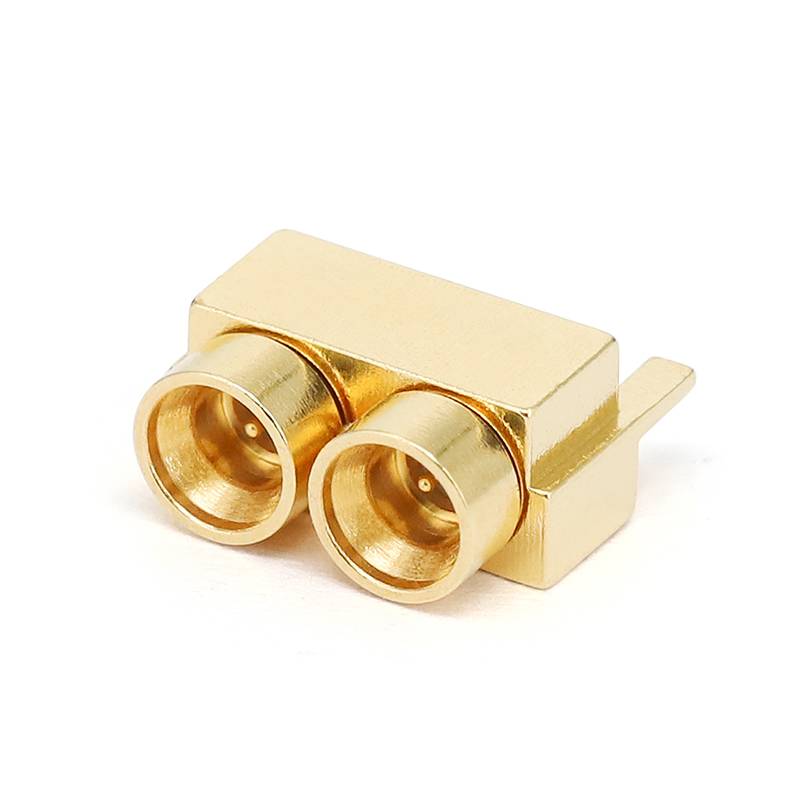
We also have Multi - coax Connectors. These connectors are great for applications that require multiple coaxial connections. They're designed to minimize crosstalk and reflection between the different coaxial lines, resulting in better return loss performance across the board.
When it comes to measuring return loss, there are a few different methods. One common way is to use a network analyzer. This device sends a signal through the connector and measures the amount of reflected power. It then calculates the return loss based on the ratio of the incident power to the reflected power.
Manufacturers like us test our connectors during the production process to ensure they meet the required return loss specifications. We use state - of - the - art testing equipment to make sure every connector we sell performs as expected.
Now, if you're in the market for RF connectors, you might be wondering how to choose the right ones for your application. Well, the first thing you need to consider is the frequency range of your system. Different connectors are designed to work best at different frequencies. You also need to think about the impedance requirements. Make sure the connector you choose has the right impedance to match your system.
Another factor to consider is the environment in which the connector will be used. If it's going to be in a harsh environment, like outdoors or in an industrial setting, you'll need a connector that's rugged and can withstand things like temperature changes, moisture, and vibration.
We're here to help you make the right choice. Our team of experts has years of experience in the RF connector industry. We can answer all your questions and guide you through the selection process. Whether you're working on a small - scale project or a large - scale industrial application, we've got the connectors you need.
If you're interested in learning more about our RF connectors or have any questions about return loss, don't hesitate to reach out. We're always happy to have a chat and discuss how our products can meet your needs. We can provide samples for you to test in your systems and offer competitive pricing for bulk orders.
In conclusion, return loss is a crucial factor in RF systems. It affects the performance, efficiency, and reliability of your equipment. As a trusted RF connector supplier, we're committed to providing high - quality connectors that minimize return loss and ensure optimal performance. So, if you're looking for top - notch RF connectors, give us a shout, and let's start a conversation about your project.
References
- "RF and Microwave Engineering Handbook"
- "RF Connectors: A Practical Guide"


