

Are there any RF connectors for automotive infotainment systems?
Leave a message

In the ever - evolving landscape of automotive technology, automotive infotainment systems have emerged as a crucial component, offering drivers and passengers a seamless blend of entertainment, communication, and navigation. These systems rely heavily on Radio Frequency (RF) connectors to ensure reliable signal transmission. As a seasoned RF connectors supplier, I am well - versed in the needs of the automotive industry and the role RF connectors play in infotainment systems.
The Importance of RF Connectors in Automotive Infotainment
Automotive infotainment systems are complex setups that integrate multiple functions such as AM/FM radio, satellite radio, Bluetooth connectivity, Wi - Fi, GPS navigation, and even in - car video streaming. Each of these functions operates on different RF frequencies, and RF connectors are the linchpin that enables the efficient transfer of these signals.
The quality of RF connectors directly impacts the performance of the infotainment system. A poor - quality connector can lead to signal loss, interference, and ultimately, a subpar user experience. For example, in the case of GPS navigation, a weak or unstable RF connection can result in inaccurate location tracking, making it difficult for drivers to reach their destinations. Similarly, for in - car entertainment like streaming music or videos, a faulty RF connector can cause buffering and interruptions.
Types of RF Connectors for Automotive Infotainment
1. Coax Connectors
Coaxial connectors are one of the most common types of RF connectors used in automotive infotainment systems. They are designed to carry high - frequency signals with minimal loss. Coax connectors have a central conductor surrounded by a dielectric insulator, a metallic shield, and an outer jacket. This design helps to prevent electromagnetic interference (EMI) and maintain signal integrity.
Coax Connectors are widely used for applications such as antenna connections in AM/FM and satellite radio systems. They provide a reliable and stable connection, ensuring that the radio signals are received clearly without any distortion. In addition, coax connectors are also used in some in - car video systems to transmit high - definition video signals.
2. Terminal Connectors
Terminal connectors are another important type of RF connector in automotive infotainment. These connectors are used to terminate and connect wires or cables. They come in various shapes and sizes, and are designed to provide a secure and low - resistance connection.
Terminal Connectors are often used in the wiring harnesses of infotainment systems. They help to connect different components such as speakers, amplifiers, and control modules. The proper selection of terminal connectors is crucial to ensure that the electrical signals are transmitted efficiently and that there is no loose connection that could lead to signal degradation.
3. Glass Beads
Glass bead connectors are a specialized type of RF connector that offers unique advantages in automotive infotainment applications. These connectors use glass beads as an insulator between the conductors. The glass beads provide excellent electrical insulation properties and can withstand high temperatures and harsh environmental conditions.

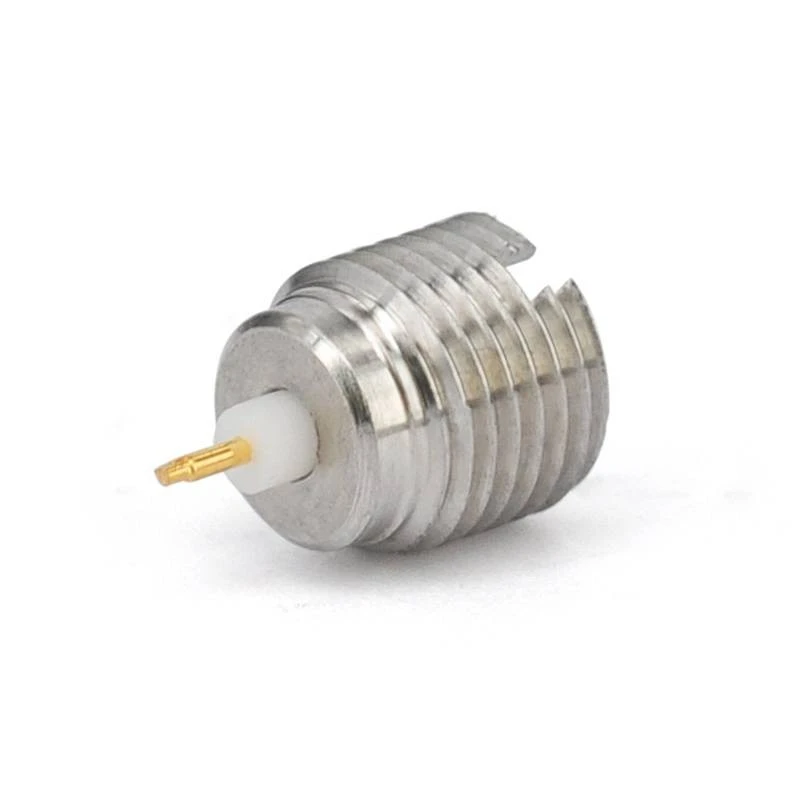
Glass Beads are commonly used in applications where reliability and durability are of utmost importance. For example, in the engine compartment of a vehicle, where the temperature can be very high, glass bead connectors can ensure stable signal transmission. They are also used in some high - end infotainment systems where the need for high - quality signal integrity is critical.
Challenges in Using RF Connectors in Automotive Infotainment
While RF connectors are essential for automotive infotainment systems, there are several challenges associated with their use.
1. Environmental Conditions
Automotive environments are harsh, with exposure to extreme temperatures, humidity, vibrations, and dust. These conditions can cause wear and tear on RF connectors over time, leading to signal degradation. For example, high temperatures can cause the materials in the connectors to expand and contract, which may result in loose connections. Moisture can also corrode the conductors, increasing the resistance and reducing the signal quality.
2. Electromagnetic Interference (EMI)
The automotive environment is filled with various sources of electromagnetic interference, such as the vehicle's electrical system, other electronic components, and external radio signals. RF connectors need to be designed to minimize the impact of EMI on the transmitted signals. This requires the use of proper shielding and grounding techniques in the connector design.
3. Miniaturization
As automotive infotainment systems become more compact and integrated, there is a growing demand for smaller RF connectors. However, miniaturization presents challenges in terms of maintaining signal integrity. Smaller connectors may have a higher resistance and capacitance, which can lead to signal loss and distortion.
Solutions to Overcome Challenges
To address the challenges associated with using RF connectors in automotive infotainment systems, several solutions can be implemented.
1. High - Quality Materials
Using high - quality materials in the manufacturing of RF connectors can significantly improve their durability and performance. For example, using corrosion - resistant metals for the conductors and high - temperature - resistant insulators can help the connectors withstand harsh environmental conditions.
2. Advanced Shielding
Advanced shielding techniques can be employed to reduce the impact of EMI on RF connectors. This includes using multiple layers of shielding materials and proper grounding designs. For example, some coax connectors use a double - shielded design to provide better protection against external interference.
3. Precision Manufacturing
Precision manufacturing processes are essential for miniaturized RF connectors. By using advanced manufacturing techniques, such as micro - machining and precision molding, it is possible to produce connectors with consistent electrical properties and tight tolerances, ensuring reliable signal transmission even in small - sized connectors.
Conclusion
In conclusion, RF connectors are an indispensable part of automotive infotainment systems. They play a vital role in ensuring the reliable transmission of various RF signals, enabling the diverse functions of these systems. As an RF connectors supplier, we understand the importance of providing high - quality connectors that can meet the demanding requirements of the automotive industry.
We offer a wide range of RF connectors, including Coax Connectors, Terminal Connectors, and Glass Beads, which are designed to withstand harsh automotive environments and provide excellent signal integrity.
If you are in the automotive industry and are looking for reliable RF connectors for your infotainment systems, we invite you to contact us for procurement and further discussions. Our team of experts is ready to assist you in finding the most suitable connectors for your specific needs.
References
- "Automotive Electronics Handbook" by Wolfgang G. Daehnick
- "RF and Microwave Circuit Design for Wireless Applications" by Joseph F. White
- Industry reports on automotive infotainment system trends and RF connector technologies.


